

These changes to how much Americans and US corporations give, if these projections prove accurate, would amount to about 1% of all donations made in 2024.
Articles on Charitable giving
Displaying all articles

After a disaster, getting help from people who are distant and unaffected is crucial. This is how charities can encourage generosity through connection.
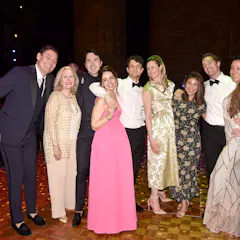
Charities have no right to keep stolen money they receive as donations, even if they didn’t know it was stolen.

The drama playing out over the late actor’s assets offers valuable lessons for anyone leaving an estate – large or small – to their loved ones or a favorite charity.
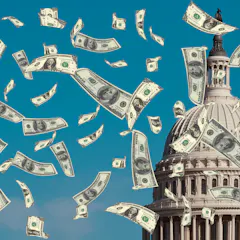
A new broadly available tax break of up to $1,000 will become available for those giving to a charity if they file on their own. Couples filing jointly may deduct $2,000 from their taxable income.
Giving to nonprofits engaged in education, health, arts, culture and humanities, the environment, and animals reached all-time highs.

While overall giving has grown, the ranks of American donors have declined.
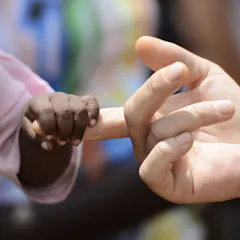
White people that sweep into developing countries to “save” people of colour are widely derided, including by donors. Does this translate to less charity donations?

The charitable deduction vanished for the 30 million taxpayers who stopped itemizing in 2018, the year the tax changes took effect.

Because smartphones can make people focus more on their personal needs, it can be harder to persuade their users to donate on them than it is when someone sees an appeal on their PC.

Lenten traditions emphasise fasting, prayer and charitable giving. This aligns with tarrying as central to communal spiritual life.
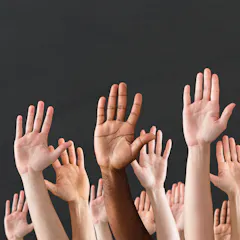
Competition is hurting charities and the causes for which they raise funds. There must be a better way.

Giving directly to Ukrainians via unused Airbnb rentals is a fast and efficient way to help. But there are some drawbacks.
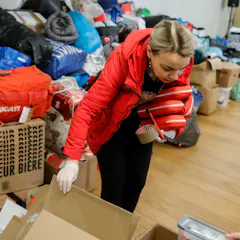
Many well-intentioned people are supporting counterproductive efforts to help Ukraine. Behavioural science can explain why.

Canadians should consider place-based giving, or donating ‘at home,’ through local community foundations that are well-positioned to navigate and bolster the post-pandemic recovery.
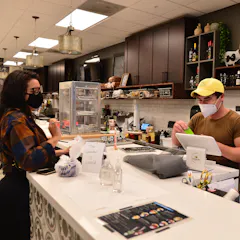
The trend of paying housekeepers unable to do their work and ordering takeout when it isn’t essential can be seen broadly as a form of charitable giving, according to philanthropy researchers.
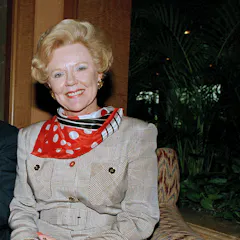
Far fewer Americans include plans for bequests to nonprofits in their wills than give to charity on a regular basis. The pandemic could be a good reason to change that.
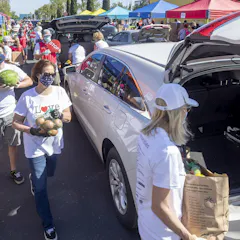
This measure, included in a pandemic relief package, is supposed to encourage Americans to give more to nonprofits.
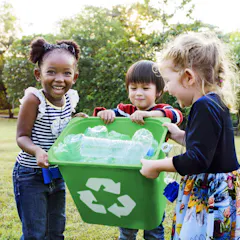
Young children should be given a bigger role in deciding which charities their schools and families support.
Top contributors
-

Interim Director of Data & Research Partnerships at the Lilly Family School of Philanthropy, Indiana University
-
Professor of Economics, University of Notre Dame
-
PhD Student, University of Guelph
-
Professor of Economics and Behavioural Science, University of Stirling
-
Global Journalism Fellow, Dalla Lana School of Public Health, University of Toronto
-
Doctoral candidate of Economics, Texas A&M University
-
Junior Research Fellow in Theology, University of Oxford
-
Frey Foundation Chair for Family Philanthropy, Grand Valley State University
-
Research Associate of Philanthropy, Women's Philanthropy Institute; Doctoral student of Philanthropy, Indiana University
-
Research Fellow in the Gradel Institute of Charity, University of Oxford; The University of Queensland
-
Professor of Marketing, University of Technology Sydney
-
PhD Student, Sustainabilty Management, University of Waterloo
-
Associate lecturer, University of Newcastle
-
Professor, University of Technology Sydney
-
Senior Lecturer in Economics, Tasmanian Behavioural Lab, University of Tasmania