

Even when donors have good intentions, philanthropy does not always produce good results.
Articles on Tax Cuts and Jobs Act
Displaying all articles

The measure enables broad tax cuts that disproportionately favor wealthy households while forcing its costs on the most economically vulnerable Americans.
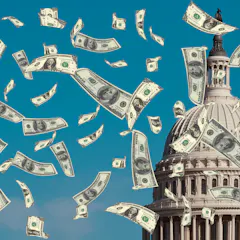
A new broadly available tax break of up to $1,000 will become available for those giving to a charity if they file on their own. Couples filing jointly may deduct $2,000 from their taxable income.

While overall giving has grown, the ranks of American donors have declined.

Much of Trump’s 2017 tax law is set to expire at the end of 2025 – failing to extend it would hurt households and the economy.

The charitable deduction vanished for the 30 million taxpayers who stopped itemizing in 2018, the year the tax changes took effect.

Researchers who analyzed a decade of data detected a reduction in giving after millions of Americans stopped getting a tax break tied to charitable giving.

Republicans and Democrats have committed to making this family-friendly government benefit a little more generous. Unless lawmakers act, it will get much smaller in 2026.

Congress tends to use the tax code to implement policy, which increases complexity and creates loopholes wealthy taxpayers like Trump can exploit.
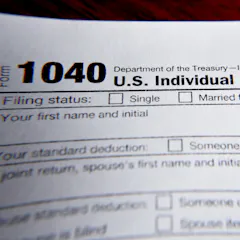
A country’s tax policies say a lot about what it values – and some of America’s tend to promote inequality.

If tax seasons is stressing you out, a look at the worst things that could happen to you if you mess up – and why they’re so unlikely – may help.

The Fed abruptly ended two years of aggressive interest rate hikes, signaling the longest economic expansion on record may be coming to a close.

Real tax reform is about more than cutting taxes to woo voters. It’s about making the system fairer.

Social Security will have to dip into its trust fund to pay benefits this year for the first time since 1982. Should we be worried?

Income inequality, the most common way to measure the gap between the rich and the poor, only tells part of the story. Wealth inequality tells the rest.
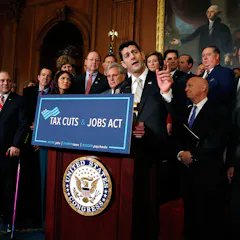
Unlike other age groups, 16- to 24-year-olds haven’t recovered the job losses they suffered during the Great Recession. Spurring investment and growth are key to getting them back to work.

Republicans were able to push through a tax plan and a flurry of judicial nominees after the Senate curtailed use of the filibuster. It’s time to go all the way.
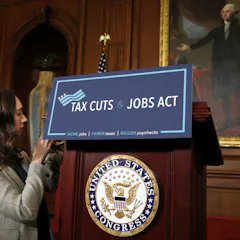
If Americans become less healthy and have less access to health care, then everyone loses.
Top contributors
-

Professor of Economics, University of Notre Dame
-
Professor of Law, University of Pittsburgh
-
Associate Professor of Accounting, Boston College
-
Director of the Center for Human Resource Research, The Ohio State University
-
Professor of Public Policy and Public Affairs, UMass Boston
-
Associate Professor of Business, Boston University
-
Professor of Law, Boston College
-
Associate Professor of Educational Foundations and Leadership, University of Louisiana at Lafayette
-
Assistant Professor of Political Science, Middlebury College
-
Associate Professor of Finance and Business Economics, University of Washington
-
Associate Professor of Public Policy, University of Michigan
-
Associate Professor of Public Policy, University of Michigan
-
Director, Center for Tax and Budget Policy at the Baker Institute, Rice University
-
Research Associate of Philanthropy, Indiana University
-
Professor of Economics and Philanthropic Studies; Associate Dean for Research and International Programs, Lilly Family School of Philanthropy, Indiana University