
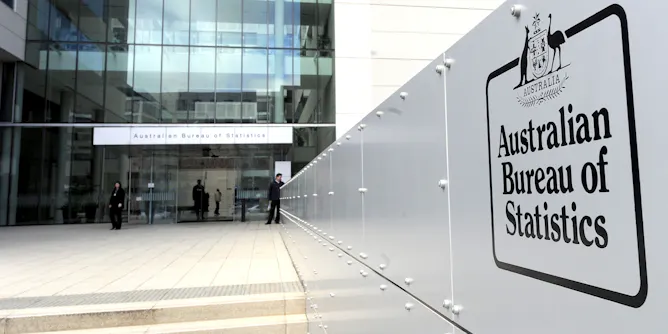
The 2016 Census reveals that Australia is becoming much more diverse – in terms of language, country of birth, Indigenous status, and religion.
Articles on Census
Displaying 101 - 120 of 133 articles
John Thompson was more than just another Washington bean counter. His resignation may affect which party controls Congress after 2020.

Today’s release of data from the 2016 Census allows us to identify some of Australians’ more common characteristics, how they vary across states and territories, and how they are changing over time.

The Australian Census has been taken since 1911. But is it still necessary in today’s world of mass digital data collection?

From the discovery of gravitational waves, to the Pokémon Go phenomenon to the Census debacle, it’s been a big year in science and technology.
How can we possibly know how many millions of people are living in the U.S. illegally? Demographers have actually refined a simple formula that’s worked pretty well since the 1970s.

Dallas Rogers speaks with Alanna Kamp on how racism and sexism has excluded lives and experiences of Chinese-Australian women from our historical record.
The report not only reveals soaring incomes and falling poverty, it also confirms the gender pay gap has shrunk to a new record low.

The evidence the Census servers suffered a DDoS attack is weak. A simpler explanation is that they buckled under load of Australians filling out their Census forms as asked.

Even without a DDoS attack, the 2016 Census may have failed due to the ABS making a rudimentary statistical error.
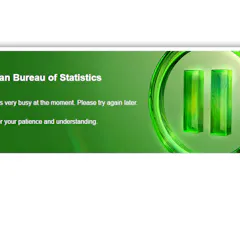
Despite assuring Australians its systems were load tested and secure, the Census site went offline at a crucial time. Could the ABS have avoided such an embarrasing failure?

Senate crossbencher Nick Xenophon will defy the requirement to provide his name when he fills out Tuesday’s census.

Census data have a real impact on the lives of Australians, from determining political representation through the distribution of electorates, to the allocation of government funding.

Women may be happy in roles that are associated with gender stereotypes but the gender pay gap persists and women certainly aren’t happy with that.

Reliable data about the homeless population is vital when developing policy, allocating funding and developing services for vulnerable people. But first the census needs to find them.
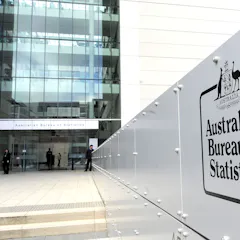
Privacy fears over longer retention of names and addresses in Census 2016 are understandable, but are also misinformed and exaggerated.

By linking censuses through time or by combining other information with the census, many more important policy questions can be answered than if we used one dataset alone.

Church affiliation and attendance is on the wane in Australia – a trend that is unlikely to be reversed be the recent slew of sex abuse scandals.

Analyzing big data sets holds the promise of big insights. But the axiom “garbage in, garbage out” is particularly apt, since conclusions can be only as good as the raw data itself.

Before Australia proceeds with plans to devote fewer resources to a less frequent national census, we should consider the Canadian experience of what losing such rich data means.
Top contributors
-

Professor of Economics and Public Policy, ANU College of Arts and Social Sciences, Australian National University
-
Demographer, POLIS Centre for Social Policy Research, Australian National University
-
Professor of Sociology, Eastern Michigan University
-
Professor of Demography and Social Statistics., Obafemi Awolowo University
-
Distinguished Professor of Sociology and Demography, Penn State
-
WorldPop Director, Professor of Spatial Demography and Epidemiology, University of Southampton
-
Associate Professor of Business, Boston University
-
Director of Carolina Demography, University of North Carolina at Chapel Hill
-
Assistant Professor of Asian Pacific American Studies, Arizona State University
-
Professor Emeritus of Law and Adjunct Professor of Political Science, Case Western Reserve University
-
Associate Professor, School of Law, University of Canberra
-
ARC DECRA Fellow, Australian National University
-
Adjunct Professor of Mathematics, Prince George's Community College
-
Professorial Fellow, University of Canberra
-
Professor of Sociology, Texas A&M University