
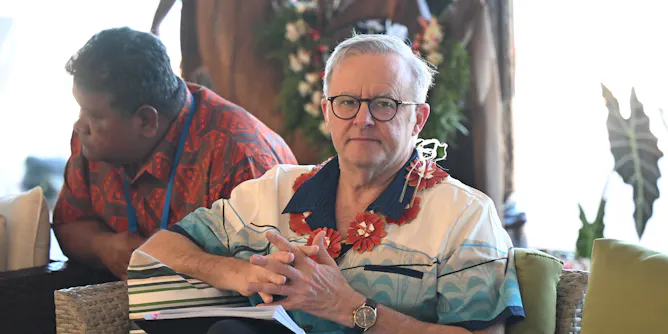
The about-faces comes after outrage from LBGTQI groups, some Labor MPs and members of the public.
Articles on Census
Displaying 21 - 40 of 133 articles

While the traditional two-parent two-child family might be the first to spring to mind, Australia’s families are varied. Policy should cater accordingly.
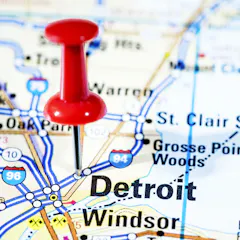
Detroit is one of the country’s most segregated regions, but census data shows how that’s changing in both the city and suburbs.
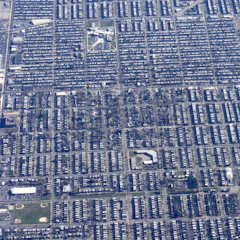
An interdisciplinary group of researchers at Penn State ran computer models on two Philadelphia census tracts. The neighborhood with more vulnerable residents was also hotter.

The ABS is exploring whether and how to ask questions on gender, sexual orientation, and variations of sex characteristics.
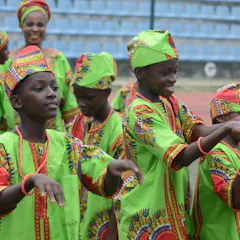
With the right investment in health and education, Nigeria’s high population can spur economic development.

Ghana’s implementation of key population policies has not been consistent.

In the last Census, 33,148 Australians identified with a nature religion, or Paganism. Who are the Pagans – and what do they do and believe?

There are many benefits to being bilingual.

Countries across the Americas are tweaking their census to better understand their population, allowing them to create more responsive policies. The US still has a ways to go.

A lack of data prevents governments and agri-food organizations from knowing what kinds of supports should be provided to reinvigorate Indigenous agricultural economies.

The share of homes owner-occupied has slipped only two percentage points since 1996, but the proportion owned outright has slid from 42% to 31%.
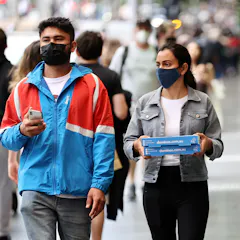
More than half of us are either born overseas or have a parent who was born overseas.
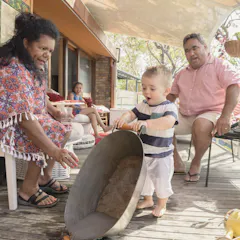
The census includes an increase in the number of people who identify as Aboriginal and Torres Strait Islander, but it lacks details about other ways they may identity and how they live.

We must redress the challenges of unpaid domestic work and the mental load on women’s physical, mental and economic health and well-being.

An ongoing shift in Australia’s religious demographics is playing out in our laws. Perhaps the most obvious example is marriage equality.
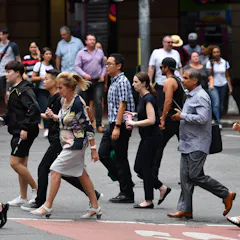
Universal schemes aimed at classifying populations by ‘race’ or ‘ethnicity’ can force us into a game of competing for better positions within a racial hierarchy.
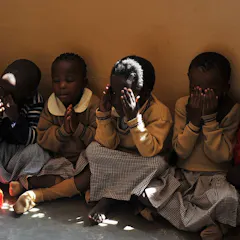
Statistics on religious affiliation in Africa are often questionable - partly because of religion’s link to ethnicity and politics.
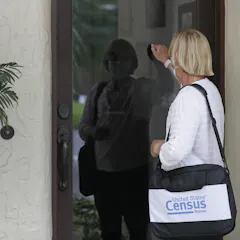
When the Census Bureau’s count of the population is inaccurate, it affects representation and government spending. Correcting errors isn’t always allowed.
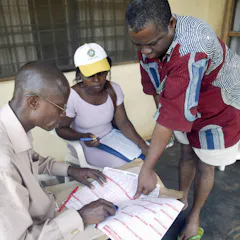
Census is a huge scientific responsibility that requires a high level of preparedness, transparency and quality assurance.
Top contributors
-

Professor of Economics and Public Policy, ANU College of Arts and Social Sciences, Australian National University
-
Demographer, POLIS Centre for Social Policy Research, Australian National University
-
Professor of Sociology, Eastern Michigan University
-
Professor of Demography and Social Statistics., Obafemi Awolowo University
-
Distinguished Professor of Sociology and Demography, Penn State
-
WorldPop Director, Professor of Spatial Demography and Epidemiology, University of Southampton
-
Associate Professor of Business, Boston University
-
Director of Carolina Demography, University of North Carolina at Chapel Hill
-
Assistant Professor of Asian Pacific American Studies, Arizona State University
-
Professor Emeritus of Law and Adjunct Professor of Political Science, Case Western Reserve University
-
Associate Professor, School of Law, University of Canberra
-
ARC DECRA Fellow, Australian National University
-
Adjunct Professor of Mathematics, Prince George's Community College
-
Professorial Fellow, University of Canberra
-
Professor of Sociology, Texas A&M University