

Disasters such as hurricanes Helene and Milton often hit low-income and other disadvantaged groups hardest. 2 policy experts suggest ways long-term aid could help.
Articles on US Census Bureau
Displaying 1 - 20 of 39 articles

Comparing states’ populations on a range of demographic and socioeconomic data reveals similarities and differences across the nation.

Eliminating poverty has not been a major campaign issue during the 2024 presidential campaign.

Census data and research show all things are not equal in disaster displacement, as two experts in disaster recovery explain.

Many years beyond the average American retirement age, politicians vie for power and influence. Their constituents tend to prefer they step back and pass the torch to younger people.
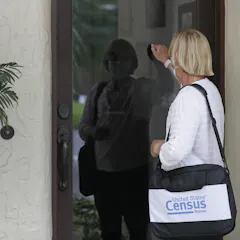
When the Census Bureau’s count of the population is inaccurate, it affects representation and government spending. Correcting errors isn’t always allowed.

Access to voting materials in a citizen’s native language helps boost involvement and voter turnout.
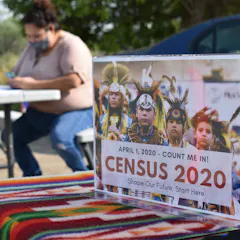
They’re called ‘pretendians’ – people who long identified as white but are now claiming to be Native American. In the last US Census, the number of Native Americans almost doubled because of them.

As the country grew, each census required greater effort than the last. That problem led to the invention of the punched card – and the birth of an industry.

U.S. opportunity zones can positively impact real estate development and help local communities. But to fully realize the program’s potential, it needs reform.
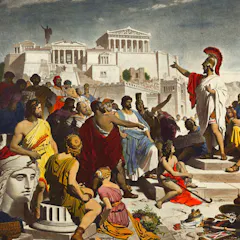
To overhaul an election redistricting process tainted by gerrymandering, Michigan has adopted a governance mechanism prominent 2,500 years ago in ancient Athens, the birthplace of democracy.

The census will likely count fewer Black Americans, Indigenous peoples, Asian Americans and Americans of Hispanic or Latino origin than there actually are.
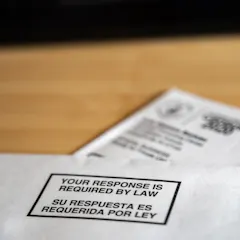
Emily Klancher Merchant, a historian of science and technology at the University of California at Davis, shares some of the most interesting stories behind the 2020 census questionnaire
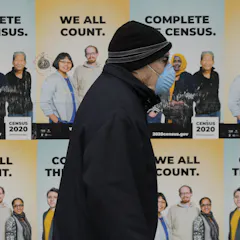
African Americans, young children and rural Americans are a few of the groups at risk of being undercounted in this year’s census.

It’s important to strike a balance between protecting Americans’ privacy and having accurate statistics for governments and businesses to make data-based decisions.

Countries have been trying to count their populations since the Han dynasty in China.
The 2020 census will now count some groups differently than it has in the past. That could make a difference in the final count – affecting which states receive funding and congressional seats.
A quarter of Americans, many of them non-white, are worried about data privacy and confidentiality in the 2020 census.

Collecting census data online creates new risks to the accuracy and integrity of the information. Here’s what to be aware of.
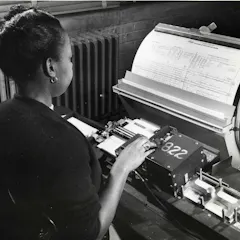
As the country grew, each census required greater effort than the last. That problem led to the invention of the punched card.
Top contributors
-

Distinguished Professor of Sociology and Demography, Penn State
-
Adjunct Professor of Mathematics, Prince George's Community College
-
Professor Emeritus of Law and Adjunct Professor of Political Science, Case Western Reserve University
-
Assistant Professor of Asian Pacific American Studies, Arizona State University
-
Professor of Sociology, Columbia University
-
Associate Professor of Geography, University of Tennessee
-
Assistant Professor, HEC Montréal
-
Associate Professor of Business, Boston University
-
PhD Candidate in Management, Massachusetts Institute of Technology (MIT)
-
Professor of Economics, Fordham University
-
Research Associate, Idaho Policy Institute, Boise State University
-
Director and Co-founder, Institute for the Study of "Race" & Social Justice and Professor of Sociology, University of New Mexico
-
Postdoctoral fellow, University of Washington
-
Adjunct Professor of Politics and Director of Think Again, University of Virginia
-
Part-Time Professor of Economics, The New School