

Switching web service providers and providing almost $40 million from the federal budget means the census 2021 website should be safe from crashing at the crucial time this evening.
Articles on Census 2016
Displaying 1 - 20 of 35 articles
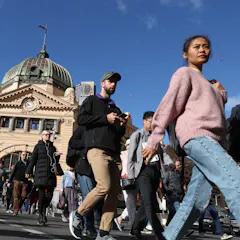
Census 2021 is no ordinary population survey – it will lay the foundation for Australia’s post-pandemic future.
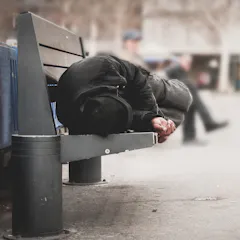
The last decade has seen a big increase in Australia’s homeless and prison population. It’s time for smarter intervention.
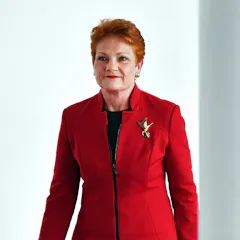
Senator Pauline Hanson raised concerns about immigration and social cohesion, saying ‘more than a million people’ in Australia ‘cannot speak English well or at all’. Let’s look at the numbers.
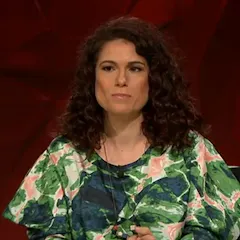
On Q&A, social researcher and author Rebecca Huntley said “about 30%” of homeless people have a job. Is that right?

On Q&A, Australian Chamber of Commerce and Industry chief executive James Pearson said almost 60% of small business owners in Australia are paid $50,000 or less. Is that right?

The latest census data reveals valuable insights into Closing the Gap targets. While there’s some improvement in school attendance rates, all other indicators suggest a radical rethink is required.
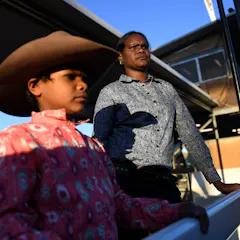
Looking past the headline Census figures, we see divergences between rural and urban Indigenous populations, and the young and old.

The latest census data confirm it’s become more difficult for New Zealanders living in Australia to become citizens.
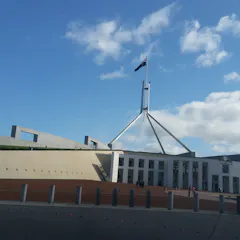
In a nation labelled secular, many of our elected representatives have strong religious ties, and this affects they way they the country is run.

The two major sources of data show conflicting trends on income inequality.

Do Muslim couples in Australia have ‘on average 4.5 children’ while other couples have ‘1.5 children’? Could Australia have a ‘Muslim majority’ in ‘a couple’ of generations? Let’s check the evidence.

A tax on empty homes will make a modest difference to housing affordability. The sheer wastefulness of our housing system calls for something much more ambitious.

The census needs to count people who identify as having a disability, as well as those who require government support.
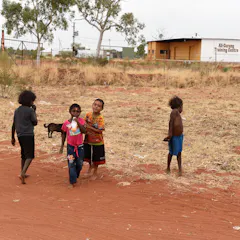
The census mostly delivered a good news story on Indigenous Australian outcomes, but it is unclear to what extent this correlates to improved lives for Indigenous families.
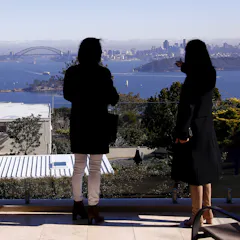
The latest 2016 Census data assesses what the national home ownership and rental rates are and how these vary location. It also gives us a picture of mortgage and rental costs.

There has been a decrease in the proportion of Australians who are married, and an increase in co-habitation of both heterosexual and same-sex relationships.
The changing pattern of the diversity of religious identities is one indicator of a society’s degree of multicultural composition. On this measure, Australia is among the most diverse.
The 2016 Census reveals that Australia is becoming much more diverse – in terms of language, country of birth, Indigenous status, and religion.
Today’s release of data from the 2016 Census allows us to identify some of Australians’ more common characteristics, how they vary across states and territories, and how they are changing over time.
Top contributors
-

Professor of Economics and Public Policy, ANU College of Arts and Social Sciences, Australian National University
-
Professorial Fellow, University of Canberra
-
Demographer, POLIS Centre for Social Policy Research, Australian National University
-
ARC DECRA Fellow, Australian National University
-
Associate Professor, POLIS@ANU Centre for Social Policy Research, Australian National University
-
Associate Dean (Research Training), College of Arts and Social Sciences, Australian National University
-
Deputy Director and Associate Professor, Centre of Policy Studies, Victoria University
-
Adjunct Lecturer, School of Arts and Humanities, Edith Cowan University
-
Professor, School of Demography, Australian National University
-
Research Associate, Te Kawa a Māui - Māori Studies, Te Herenga Waka — Victoria University of Wellington
-
Distinguished Professor of Applied Linguistics, Macquarie University
-
Lecturer in Software Engineering, Monash University
-
Emeritus Professor of Housing Studies, Centre for Urban Transitions, Swinburne University of Technology
-
Senior Research Fellow, Housing, Homelessness & Urban Studies (HHAUS) research group, Swinburne University of Technology
-
Emeritus Professor of Economics (Griffith University) and Teaching Associate (University of Queensland), Griffith University