

The destruction of war graves in Gaza has rightly received global attention. But this isn’t the first time Commonwealth war dead have been dragged into conflicts.
Articles on Cemeteries
Displaying all articles
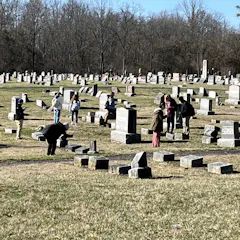
Cemeteries are a treasure trove of local history and family connection. Technology and ingenuity have made mapping them easier.
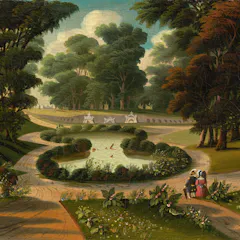
Many plants and flowers have symbolic meanings, and their presence on a grave may reflect something unique about the deceased.
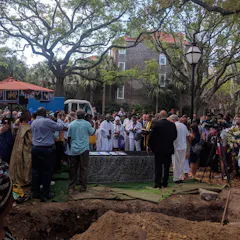
The movement to protect the long-obscured sites allows communities to reckon with painful histories through healing, remembrance and ancestral connection.

A ritual and funerary landscape is emerging in northwestern Africa, revealing connections with the Mediterranean, Atlantic and the Saharan regions.
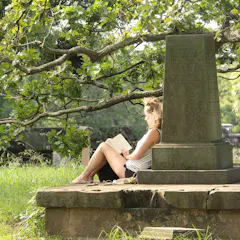
There are thousands of disused graveyards that could provide crowded cities with essential public green space.
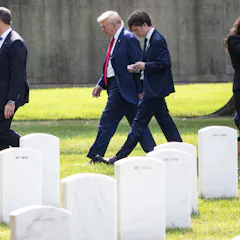
Cemeteries can set their own rules, and Arlington’s are the most restrictive in the nation, meant to protect what it calls ‘our nation’s most sacred shrine.’
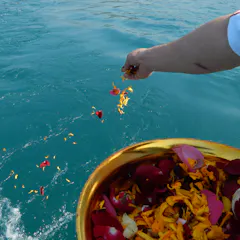
Next-of-kin often feel pressured to make hasty funeral arrangements. Most contact a funeral director and tee up a conventional service plus burial or cremation. But what are the other options?
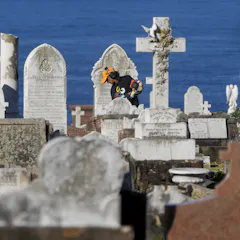
The communities of Australia’s biggest cities could soon face the prospect of having nowhere to bury their loved ones. Four key changes are needed to avert the crisis.
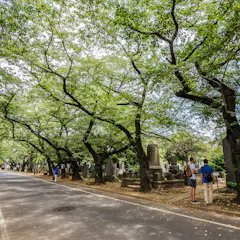
In a Japanese tree burial, cremated remains are placed in the ground and a tree is planted over the ashes to mark the gravesite. Environmental responsibility is part of Buddhism.
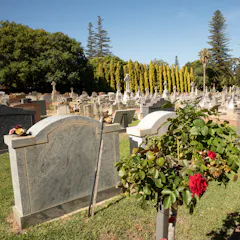
City cemeteries are fast running out of space, so researchers surveyed Australians and found many were quite open to the alternatives to traditional burials.
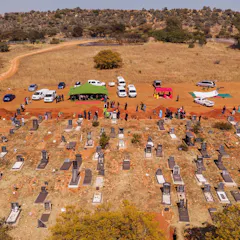
Municipalities are now forced to identify new cemetery planning methods and models that are environmentally sensitive and consistent with diverse cultural practices, and facilitate social cohesion.

Bacteria and other toxic biological waste arising from decomposing bodies can contaminate water sources, representing a public health concern.
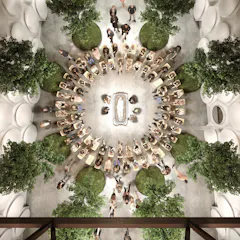
Composting burial could revolutionise bodily disposal in Australia. The need for a sustainable and affordable alternative to traditional burial practices is becoming increasingly urgent.

Migrant communities believed having a physical resting place gave them a sense of settlement in Australia.
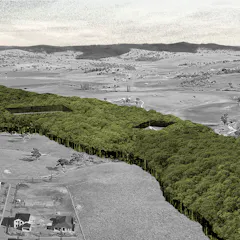
With space in our cemeteries running out, we could bury the dead in new forest developments that would bring green space to our urban areas.
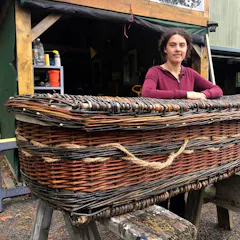
Although ‘Game of Thrones’ -style funeral pyres are still out of bounds, Americans are increasingly turning to cheaper, greener and more meaningful ways to dispose of their loved ones’ bodies.
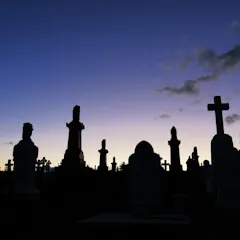
Most big city cemeteries in Australia date back to the 1800s, so we need to consider our burial options before we reach the point when the number of deaths exceeds the available cemetery plots.
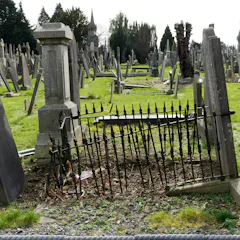
Headstones at the Dudley Park cemetery in Payneham, South Australia, were recently bulldozed as part of the ongoing “recycling” of more than 400 graves. Some people were shocked to realise that gravesites…
Top contributors
-

Research Fellow, Social And Political Sciences, The University of Melbourne
-
Professor of Law, Wake Forest University
-
Professor of Archaeology, Flinders University
-
Associate professor, University of KwaZulu-Natal
-
Assistant Professor in Philosophy and Religious Studies, Texas State University
-
University of Tasmania
-
Researcher, UNSW
-
Lecturer, T.C. Beirne School of Law, The University of Queensland
-
Professor, School of Humanities, Languages and Social Science, Griffith University
-
Research Fellow, Computing and Information Systems, The University of Melbourne
-
Honorary Professor of Accounting, University of Wollongong
-
Lecturer in Planning, University of the Witwatersrand
-
Associate, School of Architecture, University of Technology Sydney
-
Senior Lecturer in Media & Communications Studies, The University of Melbourne
-
Associate Professor, School of Built Environment, UNSW