
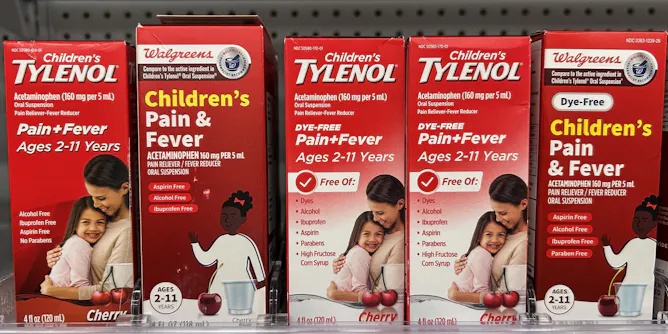
Trump’s definitive statements that Tylenol use during pregnancy causes autism suggest certainty that the science does not support.
Articles on Causation
Displaying all articles

Chocaholic nations win more Nobel Prizes, but that doesn’t mean much. It’s easy to link two things – the hard part is working out which one causes the other.

People don’t randomly select who they have children with. And that means an underlying assumption in research that tries to link particular genes to certain diseases or traits is wrong.

How can something be bad for you one day, and good for you the next? This study highlights the problem of correlation and causation.

Diversity can lead organisations to perform better. But new research shows that isn’t automatic.

Whenever you hear about a new bit of science news, these suggestions will help you assess whether it’s more fact or fiction.
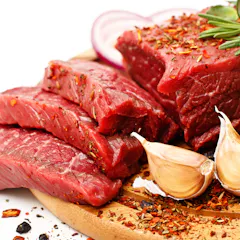
New research claiming that people do not need to reduce their consumption of red and processed meat says more about the conduct and evaluation of research than it does about beef.

Depression is a serious, common and sometimes debilitating condition. And no, chocolate won’t help, whatever the headlines tell you.

Shrewd media consumers think about these three statistical pitfalls that can be the difference between a world-changing announcement and misleading hype.

Successful policy interventions, especially those in the social realm influenced by the vagaries of human behaviour, don’t seem to travel well.

Here are some all-too-common errors when it comes to interpreting statistics, and how to avoid them.

Understanding why time seems to speed up under certain conditions could reveal when we really feel responsible for our actions.

UNDERSTANDING RESEARCH: What do we actually mean by research and how does it help inform our understanding of things? Today we look at the dangers of making a link between unrelated results. Here’s an…
Top contributors
-

Associate Professor, Epidemiology, Deakin University
-
African Centre for Epistemology and Philosophy of Science (ACEPS), Philosophy Department, University of Johannesburg
-
Associate Professor, The University of Queensland
-
Laureate Professor of Mathematics, University of Newcastle
-
Professor of the Practice of Data Science, Washington University in St. Louis
-
Professor of Social Psychology, The University of Queensland
-
PhD Candidate, School of Mathematical and Physical Sciences, University of Newcastle
-
Professor of Health Sciences, Simon Fraser University
-
Associate Professor, Nutrition and Dietetics, Griffith University
-
Professor of Chemistry, Connecticut College
-
Postdoctoral Researcher in Statistical Genetics, University of California, Los Angeles
-
Professor of Neurology and Human Genetics, University of California, Los Angeles
-
Senior Visiting Fellow, School of Medical Sciences, UNSW
-
Scientia Professor of Economics, UNSW
-
Lecturer, Ulster University