

Global efforts to cut emissions fall well short of what’s needed to avoid dangerous warming. It’s becoming essential to develop carbon-removal strategies to get to net zero.
Articles on Carbon offsets
Displaying 21 - 40 of 91 articles

We need to urgently reform the way forest conservation is measured and sold as a way to offset emissions.
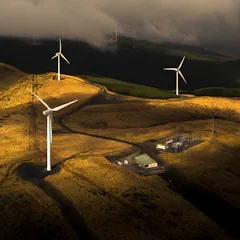
The BlackRock climate fund is a start, but New Zealand needs a comprehensive approach to tackling its various environmental and economic vulnerabilities to the climate crisis.

Most of the carbon disturbed by trawls is unreactive and difficult to convert to CO₂.

Most technologies for CO₂ removal are expensive. But New Zealand could be doing this cheaper than other countries, taking advantage of existing geothermal and forestry industries.
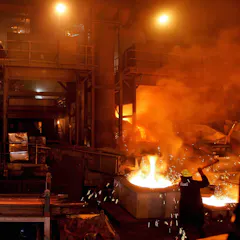
The revised safeguard mechanism could form the basis of an economy-wide carbon price.
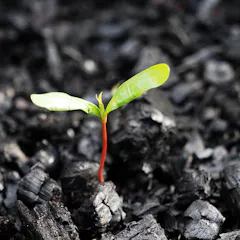
Labor must resist the false promise of carbon offsets in its safeguard mechanism. The only thing that matters is actually cutting emissions

Labor has ruled out banning new fossil fuel developments. Even so, there are many climate deals the government and the Greens could strike
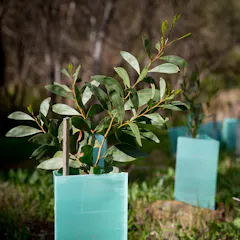
Offering ‘carrots’ like biodiversity credits to landholders won’t stop natural collapse. Banning land clearing and stronger environmental laws are much more likely to work.

Airlines are investing in sustainable biofuel startups and starting to uses alternative fuels, including cooking oil, ag waste and corn ethanol. But biofuels alone won’t be enough, research shows.
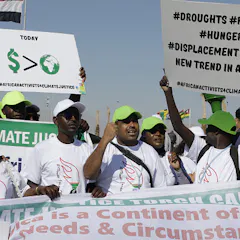
Kenya, Malawi, Gabon, Nigeria and Togo are already interested in scaling carbon credit production.
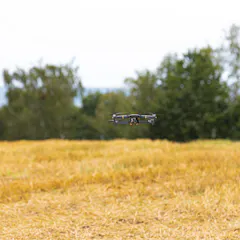
Digital technologies have the potential to yield positive results, if co-developed and used ethically with Indigenous communities.
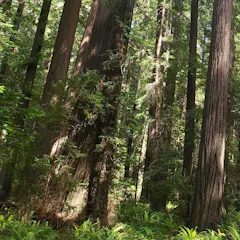
Millions of dollars have gone into California’s forest carbon offset program – with little new carbon storage to show for it, a new study suggests.

Offsetting carbon emissions sounds great. In practice, it’s often used to maintain the high-emissions status quo.
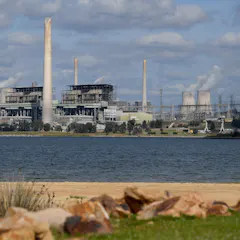
The safeguard mechanism is supposed to stop Australia’s largest polluters from emitting over a certain threshold. It’s been widely criticised for lacking teeth, and is finally under review.
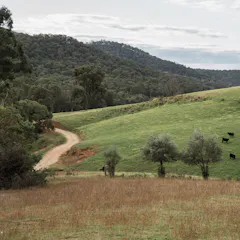
Biodiversity market schemes can help – but they are not a silver bullet, and can be gamed if poorly designed.
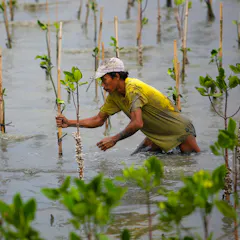
‘Blue carbon’ habitats can store a lot of carbon – but not reliably enough to offset emissions.
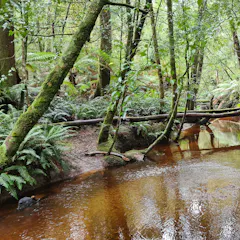
New research finds nature restoration only marginally lowers global warming. This pours cold water on the idea of using carbon offsets to solve the climate crisis.
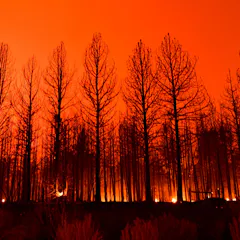
More carbon dioxide in the air doesn’t necessarily mean more growth for trees, and the increasing risk of wildfires and drought has major consequences, as an interactive map shows.
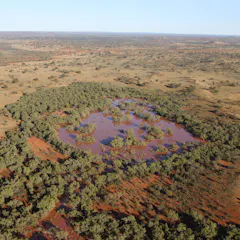
After 25 years of carbon market experiments, it’s clear climate policy should not rely on offsets.
Top contributors
-

Professor, Crawford School of Public Policy and Director, Centre for Climate and Energy Policy, Australian National University
-
Senior Research Fellow, School of Geography, Earth and Atmospheric Sciences, The University of Melbourne
-
Professor and Director of Research, ANU Law School, Australian National University
-
Honorary Professorial Fellow, The University of Melbourne
-
Senior lecturer, Australian National University
-
Professor of Global Change, Queensland University of Technology
-
Faculty of Law, The University of Western Australia
-
Professor of Sustainability Governance, University of Technology Sydney
-
Professor of Sustainable Tourism, Griffith Institute for Tourism, Griffith University
-
Associate Professor, The University of Western Australia
-
Adjunct Professor of Energy, Murdoch University
-
Head of Policy and Partnerships, University of Oxford
-
James Martin Fellow, Oxford Martin School, Environmental Change Institute and Institute for Science Innovation and Society, University of Oxford
-
Foundation Professor of Horticulture and Viticulture, The University of Melbourne
-
Lecturer in Philosophy, University of Reading