
To cut emissions fast, the Australian government will have to dial back its command-and-control approach – and put a price on carbon.
Articles on Carbon budget
Displaying 1 - 20 of 50 articles
The UK’s official climate adviser has published its seventh climate budget, with a plan to reduce emissions up to 2042.
Numbers of cows and sheep will have to fall by a third, with their farms replaced by huge areas of new woodland.
This week, nations are hashing out new goals for climate finance at the COP29 talks. Loss and damage is finally on the agenda – but the chance of major new funding is low
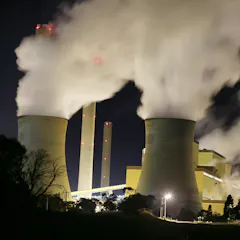
The Coalition’s pledge to build seven nuclear reactors poses serious questions about whether this nation can meet its international climate obligations.
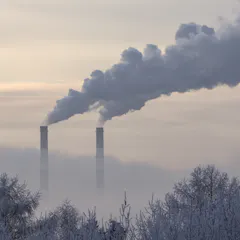
For a two-in-three chance of staying within 1.5°C, the budget shrinks to one-and-a-half years.

30 of the 50 economists surveyed want a carbon price of the kind introduced by Julia Gillard in 2012 and abolished by Tony Abbott in 2014. Several say there’s little “time left to act seriously”.
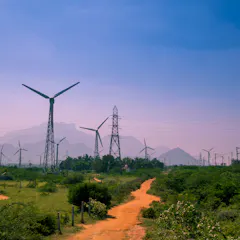
Our carbon budget is shrinking fast. We crunched the data to find pathways for G20 nations to act faster
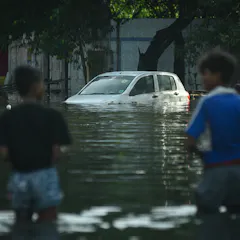
Climate models embed colonial attitudes and massive inequality.
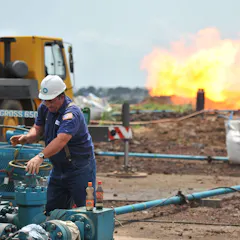
Developed nations threaten to consume more than their fair share of Earth’s dwindling carbon budget.
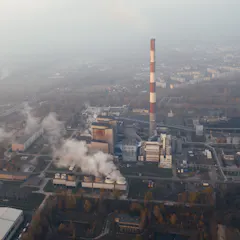
At current levels of emissions, there is a 50% chance the planet will reach the 1.5°C global average temperature rise in just nine years.

England’s housing strategy will consume our entire carbon budget by 2050 – there are alternatives, but they face political and economic barriers.

The environmental footprint of the fashion industry is rising rapidly. Drastic changes are needed to make the sector more sustainable and equitable.

The clock tracks global emissions and temperature data, and uses the most recent five-year emissions trend to estimate how much time is left until global warming reaches the 1.5 C threshold.

Most concerning is the long-term upward trends of CO₂ emissions form burning fossil fuels, which are far from trending towards net-zero by 2050.
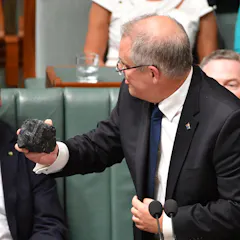
Prime Minister Scott Morrison is poised to announce Australia will adopt a target of net-zero greenhouse gas emissions by 2050. But it’s too little, too late.
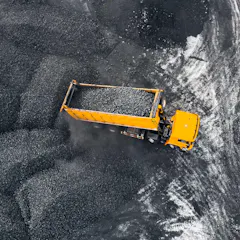
Our new study reveals how tight the world’s remaining carbon budget is.
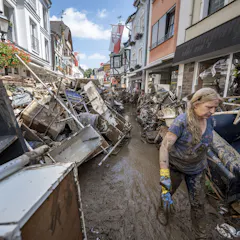
What might sound like small changes – temperatures another tenth of a degree warmer, sea level a few centimeters higher – have big consequences for the world around us.
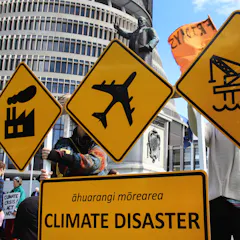
Consider Ireland. Like New Zealand, it has high agricultural emissions and a poor climate track record so far, but it has adopted much stronger targets to cut emissions by 51% between 2018 and 2030.
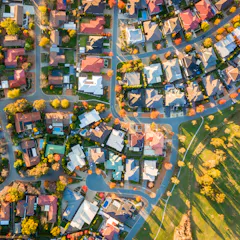
New research indicates that people in urban areas, on average, have the smallest carbon footprints, and those living in the suburbs the highest.
Top contributors
-

Professor and Climate Scientist, Department of Geography, Planning and Environment, Concordia University
-
Senior Researcher, Center for International Climate and Environment Research - Oslo
-
Emeritus Professor, Fenner School of Environment & Society, Australian National University
-
Chief Research Scientist, CSIRO Environment; Executive Director, Global Carbon Project, CSIRO
-
Chair, Mathematical Modelling of Climate, University of Exeter
-
Professor, Department of Earth System Science, and Chair of the Global Carbon Project, Stanford University
-
Senior Research Fellow, School of Geography, Earth and Atmospheric Sciences, The University of Melbourne
-
Prof. Dr. | Research Director, Institute for Sustainable Futures, University of Technology Sydney
-
Royal Society Research Professor of Climate Change Science, University of East Anglia
-
Senior Researcher, Center for International Climate and Environment Research - Oslo
-
Researcher in Climate Mitigation, University of Leeds
-
Research Fellow, Centre for the Understanding of Sustainable Prosperity, University of Surrey
-
Analyst, Climateworks Centre
-
Chair of ARC Centre of Excellence for Quantum Biotechnology, The University of Queensland
-
Lecturer, University of York