
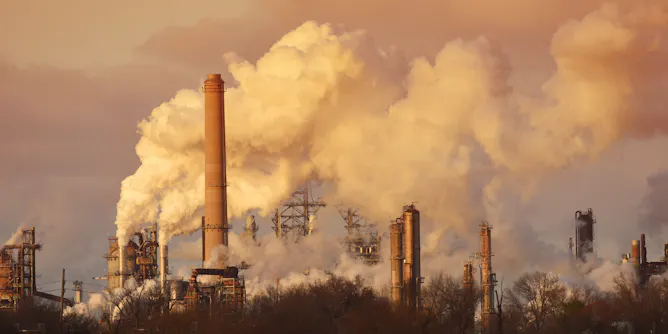
As world leaders gather at COP29 to consider reducing emissions, the latest global carbon budget shows CO₂ emissions from fossil fuels are still going up, not down, despite some promising signs.
Articles on Global Carbon Budget
Displaying 1 - 20 of 21 articles
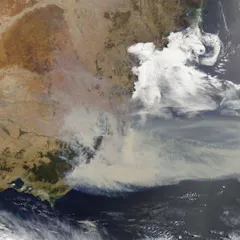
The most comprehensive Australian carbon budget assessment completed to date shows the nation flip-flops from source to sink of carbon emissions, depending on the prevailing conditions.
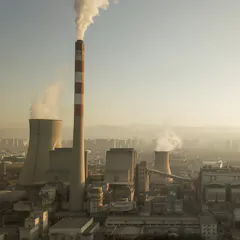
Record emissions are fast shrinking the remaining amount of carbon dioxide we can emit if we are to limit global warming. At current rates, we’ll use up the budget for a 1.5°C outcome in seven years.
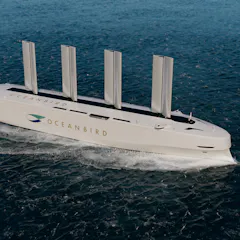
A growing source of global emissions is the ships that carry most of the goods we consume. A 21st-century generation of cargo ships propelled by the wind can reverse this unsustainable trend.
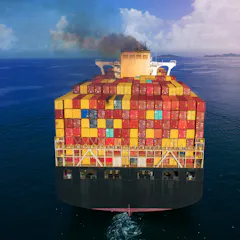
A lack of clarity over certain issues risks preventing the shipping industry’s energy transition from taking off.
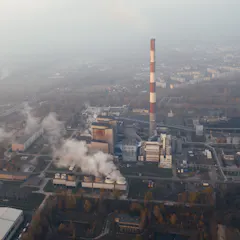
At current levels of emissions, there is a 50% chance the planet will reach the 1.5°C global average temperature rise in just nine years.

The clock tracks global emissions and temperature data, and uses the most recent five-year emissions trend to estimate how much time is left until global warming reaches the 1.5 C threshold.

Most concerning is the long-term upward trends of CO₂ emissions form burning fossil fuels, which are far from trending towards net-zero by 2050.
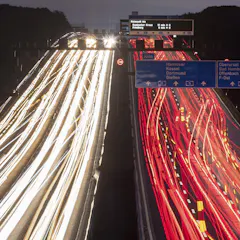
Several countries have made pledges to reduce their greenhouse gas emissions to zero by mid-century. But new research finds the remaining carbon budget will be depleted before we get there.
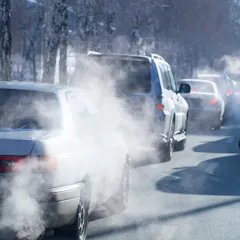
The pandemic, along with other recent trends such as the shift towards clean energy, have placed us at a crossroad: the choices we make today can change the course of global emissions.
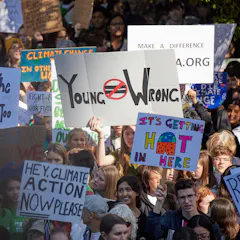
In dismissing the youth climate case, the court acknowledged that climate change is serious, but not serious enough to reconsider the reach of the constitution.
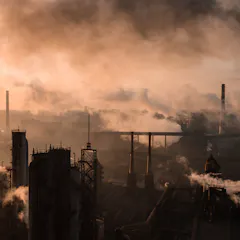
‘Carbon sinks’ like forests and the soil have already been factored into the carbon budget – they should not be double-counted.
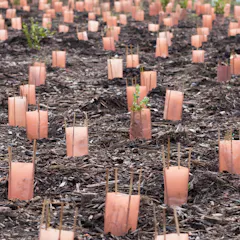
If agricultural land was used to grow crops, it would limit methane emissions from livestock, but not store a substantial amount of carbon. Growing trees is what makes the difference.
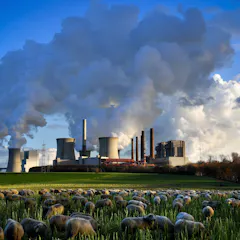
Carbon emissions will hit a record high for the second year in a row, but there is a small silver lining: the rate of emissions growth has slowed dramatically.
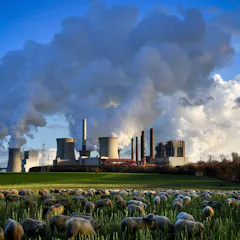
Reducing emissions doesn’t have to conflict with a growing economy, as these 18 developed nations show.
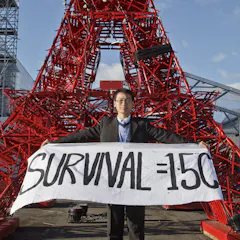
We are on track to reach 1.5°C of global warming within 16 years according to new data.

You could take the bus to work, or eat less meat. But how do you know if your efforts are making a difference? A new approach aims to break global environmental budgets down into digestible chunks.
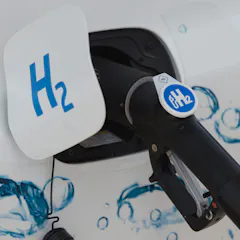
The latest UN climate report makes it clear that the task of limiting climate change is urgent and huge. We must start to transform our economy today, but it will bring rewards as well as challenges.
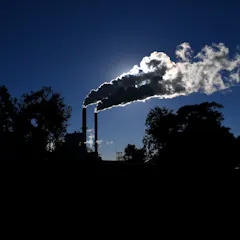
The world needs to be carbon-neutral by mid-century to give ourselves a chance of holding global warming to 1.5C. With around 1% of the global carbon budget, Australia needs to rapidly do its share.
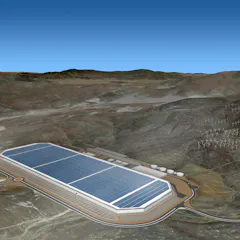
Will the renewable energy transition end up creating yet more greenhouse emissions, as we ramp up the manufacture of wind turbines and solar cells? Not if their manufacture is itself powered by renewables.
Top contributors
-

Senior Researcher, Center for International Climate and Environment Research - Oslo
-
Chief Research Scientist, CSIRO Environment; Executive Director, Global Carbon Project, CSIRO
-
Royal Society Research Professor of Climate Change Science, University of East Anglia
-
Senior Researcher, Center for International Climate and Environment Research - Oslo
-
Professor, Department of Earth System Science, and Chair of the Global Carbon Project, Stanford University
-
Chair, Mathematical Modelling of Climate, University of Exeter
-
Helmholtz Young Investigator group leader and deputy head, Marine Biogeosciences section at the Alfred Wegener Institute, Universität Bremen
-
Directeur de recherche au Laboratoire des science du climat et de l’environnement, Institut Pierre-Simon Laplace, Commissariat à l’énergie atomique et aux énergies alternatives (CEA); Université Paris-Saclay; Université de Versailles Saint-Quentin-en-Yvelines (UVSQ) – Université Paris-Saclay; Académie des sciences
-
Professor and Climate Scientist, Department of Geography, Planning and Environment, Concordia University
-
Professor of Physical Geography and Land Use Systems, Department of Geography, Ludwig Maximilian University of Munich
-
Principal research scientist, CSIRO
-
Senior Lecturer in Culture & Climate, The University of Melbourne
-
Scientific Programmer and Data Analyst, CSIRO
-
Postdoctoral research fellow, ETH Zurich
-
Professor of Environmental Science, Auckland University of Technology