

And, as with antibiotics, their widespread use in agriculture is serious problem.
Articles on Candida auris
Displaying all articles

Some of the infections are showing an increased resistance to antibiotics.

Fungal infections can be among the hardest to treat, and since the pandemic began they’ve become only more common. To prevent future antifungal resistance, scientists have developed tiny molecular drills.

Multidrug-resistant fungal infections are an emerging global health threat. Figuring out how fungi evade treatments offers new avenues to counter resistance.
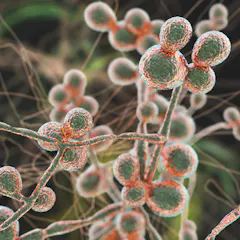
Candida auris is a relatively new addition to a family of fungi that can infect people. Most of these infections occur in sick, hospitalized patients and can be deadly.
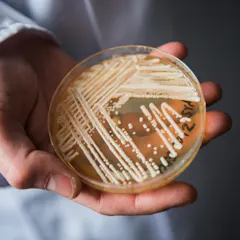
A drug-resistant fungus is a threat to human health.

While ‘The Last of Us’ is a dramatic projection of a deadly fungal outbreak, it is based, if not in reality, in logic. And it’s a reminder that fungal infections are growing more resistant.
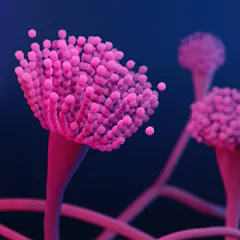
Mention fungi and most people think of eating mushrooms or yeasts in bread or beer. But fungi are now on the CDC’s list of public health threats as the number of deadly infections they cause rise.
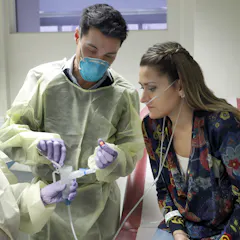
The CDC just released a list of bacteria and fungi that pose, or have the potential to pose, a serious health threat. Here are four strategies for curbing the rise of these superbugs.

Candida auris is a fungus which breeds most commonly in health-care settings. It’s cause for concern because it’s hard to detect, and is resistant to many anti-fungal drugs.
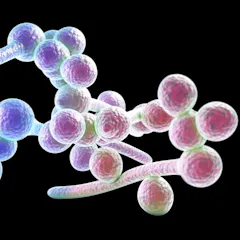
A deadly fungus called Candida auris, is among us and is now detected in more than 20 countries. It is resistant to many anti-fungal drugs. But a familiar fungus may reveal a solution.

Fungal diseases can be life-threatening for people living with HIV, cancer patients and those admitted to hospital.

The spread of a multidrug-resistant fungal infection is rapid and alarming.
Top contributors
-

Lecturer in Microbial Ecology, University of Bath
-
Head: Centre for Healthcare-Associated Infections, Antimicrobial Resistance and Mycoses, NICD, National Institute for Communicable Diseases
-
Professor, The Peter Doherty Institute for Infection and Immunity
-
Professor of Molecular Biology and Microbiology, Tufts University
-
Project officer, Department of Medicine and Radiology, The University of Melbourne
-
Postdoctoral Fellow in Microbiology, Rice University
-
Professor of Biochemistry and Biomedical Sciences, McMaster University
-
Associate Professor of Medicine and Director of Mycology, University of Pittsburgh
-
Professor of Infectious Disease, University of Wisconsin-Madison
-
Graduate Student in Chemistry, Rice University
-
Head, Department Infectious Diseases, Peter MacCallum Cancer Centre
-
Professor of Biological Sciences, University of Maryland, Baltimore County
-
Postdoctoral Fellow in Molecular Biology and Microbiology, Tufts University
-
Professor, Immunology and Immunotherapy, University of Birmingham
-
Research and Operations Manager, The National Centre for Infections in Cancer, Peter MacCallum Cancer Centre