

From Westminster Abbey to Mont St Michel, the Bayeux tapestry’s 33 buildings reveal its designer was familiar with monastic manuscripts and stonemasonry.
Articles on Built environment
Displaying 1 - 20 of 67 articles

Urban design depends heavily on human judgment and field-based understanding.
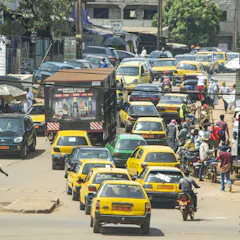
Every city is different but they can learn from each other.
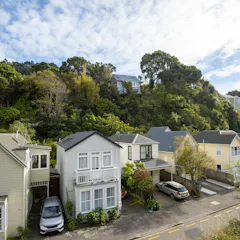
Mental health is not just connected to what’s inside our head. The environment around us can play a part – either supporting wellbeing or driving a decline.

A new Productivity Commission report finds regulations and costs are slowing Australia’s progress in becoming a circular economy.
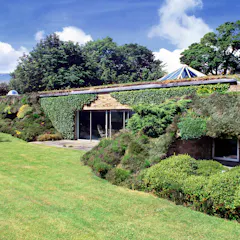
Architects around the world are developing designs that not only respond to their local climates and cultural contexts but also push the boundaries of sustainable design.

As summer temperatures rise, finding ways to build cities that don’t hold in the heat and can provide some cooling is increasingly important.

Weight stigma doesn’t have to be malicious or targeted directly at a person to cause harm. Fat microaggressions lead to poorer health, well-being and life outcomes among fat people.

Religious heritage in the UK faces a funding crisis. Both the buildings and those who worship in them need to be considered.
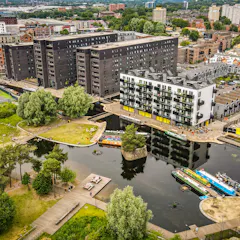
The UK government aims to enforce beauty through the planning system’s design codes. But intangible qualities like beauty are best achieved by challenging architects – not constraining them.
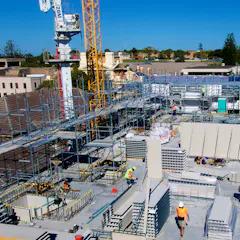
Our buildings and infrastructure can only become sustainable if the sector shares, leases, reuses, repairs, refurbishes and recycles materials and products. A new report maps out out how to get there.

Urban farms can work in developing countries if farmers and architects are aware of conditions that favour food production in built spaces.

When buildings with difficult pasts are repurposed, the process often involves navigating between omission and selective remembrance.

Freetown, the capital city of Sierra Leone, has a chief heat officer, the first in Africa. She has her work cut out for her.
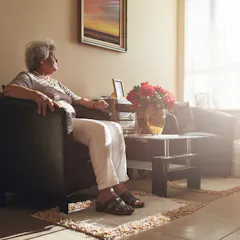
A systematic review of thousands of studies around the world has found many aspects of our cities affect loneliness. But people’s relationship with their environment is complex and highly individual.

Having the ability to decide either to do something or not, and to act accordingly, is a basic definition of freedom. Smart buildings challenge this freedom.
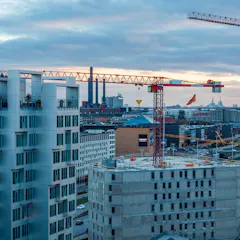
Constructing and running buildings accounts for roughly a third of global energy use and emissions. So it’s alarming that a report to COP27 shows the sector is veering off course for net zero by 2050.
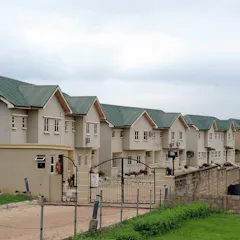
Nigeria’s built environment should ideally be part of a broader, integrated approach to crime prevention and community policing.

The success of the metaverse – whether people use it or not – will rely heavily on the environments that are created.

As we move through the ongoing COVID-19 pandemic, new predictive methods of testing can help monitor the spread of the disease. Environmental testing, like swabbing floors, is a useful tool.
Top contributors
-

Senior Lecturer in Construction Technology, The University of Melbourne
-
Associate Professor in Urban and Regional Planning, University of Sydney
-
Professor of Planning and Associate Director, City Futures Research Centre, UNSW
-
Professor of Regenerative Futures, University of Pretoria
-
Professor of Architecture and SARChI: DST/NRF/SACN Research Chair in Spatial Transformation (Positive Change in the Built Environment), Tshwane University of Technology
-
Senior lecturer in Sustainable and Climate Responsive Architecture, University of Pretoria
-
Adjunct Senior Lecturer, School of Public Health and Community Medicine, UNSW
-
Adjunct Associate Professor, South Western Sydney Local Health District
-
Associate professor, Macquarie University
-
Post-doctoral Research Associate, University of Oxford
-
Senior Research Fellow, Acting Director, CHETRE, UNSW
-
Professor of Health Sciences, Simon Fraser University
-
Director of the Center for Community & Economic Development and Adjunct Faculty in Urban and Regional Planning Program, Michigan State University
-
Post-doctoral Research Associate, University of Oxford
-
Senior Lecturer in Architecture, Nottingham Trent University