

New research looks at young people’s experiences of bullying in their own words.
Articles on Breaking the Cycle
Displaying 1 - 20 of 59 articles

How can ethnic media outlets be supported to continue to inform Australians, and how might mainstream media need to change to better serve these communities?

As a woman living on the disability support pension put it: ‘You don’t have the flexibility that a rich person has to respond to crisis, so you have to beg for help. And you know you’ll be judged’.

What’s the connection between #EatWithMe videos and mukbang? And what are we to make of claims they could help people overcome a fear of eating?

Australia’s population is more diverse than ever. But new research confirms Australia’s journalist workforce remains overwhelmingly Anglo-Celtic and white.

Across Australia, the top ten regions for socio-economic disadvantage are based in rural and regional areas. Local newspapers are especially important in such communities.

Deficit discourse is created, in part, by a mainstream media and screen culture that is overwhelmingly white and doesn’t reflect the cultural diversity of its population.

A new study of Australian media has found important cultural and social factors are omitted in reports about domestic violence. More must be done to improve understanding by journalists and audiences.

A new survey found one quarter of female high school students felt down or worried about choosing a career.

A recent report has found First Nations children in Victoria have better health outcomes, however culturally appropriate research can better highlight what’s going well for First Nations kids’ health.
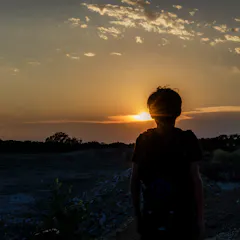
One 11-year old girl told us she knows once rent is paid, there is almost nothing left over. So she never takes school excursion notes home, in case the cost is too much.
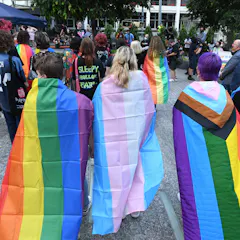
With the Manly footy jumper episode providing yet another reminder of the prejudice LGBTQ+ Australians face, new research looks at the challenges faced by queer young people.

Dementia doesn’t affect everyone equally. Social factors can determine how likely you are to suffer from the illness, including your socioeconomic status, where you live, and your background.
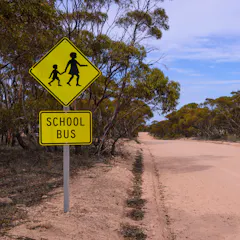
The Australian approach to lifting standards of schooling has a crucial blind spot: the role of the people and communities outside school in supporting students.

Too often, young people’s voices are sought in tokenistic or symbolic ways. Can Labor’s new youth engagement model do things differently?

Our five years of research reveals an industry facing push back from both workers and customers. Many workers we spoke with sought to leave the gig economy.
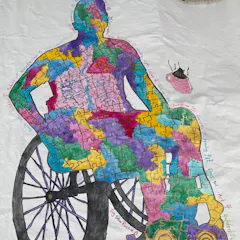
Stigma and discrimination can be upsetting to talk about and hard to describe. Creative activities can help to bring these experiences to light.

Lower participation and poorer performance in cross-country running by students at low-SES schools is troubling, because physical activity and fitness are closely tied to health and well-being.
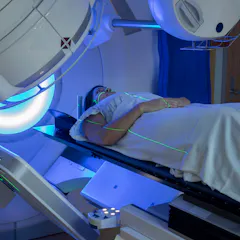
Social factors influence how likely we are to suffer from many types of disease, including cancer.

Heart disease is the leading cause of death in Australia. And it doesn’t affect everyone equally.
Top contributors
-

Professor of Education Policy and Practice, Youth Studies, Monash University
-
Sharon Bessell is a Friend of The Conversation.
Professor of Public Policy, Crawford School of Public Policy, Australian National University
-
Professor & Director, Institute of Child Protection Studies, Australian Catholic University
-
Alan Morris is a Friend of The Conversation.
Professor, Institute for Public Policy and Governance, University of Technology Sydney
-
Casual Research Fellow, Deakin University
-
Postdoctoral research Fellow, UNSW
-
Senior Research Fellow, School of Health and Social Development, Deakin University
-
Associate professor, University of Sydney
-
Lecturer, Deakin University
-
Lecturer, RMIT University
-
Associate Professor, School of Education, Deakin University
-
Senior Honorary Research Fellow, The University of Western Australia
-
Research Fellow, Deakin University
-
Lecturer in Health Pedagogy, University of Tasmania
-
Professor in Politics and Journalism, University of Notre Dame Australia