
Three Conversation science editors look ahead to what to expect in 2025 on The Conversation Weekly podcast.
Articles on Brain-machine interface
Displaying all articles

Neuralink’s first human trial is more than just a technical milestone; it represents a major leap in potential human-computer interaction.
An expert explain the various concerns that were holding up FDA approval – from potential harmful side effects, to protecting the privacy of users’ brain-wave data.

Brain scans have been used to interpret thoughts, but how far can this technology go?
Neuralink might get all the press – but these unsung heroes are pioneering brain-computer interface technology.

Several companies are in the process of commercialising invasive brain-computer interfaces, including Synchron, Neuralink and Precision Neuroscience.
When designing neuroprosthetic devices for users to control with their thoughts, engineers must take into account the sensory information brains collect from the environment and how it gets processed.

Elon Musk’s brain-machine interface technology could bring humans and computers closer together than ever before, and herald a new frontier in healthcare
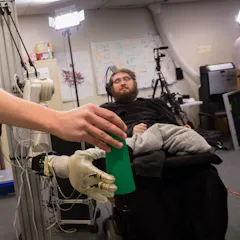
BMIs like the ones Neuralink is working on are already used in laboratories around the world as assistive technologies. But melding your mind with an AI is probably not happening anytime soon.
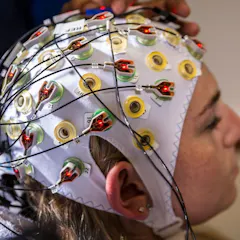
Brain-computer interfacing is a hot topic in the tech world, with Elon Musk’s announcement of his new Neuralink startup. Here, researchers separate what’s science from what’s currently still fiction.
Top contributors
-

Hwang Endowed Professor of Computer Science and Engineering and Director of the Center for Neurotechnology, University of Washington
-
Adjunct Senior Lecturer, Applied Ethics and CyberSecurity, Griffith University
-
Assistant Professor of Physical Medicine and Rehabilitation, University of Pittsburgh
-
Senior Lecturer in Neural Engineering, The University of Melbourne
-
Biomedical Engineer and Neuroscientist, University of Sydney
-
Neurological Surgery Resident, University of California, San Francisco
-
Assistant Professor of Physical Medicine and Rehabilitation, University of Pittsburgh
-
Research Fellow in Responsible Artificial Intelligence, University of Southampton
-
Assistant Professor, Faculty of Business, University of New Brunswick
-
Ph.D. Student in Bioengineering, Researcher at the Center for Sensorimotor Neural Engineering, University of Washington