
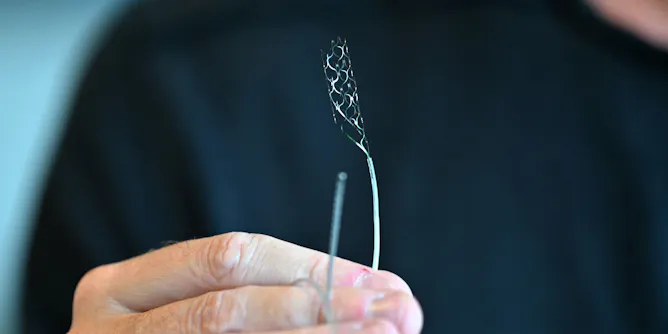
Brain implants can change people’s lives during clinical trials, but what happens next can be just as important.
Articles on Brain implants
Displaying all articles
Paralysed people are already using brain-computer interfaces to turn their thoughts into text. But there are risks to this technology.

With implants now capable of translating thoughts into words in just three seconds, the future is going to get very weird indeed.
As the federal government prepares to reform Australia’s privacy laws, it needs to better protect brain data.

Engineers have tried for decades to develop bionic eyes to reverse blindness. But the brain is far more complex than a computer.
As Elon Musk’s Neuralink begins inserting chips into human brains, we trace the history of ‘mind reading’ technology and assess the potential risks and rewards

Several companies are in the process of commercialising invasive brain-computer interfaces, including Synchron, Neuralink and Precision Neuroscience.
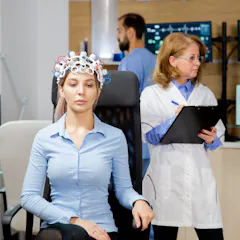
Neurotechnology could mean law firms soon track ‘billable units of attention’ rather than billable hours.

Elon Musk’s brain-machine interface technology could bring humans and computers closer together than ever before, and herald a new frontier in healthcare

The most interesting thing is how free Gertrude is to move around while the implanted chip collects the data.
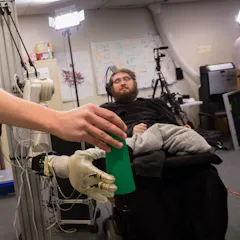
BMIs like the ones Neuralink is working on are already used in laboratories around the world as assistive technologies. But melding your mind with an AI is probably not happening anytime soon.

New approach to preventing seizures proves effective in mice.
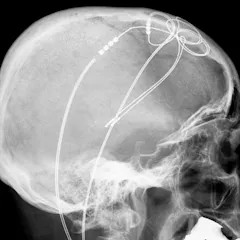
Where does responsibility lie if a person acts under the influence of their brain implant? As neurotechnologies advance, a neuroethicist and a legal expert write that now’s the time to hash it out.
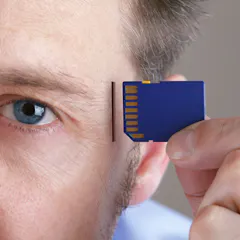
Doctors are working to reconnect the brain to paralysed limbs.
Top contributors
-

Adjunct Senior Lecturer, Applied Ethics and CyberSecurity, Griffith University
-
Research Fellow in Biomedical Engineering, Keele University
-
Professor of Neural Interfaces, Newcastle University
-
Assistant Professor of Physical Medicine and Rehabilitation, University of Pittsburgh
-
Assistant Professor in Social Psychology, University of Southampton
-
Research Associate, Trustworthy Autonomous Systems Hub, University of Bristol
-
PhD candidate (Cognitive Neuroscience/ Neuroengineering), The University of Queensland
-
Lecturer in Brain-Computer Interfaces, University of Essex
-
Biomedical Engineer and Neuroscientist, University of Sydney
-
Associate Professor of Law, Michigan State University
-
PhD Researcher in Neurotechnology and the Law, University of Antwerp
-
Assistant Professor of Physical Medicine and Rehabilitation, University of Pittsburgh
-
Associate Professor of Neuroethics, Penn State
-
Professor of Psychology, University of Washington
-
Professor of Psychology, University of Washington