
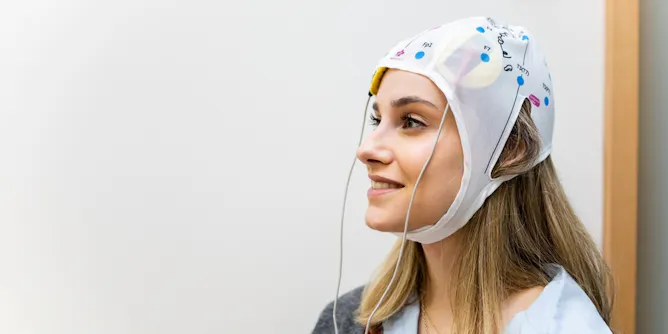
Researchers are exploring whether stimulating the brain with electric currents or magnetic fields helps people learn physical skills more effectively.
Articles on Brain-computer interface
Displaying 1 - 20 of 23 articles
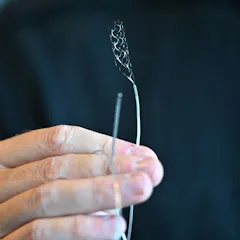
Brain implants can change people’s lives during clinical trials, but what happens next can be just as important.

AI-powered technologies are increasingly being integrated into assistive technologies like hearing aids and prosthetics. This is changing how the people who use them experience urban space.
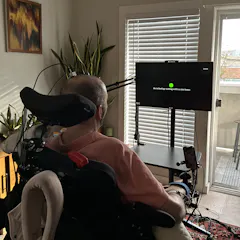
Listening in on neural activity is a promising way of restoring the ability to communicate for people whose bodies no longer can. Artificial neural networks are the key middleman in the process.

Brain-computer interfaces may present threats to cognitive liberty. But with or without them, we often overestimate how independent our own minds are, an ethicist writes.

Could the technology move beyond medical applications and into wide use?
Brain-computer interface devices have the potential to boost users’ autonomy, especially for people who experience paralysis. But that comes with risks, as well.
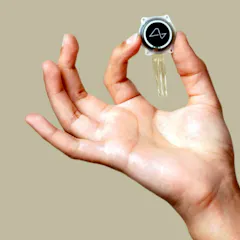
The technology to link human brains with computers is developing quickly – but the path ahead is full of challenges.

Neuralink’s first human trial is more than just a technical milestone; it represents a major leap in potential human-computer interaction.
An expert explain the various concerns that were holding up FDA approval – from potential harmful side effects, to protecting the privacy of users’ brain-wave data.
Neuralink might get all the press – but these unsung heroes are pioneering brain-computer interface technology.

Several companies are in the process of commercialising invasive brain-computer interfaces, including Synchron, Neuralink and Precision Neuroscience.

The technology is progressing but it must pass a number of regulatory hurdles. We’re unlikely to see an affordable implant in the short term.
When designing neuroprosthetic devices for users to control with their thoughts, engineers must take into account the sensory information brains collect from the environment and how it gets processed.

The most interesting thing is how free Gertrude is to move around while the implanted chip collects the data.
Researchers have developed implants small enough to fit inside brain cells.

Facebook and Neuralink are developing interfaces to link our brains to computers, with serious ethical issues.
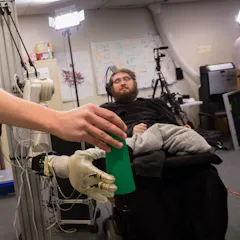
BMIs like the ones Neuralink is working on are already used in laboratories around the world as assistive technologies. But melding your mind with an AI is probably not happening anytime soon.

People – individually and in groups – were not as good at facial recognition as an algorithm. But five people plus the algorithm, working together, were even better.
Interactive cinema and the arts are at the forefront of research into brain-computer interaction.
Top contributors
-

Postdoctoral Research Fellow, Monash Bioethics Centre, Monash University
-
Hwang Endowed Professor of Computer Science and Engineering and Director of the Center for Neurotechnology, University of Washington
-
Adjunct Senior Lecturer, Applied Ethics and CyberSecurity, Griffith University
-
Adjunct Assistant Professor of Neurology at Oregon Health and Sciences University and Affiliate Assistant Professor of Philosophy, University of Washington
-
Assistant Professor of Neurological Surgery, School of Medicine, University of Washington
-
PhD candidate (Cognitive Neuroscience/ Neuroengineering), The University of Queensland
-
Founding Director of Interactive Filmmaking Lab, University of Stirling
-
Neurological Surgery Resident, University of California, San Francisco
-
Associate Professor in Energy Storage and Bioelectronics, Imperial College London
-
Assistant Professor of Physical Medicine and Rehabilitation, University of Pittsburgh
-
Professor of Medical Ethics, Humanities, and Law, Western Michigan University
-
Professor of Bioethics and Humanities, School of Medicine, University of Washington
-
Academic Fellow, University of Sydney Law School, University of Sydney
-
Senior Lecturer in Neural Engineering, The University of Melbourne
-
Assistant Professor of Physical Medicine and Rehabilitation, University of Pittsburgh