

Brain-computer interfaces may present threats to cognitive liberty. But with or without them, we often overestimate how independent our own minds are, an ethicist writes.
Articles on BCI
Displaying all articles
Brain-computer interface devices have the potential to boost users’ autonomy, especially for people who experience paralysis. But that comes with risks, as well.

Neuralink’s first human trial is more than just a technical milestone; it represents a major leap in potential human-computer interaction.
An expert explain the various concerns that were holding up FDA approval – from potential harmful side effects, to protecting the privacy of users’ brain-wave data.
Neuralink might get all the press – but these unsung heroes are pioneering brain-computer interface technology.

Experts largely agree that AI with human-level capabilities is not that far off. How will this change out relationship with machines?
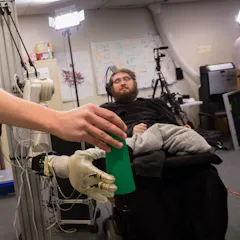
BMIs like the ones Neuralink is working on are already used in laboratories around the world as assistive technologies. But melding your mind with an AI is probably not happening anytime soon.

Stockbrokers, police officers and radiologists are among those that may benefit from new research findings on how to make decisions under uncertainty.

BCI devices that read minds and act on intentions can change lives for the better. But they could also be put to nefarious use in the not-too-distant future. Now’s the time to think about risks.
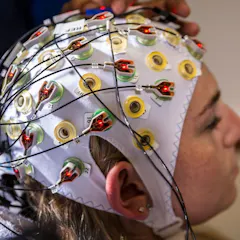
Brain-computer interfacing is a hot topic in the tech world, with Elon Musk’s announcement of his new Neuralink startup. Here, researchers separate what’s science from what’s currently still fiction.
Top contributors
-

Hwang Endowed Professor of Computer Science and Engineering and Director of the Center for Neurotechnology, University of Washington
-
Postdoctoral Research Fellow in Multimodal Neuroimaging and Machine Learning, Harvard University
-
Ph.D. Student in Bioengineering, Researcher at the Center for Sensorimotor Neural Engineering, University of Washington
-
Adjunct Assistant Professor of Neurology at Oregon Health and Sciences University and Affiliate Assistant Professor of Philosophy, University of Washington
-
Ph.D. Student in Electrical Engineering, University of Washington
-
Assistant Professor, Faculty of Business, University of New Brunswick
-
Lecturer in the Philosophy of Science, University of New England
-
Philosopher, University of New England
-
Assistant Professor of Physical Medicine and Rehabilitation, University of Pittsburgh
-
Assistant Professor of Neurological Surgery, School of Medicine, University of Washington
-
Professor of Medical Ethics, Humanities, and Law, Western Michigan University
-
Assistant Professor of Physical Medicine and Rehabilitation, University of Pittsburgh
-
Professor of Bioethics and Humanities, School of Medicine, University of Washington
-
Adjunct Senior Lecturer, Applied Ethics and CyberSecurity, Griffith University
-
Senior Lecturer in Neural Engineering, The University of Melbourne