
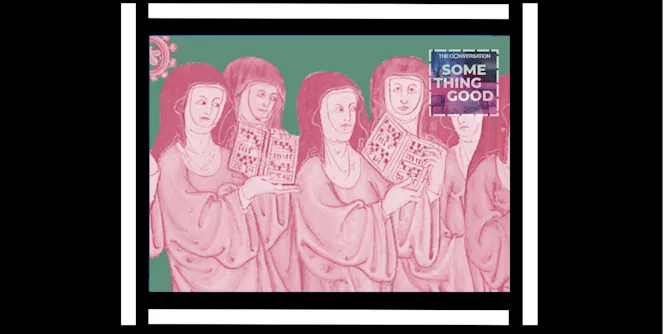
Our cultural highlights this week include three exhibitions and a unsettling dystopian novel.
Articles on Books
Displaying 261 - 280 of 1166 articles
ChatGPT is posing new puzzles for the real teams of forensic linguists attempting to solve crimes.
The film explores how much easier is it to conform to social norms than step outside them.
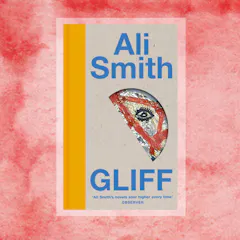
Gliff is set in a dystopian Britain – a kind of fairy tale of the future in which two children navigate a world which seems increasingly baffling and hostile.

Writing about huge monsters is one way of confronting the things that make us feel small and vulnerable.
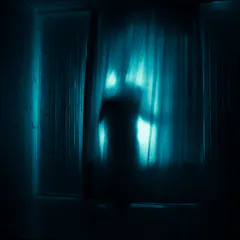
Quiet horror prizes suspense and subtlety over graphic bodily violence.
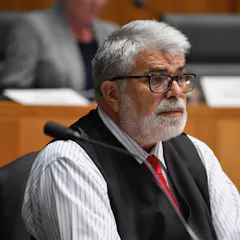
Two Labor heavyweights examine where the party has come from, and where it might be heading.
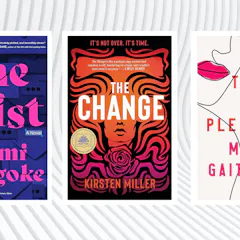
There are now several crime novels that specifically reference the #MeToo movement.
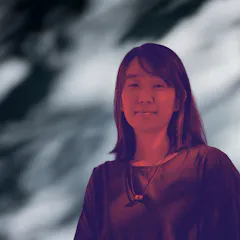
Korean literature and art, a terrifying public service film from the 80s, a dramatisation of Trump’s early career and a doc praising a group we should never have forgotten.

Rooney has rejected the label.
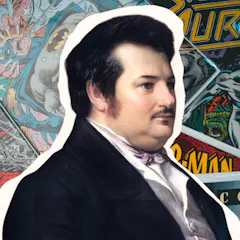
The ‘parallel universe’ style of storytelling has deep literary roots.
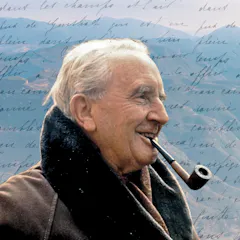
The Collected Poems of J.R.R. Tolkien contains nearly 250 individual works spanning more than five decades, 70 of them previously unpublished.

Booksellers are weathering the high street storm partly because they offer consumers more than just retail.
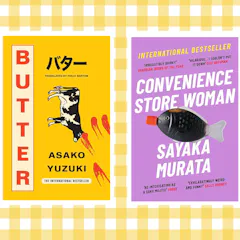
I invite you to sample four tasty literary courses that present, for your delectation, the trials and travails of post-war Japanese women.

Engaging and scientifically accurate children’s books on Australian animals are sorely lacking. Fostering more collaboration between authors and scientists can enrich children’s literature.

The Irish literary scene is thriving, which makes choosing just five other Irish writers likely to appeal to fans of Rooney a daunting task.
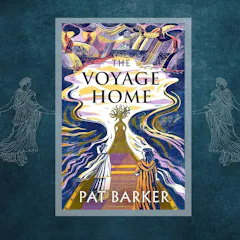
In the final novel in the trilogy that started with The Silence of the Girls, Barker brings the Trojan tragedy to a haunting close – and demands justice for the wrongs of war.

The choices of author and illustrator Crockett Johnson during the printing process – as well as his civil rights advocacy – make it entirely within the realm of possibility.
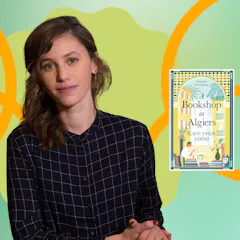
Adimi’s novel shifts time periods from the 1930s to the present day, and reflects on Algeria’s journey to independence.
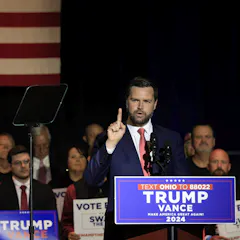
It happens in journalism and it happens in the arts. But in Congress – where just 2% of representatives held blue-collar or service-industry jobs before entering politics – it’s rampant.
Top contributors
-

Associate Professor in Literary Studies, Monash University
-
Professor in Politics and Journalism, University of Notre Dame Australia
-
Lecturer, School of Design, University of Technology Sydney
-
Honorary Associate in Creative Writing, The Open University
-
Associate Professor of Postcolonial and Global Literatures, Nottingham Trent University
-
Lecturer of English, University of Liverpool
-
Distinguished Professor Emerita of Creative Practice, Faculty of Arts and Design, University of Canberra
-
Visiting Fellow, Centre for Cultural and Creative Research, University of Canberra, University of Canberra
-
Professor in Publishing Studies, University of Stirling
-
Associate Professor, University of Southern Denmark
-
Associate Professor of French and Translation, University of Exeter
-
Senior Lecturer in Literature, Aston University
-
Associate Dean International, Faculty of Arts, Design & Humanities, De Montfort University
-
Dean of Research (Creative), Adelaide University
-
Professor of Reading and Children’s Development, The Open University