
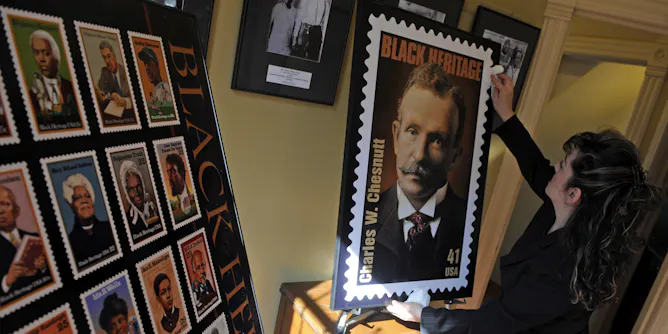
Black writers like Charles Chesnutt had to contend with a dilemma writers today know all too well: give the audience and editors what they want, or wallow in obscurity.
Articles on Black History Month
Displaying 41 - 60 of 110 articles
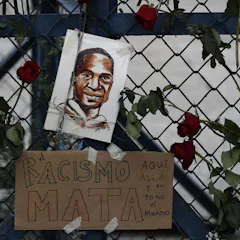
Nationalist myth has associated ‘true Mexicanness’ with being ‘meztizo’ — a racial and cultural mix of Indigenous and Spaniard, even while the state enacted policies to assimilate Indigenous Peoples.
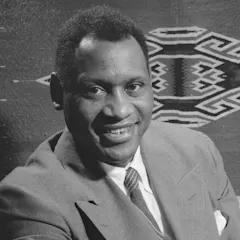
In China, Robeson continues to be remembered as a loyal friend celebrated for popularizing what became China’s national anthem and building solidarity between peoples of China and African Americans.
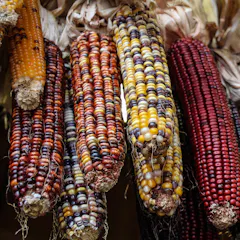
Our food systems are failing to feed all of us.
In this episode of Don’t Call Me Resilient, we pick apart what is broken and ways to fix it with two women who battle food injustice.
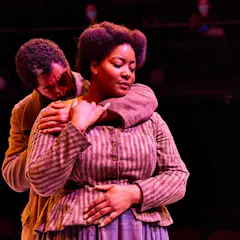
Black British women have been staging plays in recent years about Britain’s role in slavery, a history the country is too eager to forget.
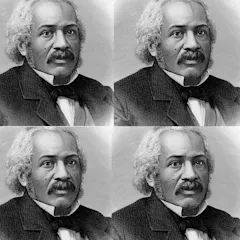
James McCune Smith was the first African American to receive a medical doctorate from a university. He dedicated his life to fighting injustice.
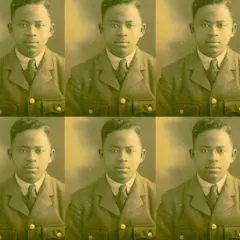
Nottingham Black Archive is recovering the stories of those who made important contributions to the national story of Black British history. The UK needs more like it.
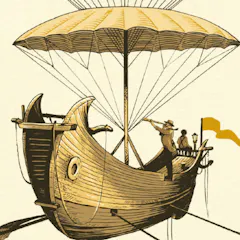
Stories about alternative worlds can be a powerful way of critiquing the problems of our own world.
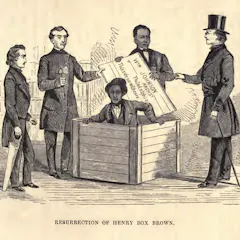
Abolition in the UK tends to focus on the work of Yorkshireman William Wilberforce but there were many Black abolitionists whose tireless work has been forgotten.
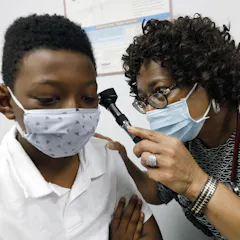
When COVID-19 first appeared, some called it the great equalizer. But the facts quickly revealed a grim reality: COVID-19 disproportionately impacts racialized communities.

Cameras played a critical role in the quest for social equality for Black Americans in the post-slavery era.

Though COVID-19 has killed Black Americans at nearly twice the rate as white Americans, Black people are the least likely racial group to say they’re eager to get the vaccine.
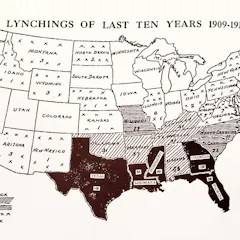
Mapping is one way African Americans fight for equality and help each other navigate a racially hostile landscape.
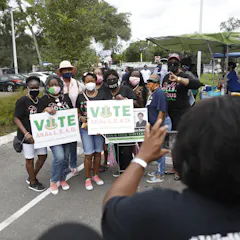
Members of the nation’s four Black sororities, including Vice President Kamala Harris, commit to lifelong acts of service for their communities.
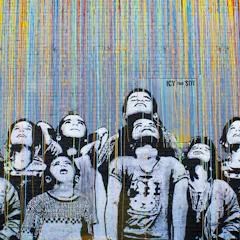
Carl James and Kulsoom Anwer discuss the injustices and inequalities in the Canadian education system.
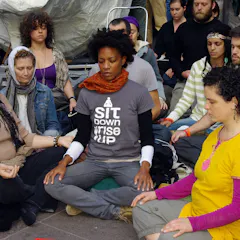
The writer and zen priest Reverend angel Kyodo williams speaks about the pain of racism, how she uses meditation to combat it — and become a stronger anti-racist activist in America today.
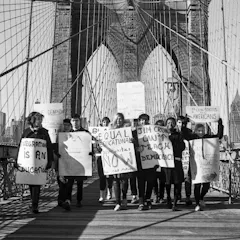
In the 1950s, Harlem mother Mae Mallory fought a school system that she saw as ‘just as Jim Crow’ as the one she had attended in the South.

An 1850 act permitted the creation of separate schools for Protestants, Catholics and for any five Black families. Some white people used the act to force Black students into separate institutions.
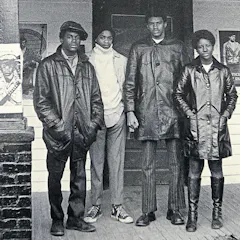
In the early hours of Feb. 10, 1971, heavily armed officers moved in on a house occupied by Black Panther activists – marking a policing trajectory toward a more militarized response to Black activism.
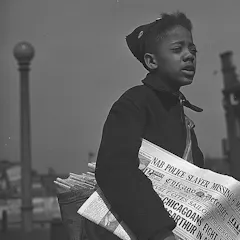
At the turn of the 20th century, with few children’s books featuring Black characters, one young editor implored his peers to ‘Let us make the world know that we are living.’
Top contributors
-

Canada Research Chair, Professor in Performance, Toronto Metropolitan University
-
Assistant Professor, RTA School of Media, Faculty of Communication and Design Forum, Toronto Metropolitan University
-
Professor of Education and Affiliate Faculty in Philosophy, University of Cincinnati
-
Assistant Professor, Anthropology, University of Manitoba
-
Professor of Music, University of Dayton
-
Director of the Center for Anti-Racism, Temple University
-
Derek H. Alderman is a Friend of The Conversation.
Chancellor's Professor of Geography, University of Tennessee
-
Professor of Geography and Senior Research Associate in the Rock Ethics Institute, Penn State
-
Assistant Professor of Secondary Social Studies, West Virginia University
-
Professor, Journalism Department, UMass Amherst
-
PhD candidate, Department of Education, York University, Canada
-
Professor of History, American University School of International Service
-
Professor of Political Science and Africana Studies, University of Connecticut
-
Professor of Fashion, Toronto Metropolitan University
-
Undergraduate journalism major, UMass Amherst