

Approximately 400,000 bison roam the North American landscape today, of which nearly 90% are considered livestock.
Articles on Bison
Displaying all articles
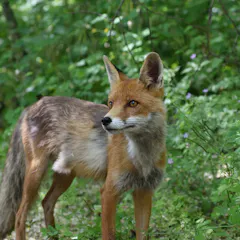
Endangered species are making their home in a massive wild zone around the derelict Chernobyl nuclear plant.

Current laws that deem species safe from extinction ignore their ecological role, geographic range and genetic diversity, as well as their relationships with people.

An Indigenous scholar explains how starvation was used to acquire the lands of Indigenous peoples. Her great-grandparents experienced ‘starvation winter’ on the Blackfeet reservation.

On July 4, 1891, Oklahoman farmer Oscar Weber Bilby served his neighbors the very first hamburgers on buns.

Not all animals retreat to their shelters in cold weather.
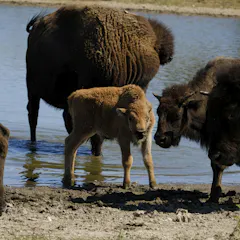
Efforts are being made to develop the capacity of Native tribes to manage bison and bison habitats. An Indigenous scholar explains their sacred significance.
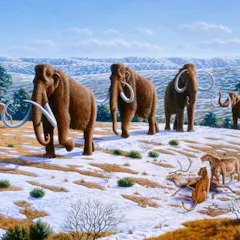
A forensic technique more often used at modern crime scenes identified blood residue from large extinct animals on spearpoints and stone tools used by people who lived in the Carolinas millennia ago.

Governments and wildlife advocates are working to protect 30% of Earth’s lands and waters for nature by 2030. An ecologist explains why creating large protected areas should be a top priority.

The recent goring of a tourist who approached within 10 feet of a bison in Yellowstone National Park is a reminder that wild animals can be dangerous and people should keep safe distances.
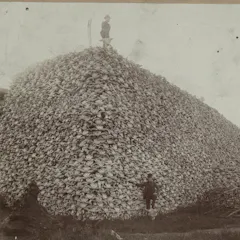
Historical photographs of bison extermination are a window into a history of relationships between humans, bison and the environment.
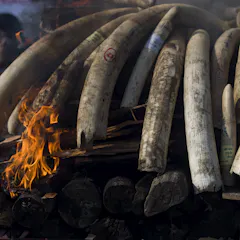
In the 1800s, Americans hunted many wild species near or into extinction. Then in the early 1900s, the US shifted from uncontrolled consumption of wildlife to conservation. Could Asia follow suit?
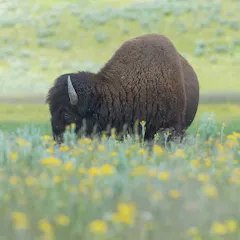
The historical record is full of surprises – and it could encourage conservationists to think more creatively.

North America’s prairies once were home to millions of wild animals. Today, most of that land is farmed or developed, but some grasslands have never been plowed and could be rewilded.
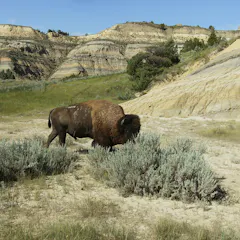
Scientists have tracked endangered species for years. Now they’re figuring out how to highlight animals and plants that have recovered – but what does that mean?
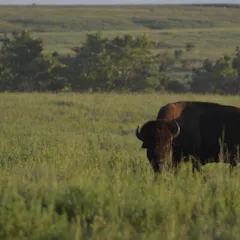
Bison once dominated the Great Plains but were nearly wiped out by hunters in the 1800s. Now scientists are learning that bison’s presence improves plant and wildlife diversity on the prairies.

We can’t return degraded landscapes to their original state but we can change the way people relate to their local environments.

DNA analysis suggests that a newly discovered species of bison roamed Europe some 17,000 years ago - as prehistoric cave artists were trying to tell us all along.
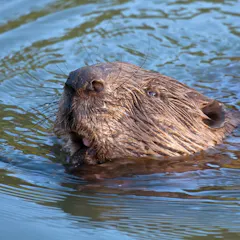
The case for why this dog-sized rather laid-back herbivore should be reintroduced to the UK.
Top contributors
-

Professor of History, University of Illinois Urbana-Champaign
-
Researcher in paleogenomics, Adelaide University
-
Elbert L. Fausett Distinguished Professor of Biology, Hendrix College
-
Research Fellow, Environmental Political Theory, Vrije Universiteit Brussel
-
Distinguished Professor, Charles Sturt University
-
Post-doctoral Researcher, University of Stirling
-
Professor of Wildlife Conservation, Colorado State University
-
Professor of Zoo Animal Welfare & Legislation, Nottingham Trent University
-
Postdoctoral Researcher in Environmental Conservation, UMass Amherst
-
Adjunct Assistant Professor, University of Wyoming
-
PhD Student in Fisheries & Wildlife and Ecology, Evolutionary Biology & Behavior, Michigan State University
-
Professor of Wildlife Ecology, Clemson University
-
Postdoctoral Research Fellow, English and Cultural Studies, McMaster University
-
Research Professor and Director of the Southeastern Paleoamerican Survey (SEPAS) at the South Carolina Institute for Archaeology and Anthropology, University of South Carolina
-
Research Professor at NCSU and Scientist at NC Museum of Natural Sciences, North Carolina State University