
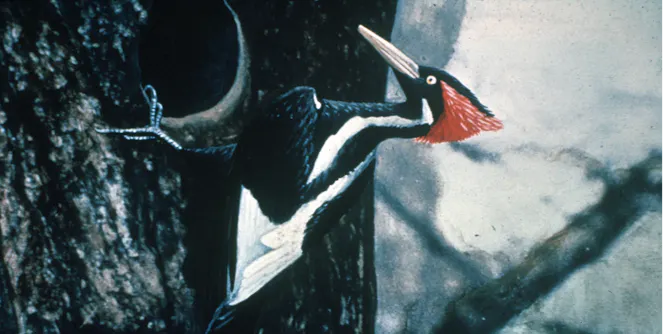
There are no more ivory-billed woodpeckers or Bachman’s Warblers on Earth, but they’ve left an echo behind.
Articles on Birdsong
Displaying 21 - 32 of 32 articles
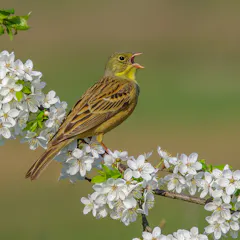
Research from across Europe and the US shows that as biodiversity declines, the natural world falls more silent.
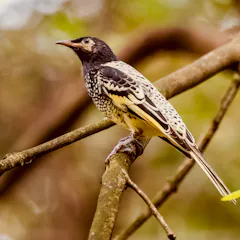
In healthy populations, the song of regent honeyeaters is complex and long. But where the population is very small, the song is sadly diminished.

From birdsong to window-tapping professionals to bleeping symphonies, morning alarms have come a long way.
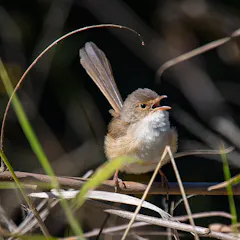
For decades, scientists believed that only male birds sang. Then women entered the field and showed what their predecessors had missed.
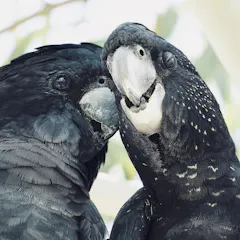
From choosing a compatible personality to sharing childcare equally, many Australian birds have mastered the art of successful relationships.
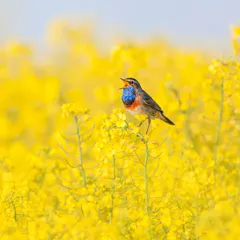
Could mating preferences, like females preferring males who sing complex songs, affect the evolution of learning? Insights from birds could have clues for how people learn throughout their lives.
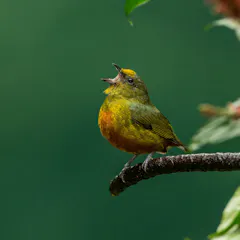
Birds spend a lot of time and energy singing, but they don’t do it the same way in every season of the year. And some can’t sing at all. What’s the purpose of birdsong?
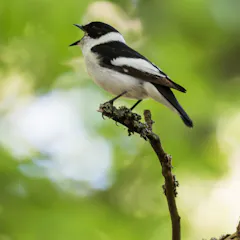
Biologists investigated whether birds that search for multiple mates would evolve ever more elaborate songs to attract them. What they found might have surprised Darwin.
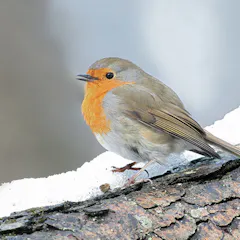
Robins are a much loved Christmas icon, but wind turbines installed in their habitat are affecting their song, with worrying consequences.

Music
The Conversation67.8 MB (download)
Today, we're hearing about a researcher who records birdsong, how tech changes music and why song might help address Indigenous language loss.
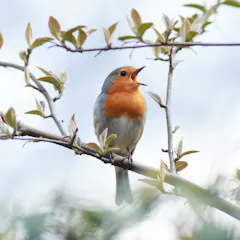
Both male and female birds sing to impress other birds, but as well as that, they do it for pleasure!
Top contributors
-

Postdoctoral research fellow, Vanderbilt University
-
Assistant Professor of Biological Sciences, Vanderbilt University
-
Professor of Applied Ecology, University of East Anglia
-
Research Affiliate, Sydney Conservatorium of Music, University of Sydney
-
Professor of Biology, Clarkson University
-
PhD Candidate in Geography and Planning, Queen's University, Ontario
-
Research Fellow, The University of Melbourne
-
PhD candidate in Behavioural Ecology, Wageningen University
-
Professor, Australian National University
-
PhD candidate, University of the Free State
-
Associate Researcher, The University of Queensland
-
PhD Student in Organismic and Evolutionary Biology, UMass Amherst
-
Professor of Applied Ecology, Newcastle University
-
Professor of Biological Sciences, University of Maryland, Baltimore County
-
Associate Professor in History, The University of Melbourne