
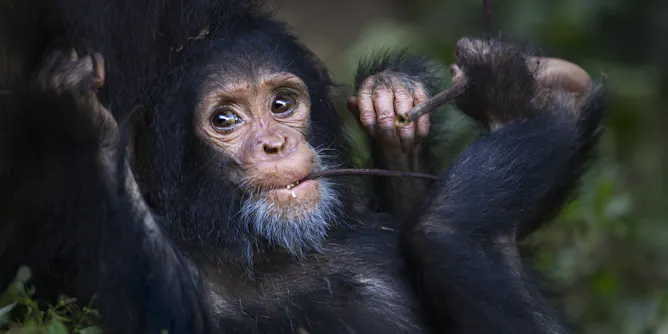
What muscles feet have, how your brain controls them, and how humans evolved all play a part in why people can’t easily move individual toes.
Articles on Biological anthropology
Displaying all articles
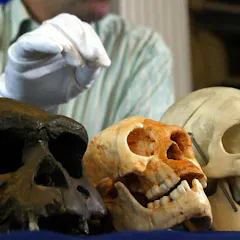
New research on the size relationship between brains and wisdom teeth suggests that bigger brains aren’t necessarily the driving force in human evolution.

Twins are pretty rare, accounting for just 3% of births in the US these days. But new research shows that for primates 60 million years ago, giving birth to twins was the norm.
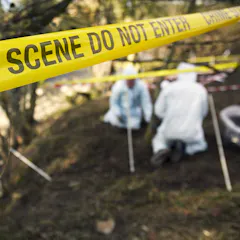
Forensic anthropologists are specialized scientists who analyze the skeletal remains of the recently deceased to help authorities figure out who the person was and what happened to them.
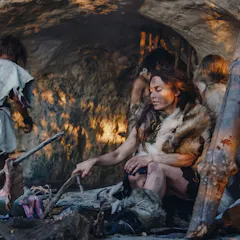
Female bodies have an advantage in endurance ability that means Paleolithic women likely hunted game, not just gathered plants. The story is written in living and ancient human bodies.
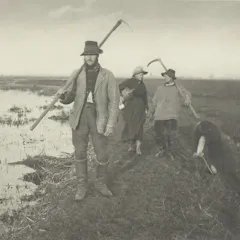
People with a common history – often due to significant geographic or social barriers – often share genetics and language. New research finds that even a dialect can act as a barrier within a group.
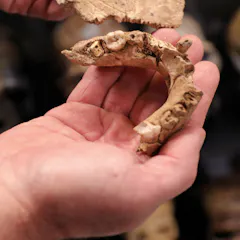
Using a new equation based on today’s primates, scientists can take a few molar teeth from an extinct fossil species and reconstruct exactly how fast their offspring grew during gestation.

Our ancient ancestors didn’t have clothes or houses – but that constant exposure to the sun helped their skin protect itself from the worst sun damage.

Are the descriptions of war passed down by ancient historians accurate? A site in Sicily provided a rare chance to fact-check stories told about two battles from more than 2,400 years ago.

We’re the only species that can throw at speeds that kill.

New research models how the Homo floresiensis species could have evolved its small size remarkably quickly while living on an isolated island.

An anthropologist works in American Samoa, taking advantage of the island’s longstanding tattoo culture to tease out the effects tattoos have on the body’s immune function.

Ancient DNA allows scientists to learn directly from the remains of people from the past. As this new field takes off, researchers are figuring out how to ethically work with ancient samples and each other.
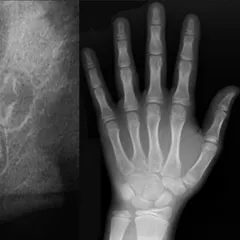
If an undocumented migrant is a minor or an adult can have far-reaching implications. A forensic anthropologist explains why relying solely on dental X-rays to determine age doesn’t work.
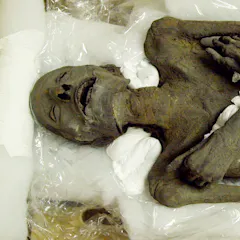
Are DNA samples today’s version of the human skeletons that hung in 20th-century natural history museums? They can provide genetic revelations about our species’ history – but at an ethical price.

New discoveries are changing archaeologists’ ideas about the origins of our own species and our migration out of Africa. This fossil pushes Homo sapiens’ African exodus date back by 50,000 years.
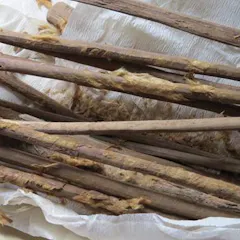
How a research team identified parasites in ‘hygiene sticks’ that travellers on the Silk Road effectively used as their toilet paper.
Top contributors
-

Professor of Anthropology, Western Washington University
-
Associate Professor of Anthropology, Binghamton University, State University of New York
-
Assistant Professor of Biological Anthropology, University of Tennessee
-
Associate Professor of Anthropology, Binghamton University, State University of New York
-
Professor of Paleontology and Paleoecology, University of Naples Federico II
-
Associate Professor of Anthropology, Rice University
-
Assistant Professor of Anthropology, University of Notre Dame
-
Evan Pugh University Professor of Anthropology, Penn State
-
Ph.D. Candidate in Biological Sciences, Vanderbilt University
-
Professor of Psychology, Grand Valley State University
-
Assistant Professor of Biological Sciences, Vanderbilt University
-
Postdoctoral Fellow in the Department of Sociology, Anthropology and Criminal Justice, Clemson University
-
Professor of Ecology and Evolution, Universidade Federal de Goiás (UFG)
-
Professor of Anthropology, Clemson University
-
Associate Research Professor of Anthropology, University of Colorado Denver