

New research on the size relationship between brains and wisdom teeth suggests that bigger brains aren’t necessarily the driving force in human evolution.
Articles on Brain size
Displaying all articles
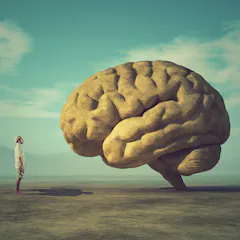
This new study could change the way we think about ageing.

Evolutionary biologist Rob Brooks talks to The Conversation Weekly about AI’s potential to influence our evolution.

Parents provide the energy needed for their young to grow large brains. Climate change may negatively affect birds’ brain development as it impacts food supplies.
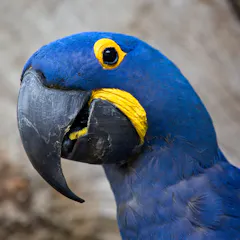
In birds, big brains aren’t associated with living in large social groups – instead, they’re linked to long stints of parental feeding.
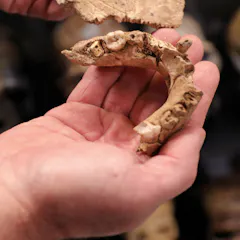
Using a new equation based on today’s primates, scientists can take a few molar teeth from an extinct fossil species and reconstruct exactly how fast their offspring grew during gestation.
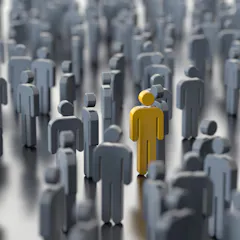
New research calls into question the validity of ‘Dunbar’s number’.
The claim that our brain size limits us to 150 meaningful friendships has been challenged by a recent paper.

Rather than distinctly male or female, the human brain is much more like the heart, kidneys and lungs – basically the same no matter the sex of the body it’s in.

The cetacean brain has a specialised thermogenic system that helps the animal’s brain to produce enough heat to maintain a functional brain temperature.
For the past 50 years, international animal cognition research has focused on how tool use is related to animal intelligence. But new research casts doubt on long-held assumptions.
Attempts to find brain structures responsible for supposed cognitive sex differences have not succeeded.
We have more neurons in our cortices than any other species, courtesy of an early technology – and along with them came our long, slow lives, with plenty of chances to gather around the dinner table.
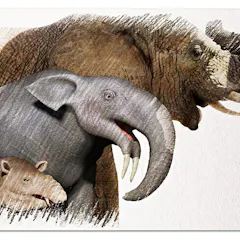
A shift in climate, along with other environmental disruptions and the invasion of competitors and new predators all likely played an important role in reshaping ancient elephants’ brains.
Top contributors
-

Professor of Anthropology, Western Washington University
-
Professor of Comparative and Evolutionary Neurobiology, University of the Witwatersrand
-
Senior Associate Professor in Ethology, Linköping University
-
Research fellow, Oxford Brookes University
-
Associate Professor of Psychology, Vanderbilt University
-
Associate professor in Vertebrate Palaeontology, University of the Witwatersrand
-
Emeritus Professor in Animal Behaviour, University of New England
-
Professor of Biological Sciences; Director of the Cellular and Behavioral Neurobiology Graduate Program, University of Oklahoma
-
DECRA Fellow, UNSW
-
Professor of Neuroscience, Rosalind Franklin University of Medicine and Science
-
Professor of Evolutionary Psychology, Department of Experimental Psycology, University of Oxford
-
Host, The Conversation Weekly Podcast, The Conversation
-
Scientia Professor of Evolution, UNSW
-
Professor of Neuroscience, University of Tübingen
-
Researcher, Zoological Ecology, Stockholm University