
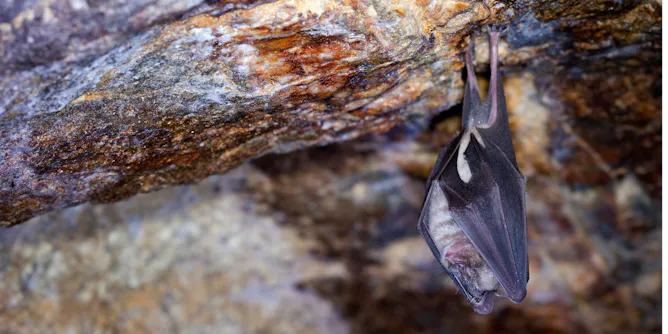
A new algorithm could reduce the amount of time it takes for ecologists to find bat roosts.
Articles on Bats
Displaying 21 - 40 of 139 articles
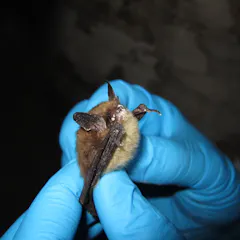
Numerous bats have been found in Colorado with white-nose syndrome. The fungus has killed millions of bats in North America, leaving biologists concerned about its impact on bats in the state.

A new type of vaccine using nanotechnology protects against a range of coronaviruses – in mice.

The scarcity of bat fossils is more than a palaeontological puzzle: it has implications for bat conservation strategies today.
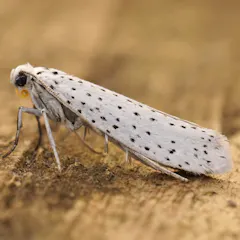
The ermine moth’s wing structures are fascinating because they rely on a mechanism we teach our engineering students to avoid
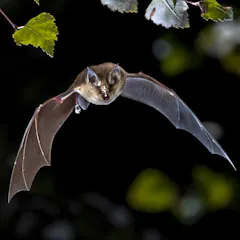
Maths plays a crucial role in new research which finds that bats “leapfrog” their way home at night.
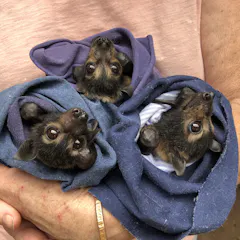
If a colony of flying foxes sets up in your backyard, you might be annoyed – or concerned. But these gentle bats are vital to our forests.
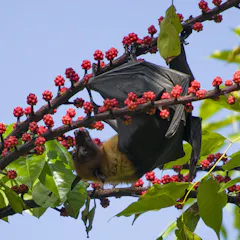
Fruit bats can eat up to twice their body weight in fruit a day. But their genes and cells evolved to process all that sugar without any health consequences − a feat drug developers can learn from.

If Australia is to meet its net zero targets it must move fast and build massive industrial infrastructure. But those projects are provoking fierce hostility. Is there a way through the green dilemma?

Shelling may have led to the killing of 7,000 noctule bats in the city of Kharkiv alone
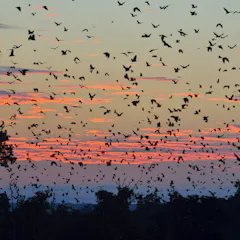
Monitoring and protecting the Kasanka bat colony helps protect bats from the entire sub-continent, and thus supports ecosystem services in a wide area.
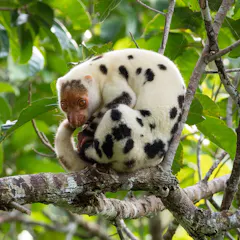
From the cuscus with the fancy coat, to the wallaby often sporting a single white glove, a wide variety of life evolved on island homes in the south-west Pacific.
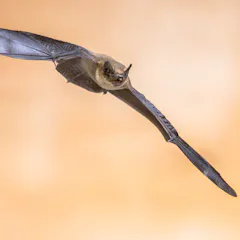
New research has found that bats avoid solar farms – but the findings should not hinder the transition to renewable energy.

We studied 16 bat species in the UK to learn about the viruses they carry and understand the risk to humans.

Africa’s mammals are a global treasure that must be protected.
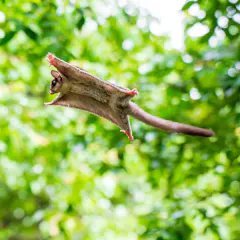
Mammals have evolved flight more often than birds. By studying the genes of the sugar glider, biologists have found a ‘molecular toolkit’ for flight membranes that’s been in us all along.
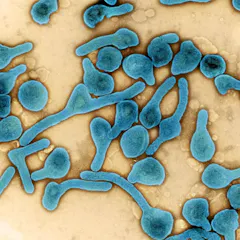
The Marburg virus, a close cousin of Ebola, currently has no approved treatments or vaccines to protect against it.

From insects to birds to bats to frogs, these little loudmouths have found ingenious ways to deliver their messages at high volume.
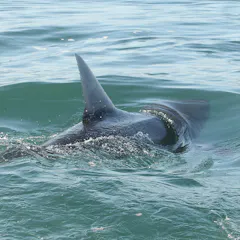
Humans often look to nature for the solutions to complex problems – here are five times where biological processes have inspired innovation.

Brush turkeys, bats, and cockroaches are crucial for the environment – including our gardens. Each have fascinating ways of coping in wet weather.
Top contributors
-

Professor of Animal Ecology, Western Sydney University
-
Biodiversity Coordinator, Wilderness, University of the Witwatersrand
-
The University of Melbourne
-
Principal Scientist and Canada Research Chair in Zoonotic Virus and Animal Reservoirs at the Vaccine and Infectious Disease Organization and Co-Lead of One Health at the University of Saskatchewan, University of Saskatchewan
-
Researcher, Max Planck Institute of Animal Behavior
-
Postdoctoral Research Associate in Biological Sciences, University of Bristol
-
Senior Lecturer in Physical Geography, James Cook University
-
Assistant Professor of Microbiology, Kennesaw State University
-
Wellcome Trust Senior Research Fellow, University of Glasgow
-
The University of Melbourne
-
Research scientist, CSIRO
-
Professor of Environmental Biology, University of Sussex
-
Professor/Director Centre for Viral Zoonoses/ DST-NRF South African Research Chair, University of Pretoria
-
Maître de Conférences (HDR) à Sorbonne Université, ISYEB - Institut de Systématique, Evolution, Biodiversité (CNRS, MNHN, SU, EPHE, UA), Muséum national d’histoire naturelle (MNHN)
-
Adjunct Asssociate Professor, James Cook University