
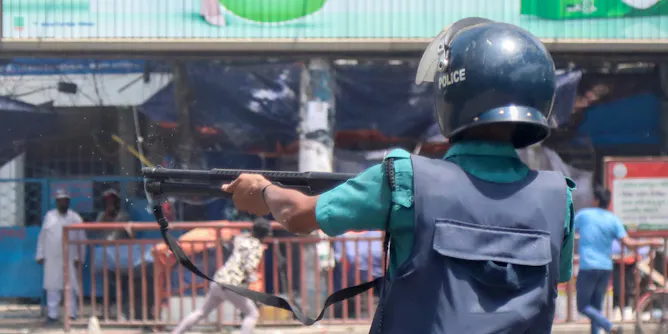
Police brutality has left many protesters dead in Bangladesh, but the authorities are not being held to account.
Articles on Bangladesh
Displaying 41 - 60 of 177 articles
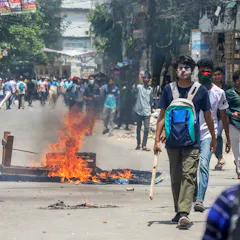
Student protests over quotas for public sector jobs rock Bangladesh.
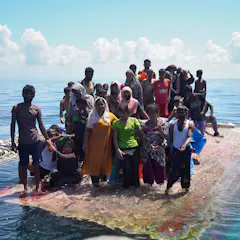
The number of Rohingya trying to escape Bangladesh by boat has risen 74% since October. Increasing lawlessness in the camps is one of the major push factors.
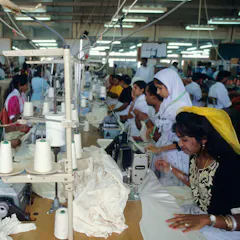
Garment workers around the world experience unacceptable forms of exploitation.

India is pursuing a policy of pleasing the ruling elites in its neighbourhood, which it hopes will serve its national aspirations to become a regional powerhouse like China.
Though hard to quantify, the social consequences of climate change are vast.
We rarely see good news headlines when a cyclone, earthquake or wildfire does not turn disastrous.
Sea-level rises and storm surges don’t discriminate, but societal structures do.
Something unusual seems to be happening with dengue, a potentially fatal mosquito-borne viral disease.

A new study suggests disclosure laws to prevent forced labour in the clothing industry are a form of window dressing designed to ease the conscience of consumers rather than protecting workers.
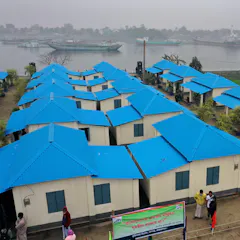
By 2050, 13.3 million people in Bangladesh could be displaced by the climate crisis. For them to be safe, the government needs to do more than build buildings.
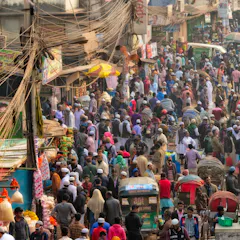
What makes a city workable to many people is access to informal labour markets, cheap travel options, flexible housing and rental arrangements.
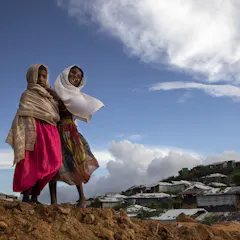
As conflicts last longer, the number of refugees and other displaced people is on the rise.
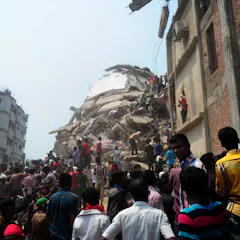
Ten years after a garment factory collapsed in Bangladesh, scholars find slow fashion practices hold the keys to a more sustainable, joyful relationship with clothes.
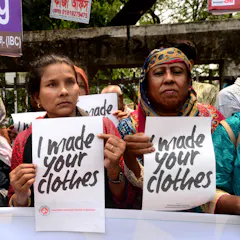
Ten years after the collapse at Rana Plaza in Bangladesh, the garment industry’s deadliest disaster, reforms are incomplete. The opaqueness of today’s complex supply chain is part of the problem.
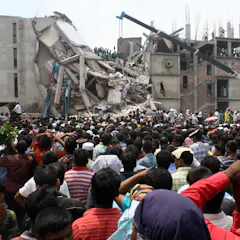
At least 1,132 workers died when the Rana building collapsed in Bangladesh, while several thousand more were injured.
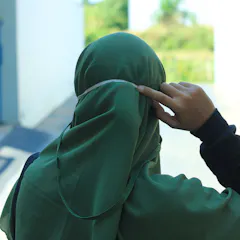
Migrant women come to Australia with high hopes but their husbands’ careers often take precedence. Farjana Mahbuba spoke to Bangladeshi Muslim women, finding stories of isolation and under employment.
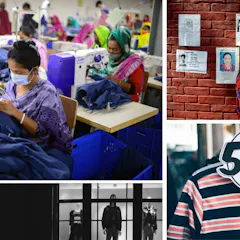
We look back to the 2013 Rana Plaza garment factory collapse in Bangladesh that killed 1,124 people and discuss how much — or how little — has changed for garment-worker conditions today.
Thirty years ago the World Bank recognised that its position was untenable. It put in place mechanisms to make the bank more accountable to ordinary people.

Two social scientists explain how caste-identities are pervasive in not just Hinduism but other South Asian faith groups as well.
Top contributors
-

Director, Centre for Accountability and Global Development, University of Essex
-
Professor of Intersectional Justice, UCL
-
Professor of Social Policy, University of South Wales
-
Lecturer in Government, Jeff Bleich Centre for Democracy and Disruptive Technologies, Flinders University
-
Professor of Development Economics, Monash University
-
Adjunct Research Fellow, Humanitarian and Development Research Initiative, Western Sydney University
-
Senior Research Fellow and Lecturer in Environmental Management, University of Manchester
-
Assistant Professor, Michigan State University
-
Senior Professorial Lecturer of Global Governance, Politics and Security, American University School of International Service
-
Associate Professor in International & Community Development, Deakin University
-
Professor of Disasters and Health, UCL
-
Senior Research Fellow, Digital Media, Western Sydney University
-
Senior Lecturer in Politics and International Relations, University of Dundee
-
Senior Lecturer in Anthropology, University of Sussex
-
Lecturer, University of South Wales