
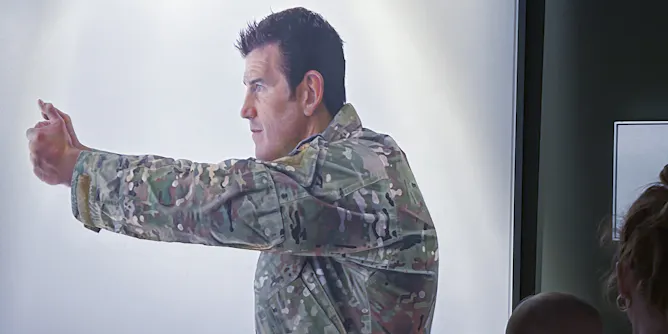
Chris Masters’ book on Ben Roberts-Smith was chosen to win the Australian War Memorial’s Les Carlyon Prize for Military History. But the prize wasn’t awarded. Why?
Articles on Australian War Memorial
Displaying all articles
War is escalating in the Middle East and continuing in Ukraine, Sudan and Myanmar. Gun violence in the US is ballooning, too. How do our cultures nurture violence? And can we change?
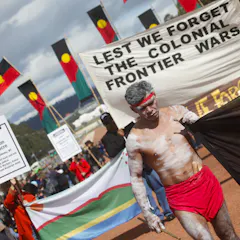
The Australian War memorial recently announced it will extend its exhibition to recognise the Frontier Wars, where Aboriginal resistance fighters fought in retaliation to massacres and other attacks.
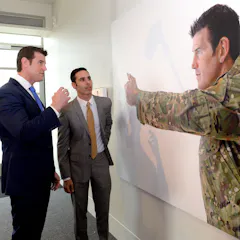
To remove the portraits would miss a valuable opportunity to debate important questions about how we construct hero stories.
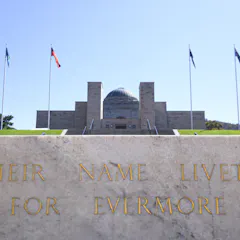
The memorial promotes a powerful national origin story. The story of frontier warfare is also a powerful foundation story that deserves to be told.
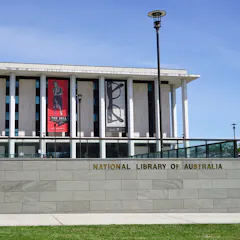
Years of cost-cutting measures have left Australia’s national galleries, libraries, archives and museums in dire straits.
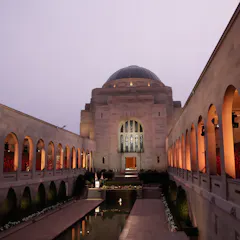
The Australian War Memorial’s pledge to recognise the frontier wars is an end to ‘black armband’ rhetoric. It should now investigate the Aboriginal resistance, and see it as a military operation.

In her new SBS documentary, Rachel Perkins travels across vast territory to capture key aspects of a war that lasted more than 100 years.
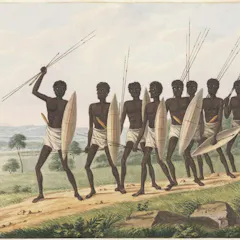
The widespread conflict that accompanied Australian life for 140 years was arguably our most important war. We need a museum telling this story, funded on a par with The Australian War Memorial.
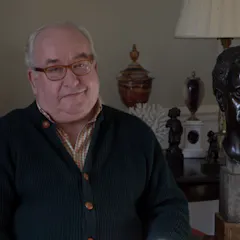
In 1918, in Wünsdorf prisoner-of-war camp, a German sculptor created a bust of Indigenous soldier Douglas Grant. For decades, the whereabouts of this nationally significant sculpture were unknown - until now.
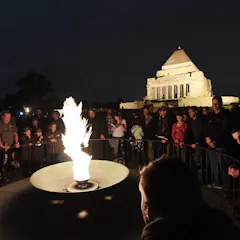
Australia is spending cast amounts of money commemorating the war dead, but it’s time we took better care of ex-servicepeople who are still living.
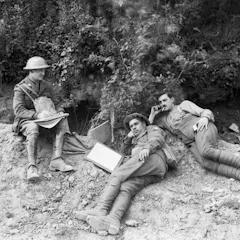
Australian authorities sent artists to the WW1 battlefields to interpret and commemorate war. But unlike similar schemes in Britain and Canada, ours neglected the war experience at home and the perspective of women artists.
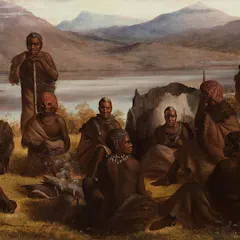
That colonial wars were fought in Tasmania is irrefutable. More controversially, surviving evidence suggests the British enacted genocidal policies against the Tasmanian Aboriginal people.
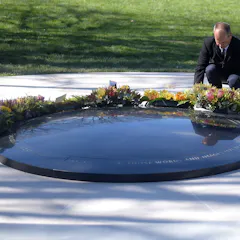
A memorial unveiled in Canberra this week honours the work of Australian war correspondents, but a new Pentagon “Law of War” manual identifies journalists in conflict zones as “spies and belligerents”.
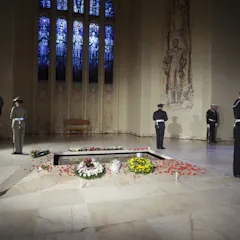
Why did it take three-quarters of a century beyond the first world war for Australians to build our own tomb of the unknown soldier, remembering the 23,000 Australians who died with no known grave?
Top contributors
-

Associate Professor in History, Deakin University
-
Director, Vice-Chancellor's Centre of Public Ideas (CoPI) and Donald Horne Professor of History and Public Ideas, University of Canberra
-
Professor of History, President, Australian Historical Association, Macquarie University
-
Honorary Research Professor, Aboriginal Studies Global Cultures & Languages, University of Tasmania
-
Lecturer in History, UNSW
-
Podcaster and cultural knowledge facilitator, Indigenous Knowledge
-
Senior Research Fellow, Indigenous Land & Justice Research Group, UNSW
-
Lecturer in Australian Political Studies, University of Canberra
-
Research Fellow, Associate Professor (Adjunct), School of Social Sciences (Archaeology), The University of Queensland
-
Associate Professor in Peace Studies, University of New England
-
Professor in Screen Media and Creative Arts, Macquarie University
-
Senior Lecturer, School of Humanities and Social Sciences, Deakin University
-
Professor in Art, Curtin University
-
Postdoctoral Fellow, School of Archaeology & Anthropology, Australian National University
-
Professor, Australian and Aboriginal History, Faculty of Arts, Design and Architecture, Convenor: Indigenous Land & Justice Research Group, UNSW