
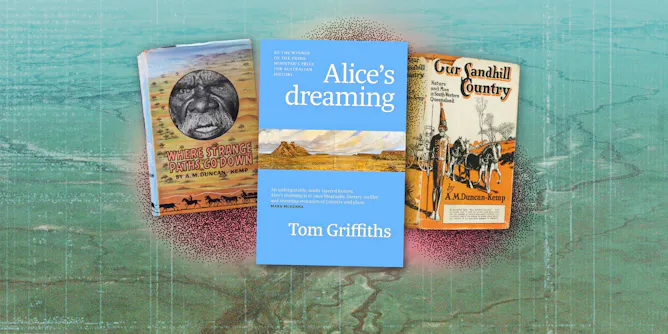
Alice Duncan-Kemp’s books drew on a childhood in intimate contact with Mithaka people. Historian Tom Griffiths’ book, Alice’s dreaming, reminds us of her work.
Articles on Frontier Wars
Displaying 1 - 20 of 26 articles
How will a new generation of viewers respond to the Ingalls family and their experiences of life in an America that was still taking shape?
Chris Masters’ book on Ben Roberts-Smith was chosen to win the Australian War Memorial’s Les Carlyon Prize for Military History. But the prize wasn’t awarded. Why?
Australian military history is still unsure how to represent the frontier wars. Uprising contests most histories, describing a coordinated Aboriginal military front.
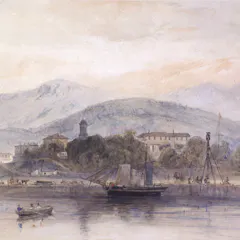
Along with British and Irish convicts, 627 free men, women and children were transported to the 19th-century penal colonies of Van Diemen’s Land. Their stories, mostly forgotten, are moving.
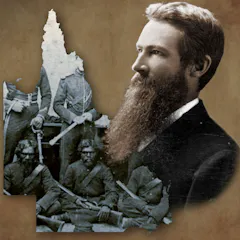
Many argue Samuel Griffith, twice Queensland premier and our first chief justice, is guilty of colonial war crimes. Raymond Evans searched for the evidence to nail him but found a different story.
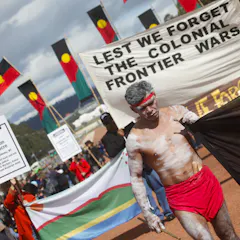
The Australian War memorial recently announced it will extend its exhibition to recognise the Frontier Wars, where Aboriginal resistance fighters fought in retaliation to massacres and other attacks.
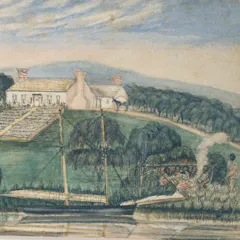
Eliza Batman has remained largely a footnote to her husband, whose dark deeds in the war over land are now well-known. How should we remember her today?
The memorial promotes a powerful national origin story. The story of frontier warfare is also a powerful foundation story that deserves to be told.
The Australian War Memorial’s pledge to recognise the frontier wars is an end to ‘black armband’ rhetoric. It should now investigate the Aboriginal resistance, and see it as a military operation.

Prime Minister Anthony Albanese stated students should learn about the atrocities suffered by Indigenous people. However, appropriately teaching history is only one area that needs to be addressed.

In her new SBS documentary, Rachel Perkins travels across vast territory to capture key aspects of a war that lasted more than 100 years.

The Debney Peace, negotiated over a 5-day ceremony on Mithaka Country, is nationally significant to 21st century Australia.
The widespread conflict that accompanied Australian life for 140 years was arguably our most important war. We need a museum telling this story, funded on a par with The Australian War Memorial.
Police played a unique role in many settler colonies executing assimilationist policies designed to dismantle First Nations families.
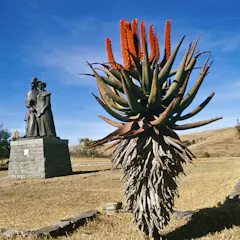
It is not hard to see the roots of 20th century apartheid policies in the legacy of the British settlers.
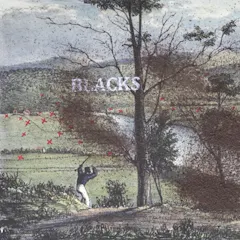
This major exhibition examines Tasmania’s overlooked history of dispossession and frontier war.
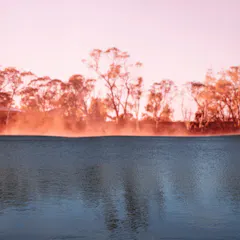
There is a long history of cultural silence on the frontier wars that characterised Australia’s colonisation. Peta Clancy’s exhibition invites us to see this history in the Victorian landscape.
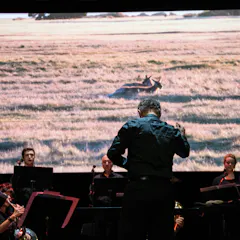
A Tasmanian Requiem brings together Western and Aboriginal voices to confront the violence of the state’s Black War. It shows what a historical reckoning, and reconciliation, might look and sound like.
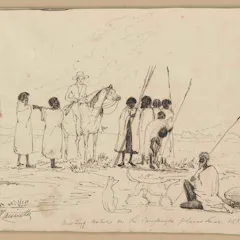
George Hamilton published An Appeal for the Horse in 1866, a defence of animal welfare well ahead of its time. However, his compassion for Aboriginal people was conspicuously lacking.
Top contributors
-

Professor in History, University of Tasmania
-
Honorary Research Professor, Aboriginal Studies Global Cultures & Languages, University of Tasmania
-
Professor, Australian and Aboriginal History, Faculty of Arts, Design and Architecture, Convenor: Indigenous Land & Justice Research Group, UNSW
-
Associate Professor in History, Deakin University
-
Wesfarmers Chair of Australian History, The University of Western Australia
-
PhD Candidate, University of Newcastle
-
Dean Laureate and Professor of History, Victoria University
-
Honorary Lecturer, School of Literature, Languages and Linguistics, Australian National University
-
Adjunct Researcher, University of Tasmania
-
Associate Professor Emeritus and Head, Isikhumbuzo Applied History Unit, Rhodes University
-
Research Fellow, Associate Professor (Adjunct), School of Social Sciences (Archaeology), The University of Queensland
-
Lecturer in Criminology, University of Tasmania
-
Professor of Law, University of Technology Sydney
-
Senior Research Fellow, Indigenous Land & Justice Research Group, UNSW
-
Director, Vice-Chancellor's Centre of Public Ideas (CoPI) and Donald Horne Professor of History and Public Ideas, University of Canberra