
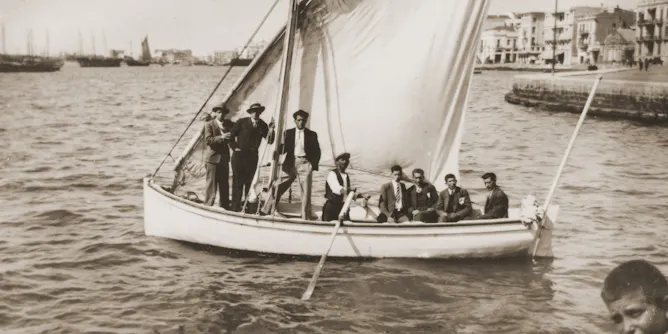
Vital Hasson was born into the Jewish community of Salonica, Greece, a cultural capital of the Sephardic world. After World War II, he was executed for helping the Nazis destroy that community.
Articles on Auschwitz
Displaying 21 - 38 of 38 articles
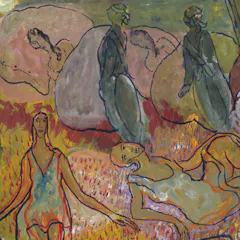
Charlotte Salomon’s dizzying work of hope and creativity amid destruction and despair, is a moving early example of the contemporary graphic novel

You might think it morbid, but people have many reasons for visiting the sites of battles and disasters.
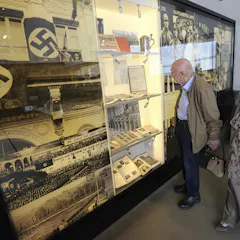
Memory is traumatic but also important in Holocaust remembrance. It also serves a critical role in providing lessons for the future.
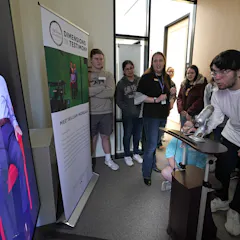
In anticipation of International Holocaust Remembrance Day, a scholar explains how digital technologies can help close knowledge gaps about the catastrophe that claimed the lives of 6 million Jews.
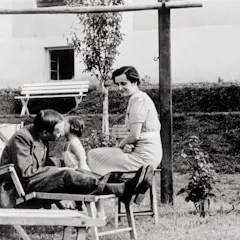
In Terry Kurgan’s book family history, however tortuous, is subsumed into a greater history of the greatest atrocity.
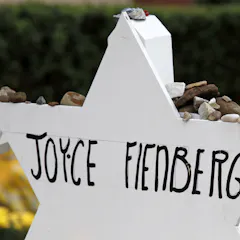
The deaths of 11 worshippers at the Tree of Life synagogue filled people with sadness and fear. Transforming the grief into meaning is very difficult, a trauma psychologist writes, but ultimately healing.
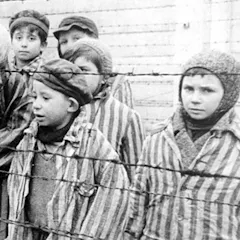
The more notorious concentration camps of the 20th century must serve as a stark reminder of the depravity of tearing children away from their parents and putting them in camps.
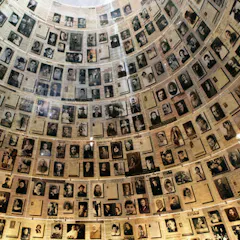
Foundational to the work of Holocaust educators and many teachers have been the survivors. Given there are fewer survivors who are alive today, how do educators inform future generations?
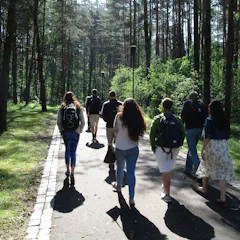
In recent years, the number of people traveling to sites of death, natural disaster, acts of violence, tragedy and crimes against humanity has dramatically increased. Is it immoral?
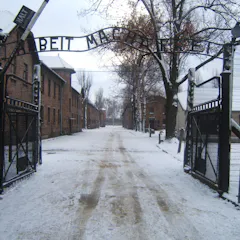
The imperative issued by Levi’s text is not that one should persist in seeing the human in the inhuman. It is more like its opposite: that one bear must witness to the inhuman in the human.
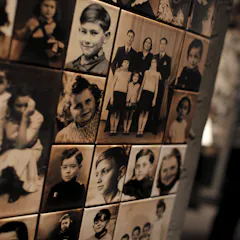
Can the Nazis be forgiven? A rabbi explains why this question needs a more profound examination of some of Judaism’s deepest ethical mores and theological beliefs
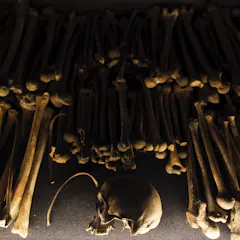
Significant links connect racial science in colonial southern Africa with the holocaust of the European Jews. Colonial racial science also contributed to the 1994 genocide in Rwanda.
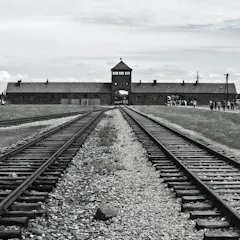
Myths of the Sonderkommando as unfeeling drunkards do them an injustice and damage history.
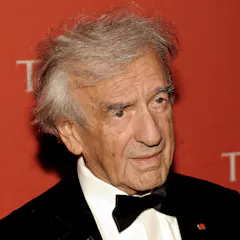
The Nobel laureate chronicled a world gone mad.
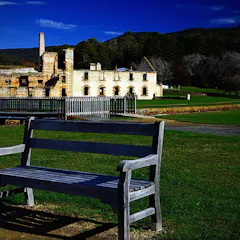
The 20th anniversary of the massacre at Port Arthur again raises pressing questions about ways of remembering the tragedy.

As we approach the 70th anniversary of the liberation of Auschwitz on January 27, the victims of the Holocaust stand, with a good reason, at the centre of our attention. It is survivors’ memoirs that shaped…
Ouch. I think my entire body physically cringed when I came across the latest story of a misjudged tweet gone viral this week: the case of Breanna Mitchell, the naïve teenager and self-styled “Princess…
Top contributors
-

Professor of History, USC Dornsife College of Letters, Arts and Sciences
-
Associate Professor of Modern Continental European History, University of Warwick
-
Professor of Sociology, Rowan University
-
Associate Professor in Modern European History and Jewish History, UNSW
-
Professor of Social History, University of Bristol
-
Lecturer, Media, University of Tasmania
-
Montague Burton Fellow in Jewish Studies, University of Leeds
-
Albert E. Kent Professor of Psychiatry, Yale University
-
Affiliate Associate Professor of History, University of Sydney
-
Associate Professor of History and Politics, Thompson Rivers University
-
Lecturer, Philosophy of Traditional Judaism, Colorado State University
-
Postdoctoral Research Fellow at the Institute for Advanced Studies in the Humanities, The University of Queensland
-
Professor of History, University of California, Los Angeles
-
Casual Academic, Faculty of Arts and Social Sciences, University of Technology Sydney
-
Professor of Anthropology, University of the Western Cape