

Rural regions need skilled graduates and for international students studying there to stay and work. Housing and employment security are key in factors in whether this is viable.
Articles on Atlantic Canada
Displaying 1 - 20 of 25 articles
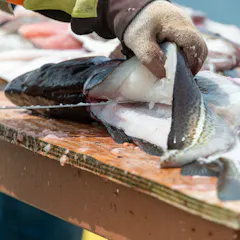
Fisheries scientist Tyler Eddy explains the history of the North Atlantic cod moratorium, and why it was lifted in 2024. Listen to The Conversation Weekly podcast.
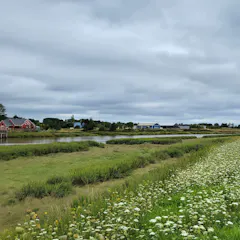
With the recent scrapping of Nova Scotia’s Coastal Protection Act, the future of Canada’s iconic Bay of Fundy now rests in the hands of private interests, with potentially significant consequences.

Public concerns for real estate value, and a focus on the self, make flood risk maps unpopular. However, these concerns should not dissuade governments from providing resources we can all trust.
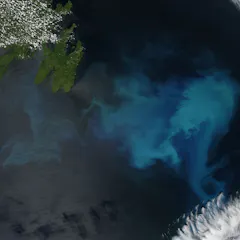
Recent research sheds light on the ocean’s annual ‘biological clock’ and highlights the key dynamics that make it susceptible to climate change.

Momentum on basic income is growing in Canada. However, pervasive myths about poverty are making implementing the idea challenging.

Potatoes are one of Canada’s largest commercial crops. Artificial intelligence technologies can be used to maximize crop yields.
As oceans warm, Canada’s marine protections system looks woefully inadequate. New monitoring systems and flexible governance can help Canada protect the areas most likely to have the greatest impact.
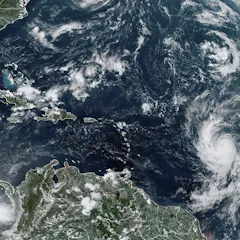
Can Hurricane Fiona give us a hint about what future climate change might bring to Eastern Canada? Unravelling this question could lie in understanding ancient storm records.
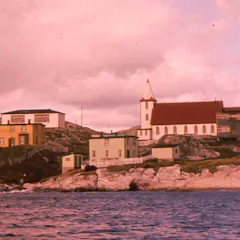
Resettled families did not receive adequate compensation for property left behind and were rarely provided with sufficient funds to build new lives.

Supporting people with disabilities in an emergency is not just about doing the right thing, it’s also the law, fundamental to human rights and part of several international agreements.

Evacuations can save lives, as in the case of post-tropical cyclone Fiona. As more frequent extreme weather events are set to occur, it is important to have evacuation plans in place.

Hurricane Fiona is the most devastating storm to hit Atlantic Canada. International collaboration between ocean measurement institutions is necessary to help efficiently plan responses to hurricanes.

Hurricanes don’t usually maintain high wind speeds as they make their way toward Atlantic Canada. But ocean warming may be linked to the increasing intensity of storms like Fiona.
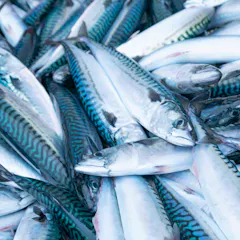
Suspending mackerel and spring herring fishing in the southern Gulf of St. Lawrence will impact the fishing industry on many levels.
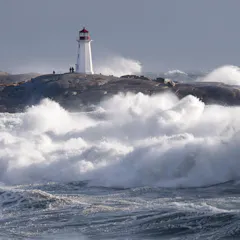
The idea that Atlantic Canada’s pandemic success is due to a ‘collective ethic’ unique to the region is disingenuous. In fact, government decisions to prioritize human lives explain the success.
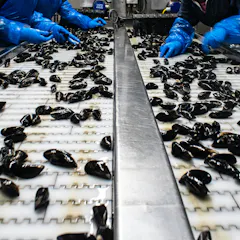
Debates about public safety and temporary foreign workers continue without input from those whose health is most affected. Migrant workers themselves are largely invisible amid discussions about risk.

Irving Oil is transporting Canadian crude oil by tanker through the Panama Canal and the Gulf of Mexico to its Saint John refinery in an effort to offset any impact COVID-19 might have on its supply.
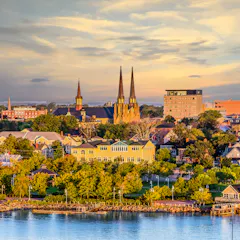
In Atlantic Canada, leaders must avoid the mistakes made in the country’s largest cities where people are being pushed out due to high housing prices.

As Canada approaches its federal election, political pundits have been warning of a polarized war among Canadians. But a new survey tells a story of unity.
Top contributors
-

Associate Professor, University of King's College
-
PhD student in Sociology, Dalhousie University
-
Professor of Sociology, Western University
-
Lecturer, Hue University of Agriculture and Forestry
-
Professor, School of Environment, Resources and Sustainability, University of Waterloo
-
Professor of Civil Engineering and Director of the Beaty Water Research Centre, Queen's University, Ontario
-
Associate Professor, Environmental Sustainability Research Centre, Brock University
-
Scholarly Director of the MacEachen Institute for Public Policy and Governance, Dalhousie University
-
Maître de conférences en biologie halieutique, Institut Agro Rennes-Angers
-
Professor and Canada Research Chair (Tier 2) in Advancing the UN Sustainable Development Goals, Royal Roads University
-
Associate professor, Dalhousie University
-
Professeur et Chaire de recherche du Canada en écologie halieutique, Université du Québec à Rimouski (UQAR)
-
Ph.D. Candidate, Faculty of Agricultural and Environmental Sciences, McGill University
-
Associate Professor, Engineering, Dalhousie University
-
Research Associate, Public Policy, Dalhousie University