
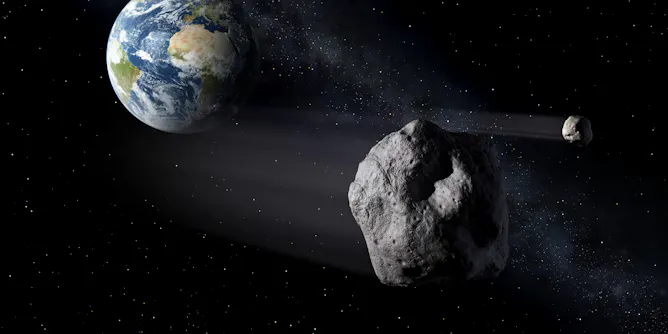
In mid-February, asteroid 2024 YR4 was spotted and originally believed to have a 3.1 per cent of hitting Earth in 2032. Further calculations revealed this was not the case.
Articles on Asteroids
Displaying 21 - 40 of 208 articles
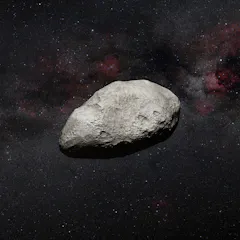
The chances of asteroid 2024 YR4 hitting Earth are small but fluctuating.
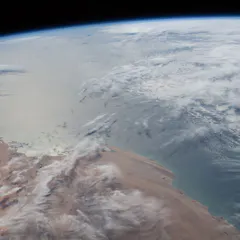
At the very beginning of its history, Earth was dry. How did it become a blue planet? A new theory could provide an answer.
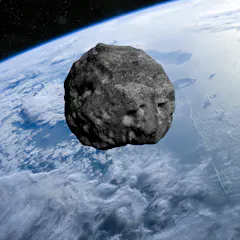
Asteroid 2024 YR4 has around a 1-in-77 chance of hitting Earth in 2032 – but there’s no need to panic.
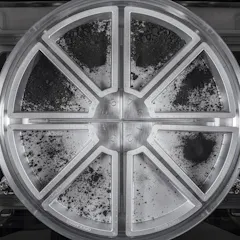
Two new studies show a briny, carbon-rich environment on the parent body of the Bennu asteroid was suitable for assembling the building blocks of life.

Comets without tails, called dark comets, are a newly discovered space object. Now, astronomers know they come in 2 classes.

In 2017, astronomers found an object they’d never seen before. Now, it’s part of a growing category of elusive ‘dark comets’ – and we might find more soon.
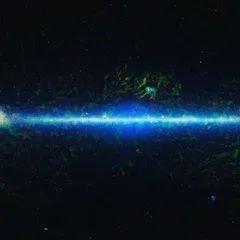
Once the Wide-field Infrared Survey Explorer couldn’t survey widely anymore, NASA scientists switched gears and began using the spacecraft for planetary defense.
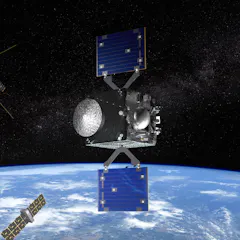
Ramses, a European space mission to study the asteroid Apophis, has been approved for perparatory work.
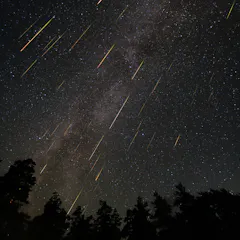
Two new studies show that the majority of meteorites originate from just one family of asteroids between Mars and Jupiter.
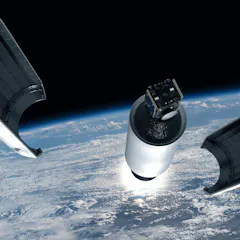
In 2022, a probe was sent crashing into an asteroid as part of a “planetary defence” test. This Monday, the second part of the mission flies off to study the consequences of the impact.
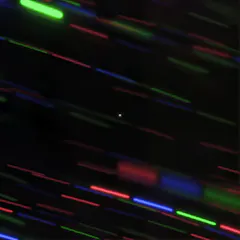
A large space rock will be temporarily captured by Earth’s gravity throughout October and November.
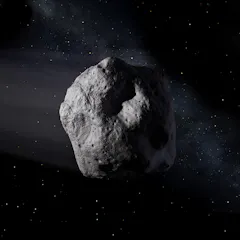
This month, they spotted just the ninth asteroid to be detected before impact with Earth.
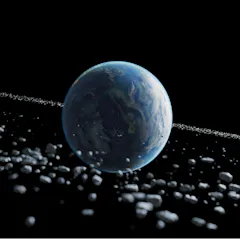
Mounting evidence suggests the rubble of an asteroid once formed a ring orbiting our planet’s equator.
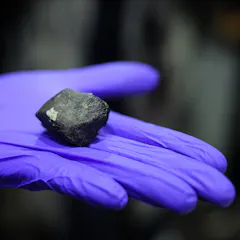
Meteorites contain a wealth of information about the origins of our solar system, helping us to understand their, and even Earth’s, origin and evolution.
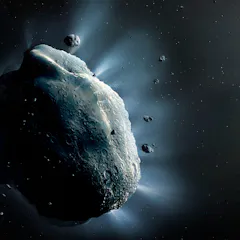
Asteroids aren’t supposed to emit gas when they get close to the Sun in the way that comets do, but Phaethon didn’t get the memo.
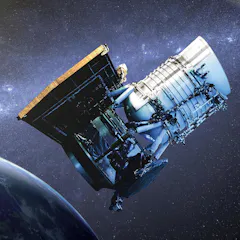
NASA’s enduring NEOWISE mission was just shut down. It was keeping an eye out for potentially dangerous asteroids – but we’re not left defenceless.
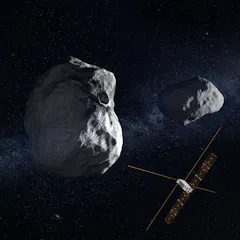
NASA’s DART was the first time we tried planetary defence – attempting to redirect an asteroid. The data from this landmark mission is still yielding new insights today.
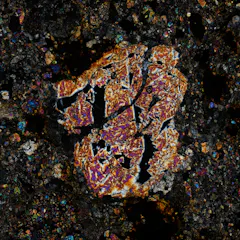
Vast amounts of space rocks litter our Solar System, and sometimes land on Earth’s surface. There are many things we can learn from them.
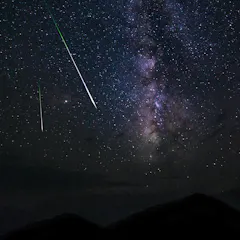
When rocks from space fall towards Earth, they usually don’t do any damage – here’s why.
Top contributors
-

Professor of Planetary and Space Sciences, The Open University
-
Professor (Astrophysics), University of Southern Queensland
-
Senior Curator (Astronomy), Museums Victoria Research Institute; The University of Melbourne
-
Head of Research Data & Software, Macquarie University
-
John Curtin Distinguished Professor (Radio Astronomy), Curtin University
-
Professor, School of the Environment, The University of Queensland
-
Adjunct professor, UNSW
-
Associate Professor, School of Earth and Planetary Sciences, Curtin University
-
Director, Binar Space Program, Curtin University
-
Professor of Vertebrate Palaeontology, University of Bristol
-
Lecturer in Astronomy, Nottingham Trent University
-
Postdoctoral Researcher in Radio Astronomy, University of Sydney
-
Senior Lecturer, School of Earth and Planetary Sciences, Curtin University
-
Research Associate, Curtin University
-
Senior Lecturer in Physics, Nottingham Trent University