
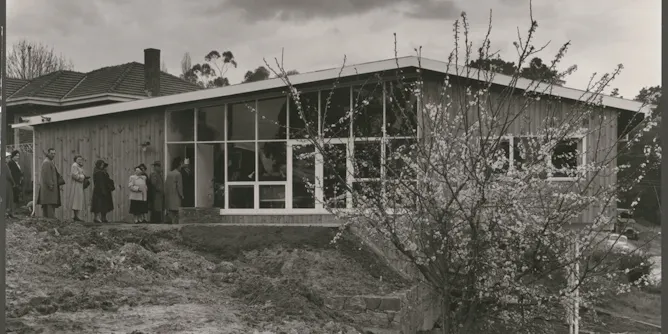
Renewed interest in mid-century modern houses is more about substance than style. They represent the emergence of a new spirit and a coming of age in postwar Australia.
Articles on Architecture
Displaying 221 - 240 of 466 articles
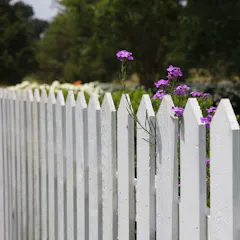
In a time of populist momentum to ‘build a wall’, your front fence says more than you think.
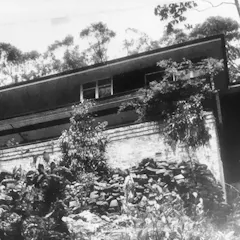
Sydney Schools weren’t actually schools, but houses that embraced the native Australian landscape, and reacted to international modernism.

The proposal to redevelop Jamestown would not only occupy a prime site with historical significance, it would displace a large community along with their heritage, skills and traditions.
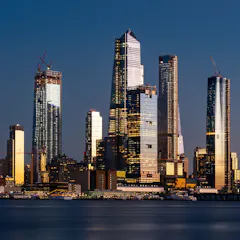
Glass has always been a notoriously energy inefficient building material – but an obsession with aesthetics led architects to ignore its shortcomings.

Ancient Rome and its empire had the concept of asylum at its heart. Its legacy provided inspiration for centres of power around the world, but today outsiders are no longer welcome.

Urban public spaces may be built to represent governments, but often become sites of protest.
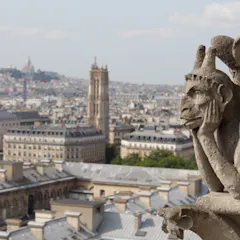
Looking nostalgically to the past, a young architect sought to revive the building as a bulwark to the uncertainty of the Industrial Revolution.

Medieval churches have often suffered fires. A look at those in Britain shows that Notre Dame can be rebuilt.

For two decades, a competitive design process pioneered by Sydney City Council has been transforming the city skyline and, new research shows, raising standards as it goes.
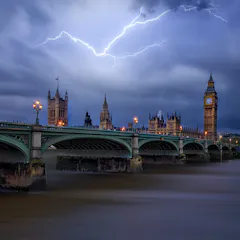
As MPs flounder over Brexit, rain is leaking into the House of Commons. Was there ever a more fitting time to discuss what this building is for and what it should look like?
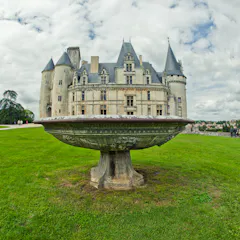
Optical illusions appear when our brains have trouble moulding raw sensory data into shapes and patterns. Designers have been exploiting this process for centuries.

Knoll is best known for transforming the design of America’s corporate offices. But she was also on the front lines of a State Department effort to promote American ingenuity and capitalism abroad.
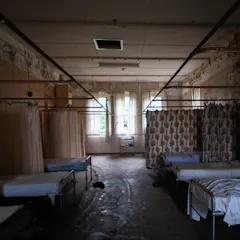
Asylums were once designed to aid mental recovery – perhaps modern prisons should take note.
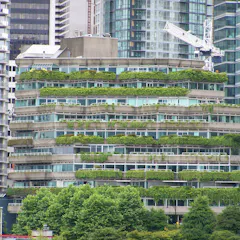
Buildings are responsible for 40 per cent of energy-related carbon dioxide emissions worldwide. Efforts to reduce emissions should no longer be voluntary.
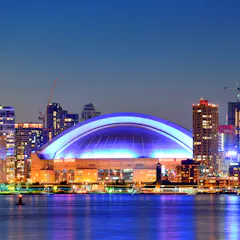
From the amphitheatre at Arles to London’s Wembley, stadiums can be adapted to serve their cities.
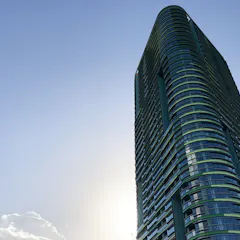
It’s tempting to blame building certifiers and the fact they are privately employed. But the cracks in the quality of our apartment buildings go deeper and can be fixed.
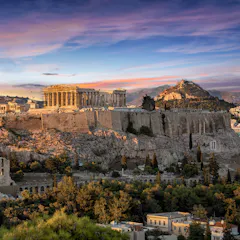
The Parthenon has been seen as central to the history of Western civilisation. But the building has a troubled past that is somewhat at odds with our ideas of democratic values.
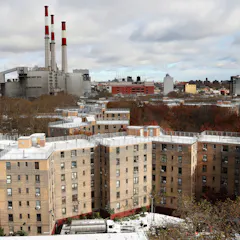
When large companies move into an area, the result is often gentrification. When this happens, the economic and social costs for displaced residents is typically high.

Work to preserve the country’s heritage is already happening.
Top contributors
-

Director of the Design and Creative Practice Enabling Impact Platform, RMIT, RMIT University
-
Professor and Chair of History of Art, Vanderbilt University
-
Chair Professor of Architecture, UNSW
-
Professor of Architecture and Urban Design, The University of Melbourne
-
Architectural Technologist and Urban Designer, Nottingham Trent University
-
British Academy Research Fellow, University of Oxford
-
Adjunct Professor of Architecture, University of Technology Sydney
-
PhD Candidate, Building Engineering, Carleton University
-
Lecturer in Architecture, UCL
-
Professor of Architecture and Urbanism, Manchester Metropolitan University
-
Professor of Practice, University of Technology Sydney
-
Transformation Fellow + Senior Lecturer in Architecture, Queensland University of Technology
-
Head and Professor of Architecture, Glasgow School of Art
-
Senior Lecturer, School of Architecture, University of Technology Sydney
-
Senior Lecturer in Architecture, Northumbria University, Newcastle