

The use of “gamification” in stock trading and other apps raises new legal challenges. Existing legal tools should be adapted to meet these challenges.
Articles on Apps
Displaying 61 - 80 of 226 articles

The study found most use Tinder casually because they’re bored, playing with the app like a kind of smartphone game - even though many use it to find true love.

There is a pervasive message from fashion, tech and the media that women can change their lives if they could be more confident.
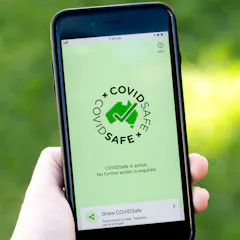
Instead of making the lives of contact tracers easier, analysis shows the expensive technology missed contacts and added to their workload.

When researchers look at CCTV footage of how people really react during earthquakes – as opposed to what they report after the fact – it looks like alerts aren’t yet inspiring protective action.

Informed data donations are different from the usual online data experience. They’re easier to manage because of technological advances.

Ultimately, screens are a part of modern life – children need to learn how to navigate them.

New research shows technologies like pregnancy apps do not account for pregnancy loss 72% of the time, causing real harm to users.

Privacy, security, access and design will need to be monitored as the UK moves to ‘appify’ public services.

The federal government has awarded $75 million to Accenture to design a digital replacement for the cards filled in by international arrivals, complete with details of passengers’ COVID vaccination status.

Connecting health apps to health care can enable better care for patients with chronic diseases, and it has the potential to lower skyrocketing US health spending.

It’s time African governments supported the development of online platforms designed to support local people in the informal sector.
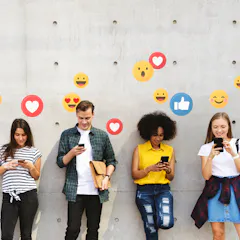
The pandemic has people spending more time online for school, socializing and work. To maintain a healthy relationship with social media, people should manage their online time and activities.

An app to record consent won’t address the real problems of sexual violence and how our society responds to it.

The majority of children’s apps advertised as educational are not based on relevant research.

If you’re struggling to cut back on the booze, your subconscious brain may be over-riding your conscious brain. A new form of brain training targets our subconscious tendencies towards alcohol.

The internet ushered in new ways of raising money, particularly with the rise of crowdfunding. But making appeals for cash on social media represents an entirely different phenomenon.

Download rates have been disappointing and people aren’t following self-isolation warnings.

The app’s predictions may only work if we’re willing to make life changes.

An app that young people use to share videos of themselves dancing might seem like a silly diversion, but it’s become a powerhouse social media platform.
Top contributors
-

Professor & Director, Hub for Apple Platform Innovation (HAPI), School of Computing Technologies, RMIT University
-
Professor of Reading and Children’s Development, The Open University
-
Senior Research Scientist at the Australian E-Health Research Centre, CSIRO
-
Adjunct professor, Carleton University
-
Researcher, Digital Wellbeing, Western Sydney University
-
Associate Dean, Research and Innovation, University of Salford
-
Lecturer in Information and Communication Technologies, CQUniversity Australia
-
Associate Professor, Film, Screen and Creative Media, and Associate Dean Engagement, Bond University
-
Quality of life researcher and occupational therapist, The University of Queensland
-
Harvard University
-
Director of UWA Centre for Software Practice, The University of Western Australia
-
Principal Research Scientist, Australian eHealth Research Centre, CSIRO
-
Associate Professor, Informatics and Operations, Kingston University
-
Associate Dean, Interaction, Technology and Information, RMIT University
-
Associate Professor in Education & Technology, University of KwaZulu-Natal