
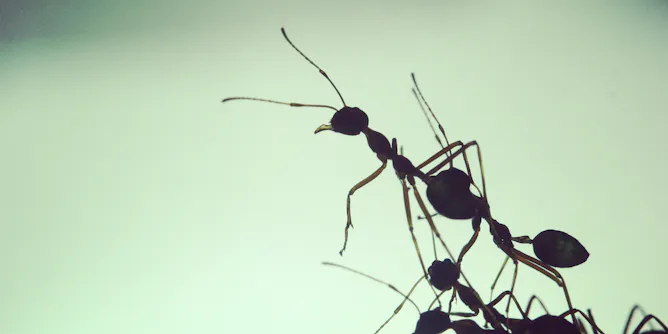
Weaver ants organise themselves into bridges to cross gaps and explore new territory – and new research shows this collective behaviour is governed by a surprisingly simple decision-making rule.
Articles on Ants
Displaying 21 - 40 of 93 articles
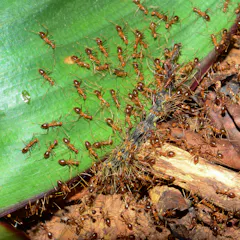
The two pest ant species have huge impacts on the areas they invade. The fire ants can even kill people. Unfortunately, these ants will be hard to eliminate.

Ants are skilled surgeons, bacteria have their own internet, and scientists think sperm whales have names.
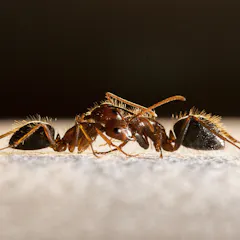
Researchers explore what happens when ants can’t properly use smell to detect friend from foe.

Our lives are intertwined with animals, insects and birds – we should consider them more when we design our cities.
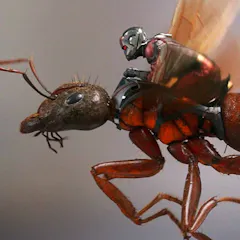
Tiny ants might seem like unlikely inspirations and sidekicks for a superhero, but real life ants have astonishing superpowers that make them formidable allies.

The ways eastern fence lizards have changed in response to red imported fire ants demonstrate how species can adapt to survive the presence of invasive predators.
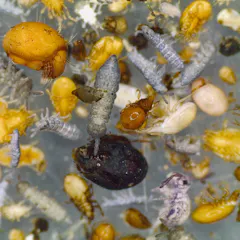
New research shows rewilding with invertebrates – insects, worms, spiders and the like – can go a long way in bringing our degraded landscapes back to life.
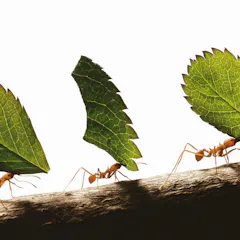
Over hundreds of million years of evolution, ants have come up with some pretty smart solutions to problems of agriculture, navigation and architecture. People could learn a thing or two.

Invertebrates are “the little things that run the world”. So researchers decided to count all the ants on Earth, to help monitor how they’re coping with environmental challenges.
Ant feet are equipped with an array of tools – from retractable sticky pads to claws to special spines and hairs – enabling them to defy gravity and grip virtually any surface.
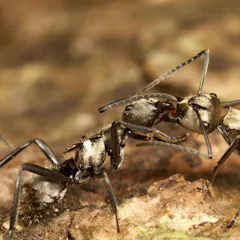
A new map of more than 14,000 ant species around the world will guide efforts for discovery and conservation.
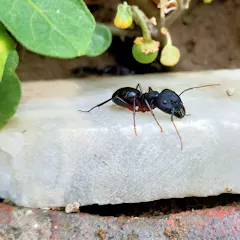
Give ants a chance.

E.O. Wilson was one of the world’s leading experts on ants, but his other passion was convincing humans to see themselves as part of the natural world.
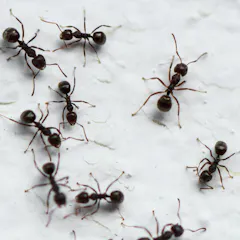
A clue is in insects’ hairy feet.
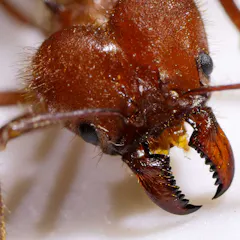
Many small animals make their teeth and claws from a smooth blend of proteins and heavy elements. These materials can form very sharp tools that make it possible to cut tough substances using tiny muscles.
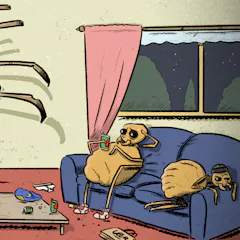
Yellow crazy ants are one of the world’s worst invasive species. And it turns out they have unique systems of reproduction that make life in the queendom more complicated than we realised.

A type of structure called a ‘scaffold’ acts like a safety net for ants when they go foraging, preventing them from slipping on steep surfaces.
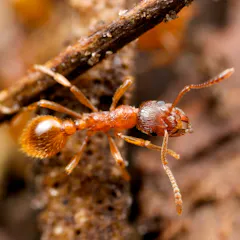
Animals that are traded as pets are more likely to be invasive species, including a relatively new pet: ants.
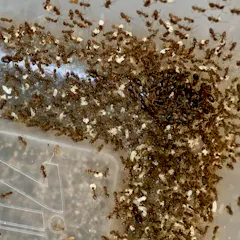
The spread of tawny crazy ants may be driven, in part, by their need for calcium. The calcium-rich limestone bedrock of the lower U.S. Midwest may provide ideal conditions for populations to explode.
Top contributors
-

Associate Professor in Entomology, University of Sydney
-
Research Fellow, School of Biosciences, The University of Melbourne
-
Associate Professor, School of Mathematical Sciences, Monash University
-
Postdoctoral Fellow, Max Planck Institute of Animal Behavior
-
ARC Future Fellow, Behavioural Ecology, Macquarie University
-
Lecturer, Chemistry and Forensic Science, Nottingham Trent University
-
Associate Professor, James Cook University
-
Research scientist, James Cook University
-
Associate Professor, Ecology, Northumbria University, Newcastle
-
Postdoctoral Research Associate, Florida International University
-
Lecturer, Department of Genetics and Genome Biology, University of Leicester
-
Professor of Ecology, The University of Western Australia
-
PhD Candidate, Department of Genetics and Genome Biology, University of Leicester
-
Senior Lecturer in Biology, Brunel University of London
-
DECRA Fellow and Lecturer, School of Life and Environmental Sciences, University of Sydney; The University of Western Australia