

The health secretary has made many inaccurate statements about vaccines. But the science is clear that vaccines have dramatically reduced childhood illness, disability and death.
Articles on Antigens
Displaying all articles
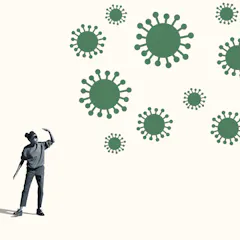
Your immune system is often able to fend off pathogens it’s never seen before. But defending your body against all of them all at once is a tough challenge.

Annual flu vaccines are in a constant race against a rapidly mutating virus that may one day cause the next pandemic. A one-time vaccine protecting against all variants could give humanity a leg up.
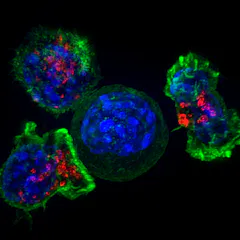
Immunotherapy has the potential to eliminate tumors, but works best for select patients. Engineering T cells to bypass cancer’s defenses could help expand treatment eligibility to more patients.

An effective nasal vaccine could stop the virus that causes COVID-19 right at its point of entry. But devising one that works has been a challenge for researchers.
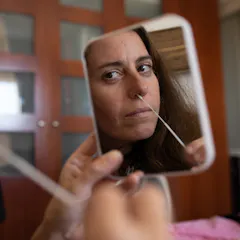
The Biden administration intends to distribute an additional 500 million at-home rapid COVID tests starting in January.
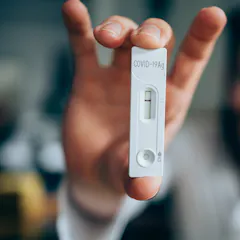
Knowing when and how often to use rapid tests is key to getting an accurate picture of your COVID-19 status.
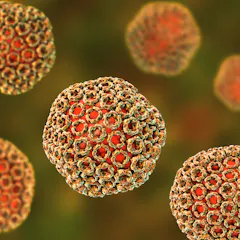
Manufacturing is just one part of the vaccine ecosystem. It’s the health system that delivers vaccines and people must be willing to take them.
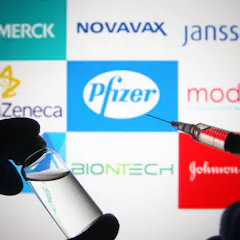
Various companies use different ingredients and different delivery systems in their COVID-19 vaccines. Researchers are investigating whether it’s better for individuals to mix what’s available.
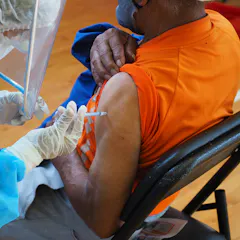
Most shots work best when inserted into muscle. The shoulder muscle known as the deltoid works best.
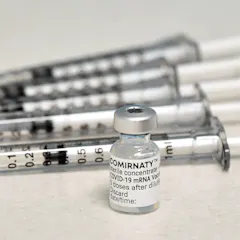
Giving smaller vaccine doses in multiple shots is often more effective than a larger single dose.
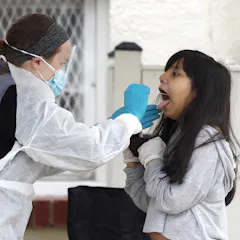
In September, production of rapid tests really ramped up in the US. But due to low accuracy and massive numbers needed, these tests alone are unlikely to have much of an effect on the pandemic.
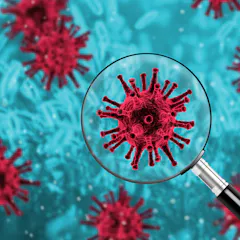
Testing large numbers of people regularly would reduce the spread of the coronavirus in the US. Laboratory testing is slow and expensive, but rapid screening tests could be the answer.
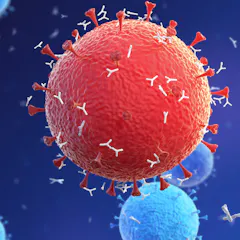
An antigen test was given emergency use authorization by the FDA in early May. A biochemist explains how COVID-19 antigen tests work.
Top contributors
-

Associate Professor of Molecular Medicine, UMass Chan Medical School
-
Associate Professor of Public Policy, University of Maryland, Baltimore County
-
Assistant Professor of Medicine, University of California, San Francisco
-
Assistant Professor of Epidemiology, Penn State
-
Associate Professor of Biology, Rochester Institute of Technology
-
Group Leader, KEMRI-Wellcome Trust Research Programme, Kenya; Associate Professor, Centre for Tropical Medicine & Global Health, University of Oxford
-
Professor of Nursing, Purdue University
-
Professor of Microbiology, School of Medicine, University of Washington
-
Vice-Chancellor's Research Fellow, School of Health and Biomedical Sciences, RMIT University
-
Professor of Biostatistics, University of Arizona
-
Associate Professor of Microbiology and Cell Science, University of Florida
-
Professor of Food Science, Penn State
-
Professor Emeritus of Microbiology and Immunology, University at Buffalo
-
Assistant Professor of Epidemiology and Biostatistics, University of Arizona
-
Clinical Associate Professor of Infectious Diseases, Stanford University