

Our new study shows you may be able to walk, run, lift or dance away depression. And the more intense your exercise program, the better.
Articles on Antidepressants
Displaying 21 - 40 of 110 articles

Australia has among the highest antidepressant prescribing rates in the world.

A Finnish study found antidepressant use increased among men and women in the four years leading to the relationship ending – but there was a larger increase among women.

Guidelines on mental health during pregnancy and after birth emphasise antidepressants should be prescribed if they’re needed.

Research suggests AI could diagnose depression from health records or even social media posts. And it could overcome GP bias when it comes to prescribing medications.
It is unknown exactly how SSRIs and psychedelics treat depression, but their ability to boost flexibility may be more important than previously thought.

Amid the fanfare about a new medication for postpartum depression, it’s important to remember that PPD is underdiagnosed and undertreated, and that safe and effective treatments already exist.
Combining psychotherapy with medication can lead to more immediate and enduring results by boosting the brain’s neuroplasticity.
Clinical trial funders now insist studies use female participants. But it will still take a long time for our understanding of how medicine affects women to catch up.

Antidepressants are prescribed for anxiety or depression but are also used in chronic pain and incontinence. When you get a respiratory infection, it’s important to avoid dangerous interactions.

This latest research provides hope for people whose symptoms are harder to treat.

The longer you taken an antidepressant, the more likely you are to experience withdrawal effects.

Receiving a cancer diagnosis and undergoing cancer treatment can be a traumatizing experience. Psychedelics like LSD, psilocybin and MDMA could help alleviate symptoms from cancer-related PTSD.

Postpartum depression can strike days, weeks or months after delivery, and the much rarer cases of psychosis can be difficult to detect.
Antidepressants have been prescribed to millions of people with little thought about how those people will come off them.

An overreliance on medication as the first-line treatment for depression can lead some people to be labeled with treatment-resistant depression when there are other viable alternatives for relief.

There are lots of reasons someone might want to stop taking antidepressants, from a life change to wanting to take a break. But the process of tapering off medications needs to be carefully managed.

Neuroactive compounds in antidepressants enter our wastewater and affect how fish function. Identifying the potential damage to fish is paramount for protecting our aquatic ecosystems.
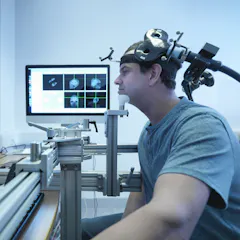
Patients who undergo transcranial magnetic stimulation say it’s painless, with few to no side effects. The treatment isn’t yet widely accessible, but for those who use it, the effects can be profound.

This rare procedure is offered by only a handful of centers in the US and around the world and should be used only when less invasive treatment options for OCD have been tried.
Top contributors
-

Visiting Clinical Research Fellow in Psychiatry, UCL
-
Professor and Personal Chair, Swansea University
-
Professor of Critical and Social Psychiatry, UCL
-
Assistant Director of Pharmacy, Mater Health SEQ in conjoint appointment as Associate Professor of Pharmacology, Bond University and as Associate Professor (Clinical), The University of Queensland
-
Enterprise Fellow (Senior Research Fellow/Senior Lecturer), Adelaide University
-
PhD candidate, School of Public Health, Monash University
-
Associate Professor of Psychiatry and Psychology, University of Pittsburgh
-
Head of the Department of Psychiatry, The University of Melbourne
-
Professor of Biology, University of Portsmouth
-
Professor of Clinical Neuropsychology, University of Cambridge
-
Medical Doctor, Western Health
-
Clinical Assistant Professor of Psychiatry and Neurology, University of Michigan
-
Distinguished Professor of Pharmacy Practice, University of Connecticut
-
Professor of Psychiatry, UNSW & Black Dog Institute, UNSW
-
Professor of Psychology, The University of Melbourne