
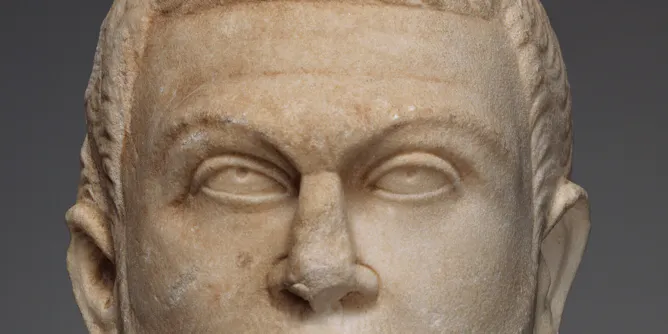
Most Roman emperors died on the job. So when the emperor Diocletian decided to abdicate and retire in March 305 CE, it was a highly unusual development.
Articles on Ancient world
Displaying 1 - 20 of 25 articles
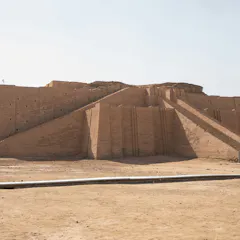
Unlike the Egyptian pyramids, ziggurats were not places of royal burials, but temples dedicated to the patron deity of a city.

The Sphinx sits right next to a pharaoh’s pyramid complex, which makes many historians think it was built to watch over his tomb.
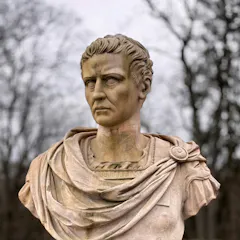
Depictions of the eccentricities of Roman leaders were (and remain) interesting. But such leaders were often also dangerous, unpredictable and frightening.

Ancient evidence tells us these people held positions of power because of their gender ambiguity, not despite it.

The ancient Greeks had a reputation for holding wild parties. But that’s not the only way to party like an ancient Greek.
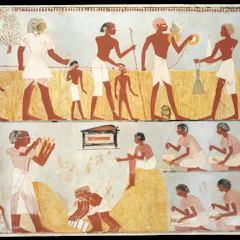
New findings add weight to the theory that states didn’t just spring up from any kind of farming – it had to be grain.

The statue, titled Kneeling Before Iran, shows the emperor grovelling before Persian king Shapur I. Where did this imagery come from? And why now?
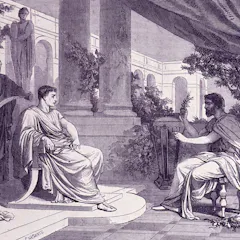
They worried deeply about the impact climate change would have on us as individuals, and on broader society.

Anyone who tried to rob a tomb was taking a big risk because both the ancient police and the law were ready to punish them.

Nymphs offer us more than just stories of sexy nature spirits. They can reveal how ancient people thought about their world and connected with their landscape.
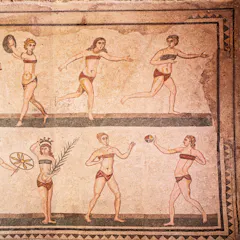
There’s nothing new about our modern obsession with playing and watching sports – they were popular in ancient Greek and Roman times too.
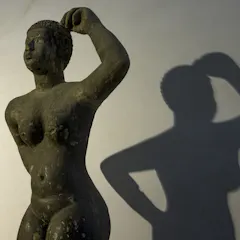
The war in Sudan has seen the looting of the country’s museums. Heritage boss Ikhlas Abdel Latief speaks about the losses.
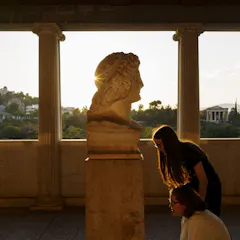
Here’s what the ancient Greeks and Romans can teach us about the environment and ourselves. From Roman soldiers in crowded camps to emperors cleaning up rivers, there are many lessons to be learned.
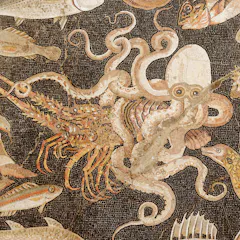
Through reports and testimonies from everyday people, ancient polymaths were able to learn a great deal about the natural world. But sometimes it was hard to separate fact from fiction.

Ancient physicians prescribed swimming, ball games and walking on sand as ideal forms of physical exercise. A treatise published in 1569 is the best source of information on their advice.
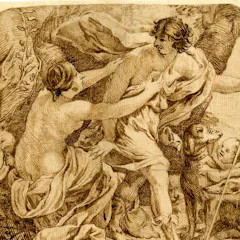
People in Ancient Greece and Rome were just as obsessed with falling in love as we are. And their romantic tribulations bring plenty of timeless advice.
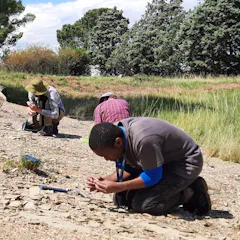
New insect treasures are almost certainly just waiting to be found by future palaeonentomologists.
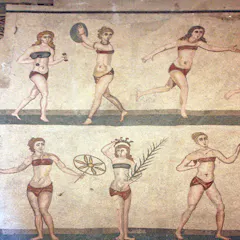
If you’re overworked, skipping gym and drinking too much – fret not. People had the same concerns some 2000 years ago.
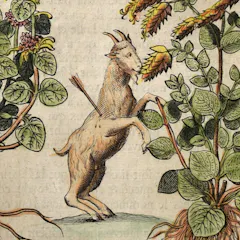
Humans have watched and learned from animals who treat their ills with bioactive plants. This animal wisdom has a scientific name: zoopharmacognosy.
Top contributors
-

Lecturer in Classics and Ancient History, The University of Western Australia
-
Associate Professor in Ancient History, Macquarie University
-
Honorary Research Fellow in Archaeology, The University of Queensland
-
Senior Lecturer in Microbiology, Western Sydney University
-
Professor Old Testament and Ancient Near Eastern Studies, Reformed Theological Seminary
-
Advising Fellow and Lecturer, University of Virginia
-
PhD Candidate; Assyriologist, Macquarie University
-
Visiting Fellow, Centre for Cultural and Creative Research, University of Canberra, University of Canberra
-
Senior Lecturer
-
Research Scholar, Classics and History and Philosophy of Science, Stanford University
-
Associate Professor in Ancient History, Australian Research Council Future Fellow, Macquarie University
-
Associate Professor, Management Discipline, Faculty of Business, Arts and Law, Southern Cross University
-
Biodiversity Coordinator, Wilderness, University of the Witwatersrand
-
Sessional Academic, Department of History and Archaeology, Macquarie University
-
Lecturer, Department of History and Archaeology, Macquarie University