
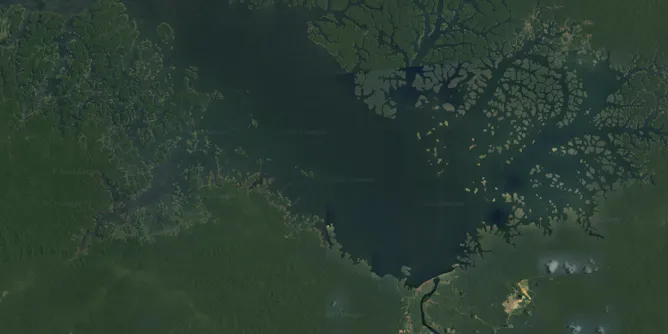
New research shows how hydropower is linked to extinctions.
Articles on Amazon forest
Displaying 21 - 40 of 93 articles

The deforestation of the Amazon in Brazil is at its peak, with 2022 breaking all records. Deforestation threatens human rights.
New research suggests 75% of the rainforest has become less resilient to stress since the early 2000s.

The climate emergency can’t be addressed with simplistic solutions. A network of Indigenous communities in Brazil invites us to reorient colonial approaches and embrace deeper change.

Which species are becoming endangered and which are recovering, according to the IUCN World Conservation Congress?
Secondary forests are growing on deforested land in the Amazon – but not enough to offset emissions from logging.
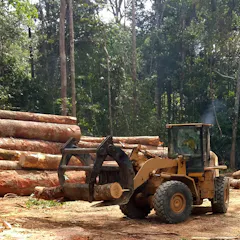
Some Amazon deforestation is caused by recent policy, but there are also long-term issues.
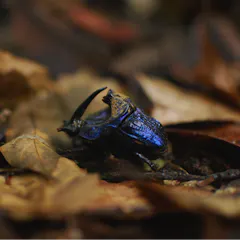
We know surprisingly little about the millions of animals, plants and birds that live in the Amazon – here’s how we can understand them better.
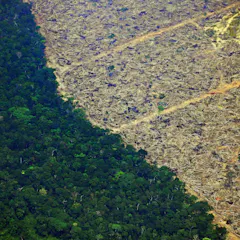
Because Brazil’s economic prosperity in the last two decades is increasingly linked to the Amazon’s good health, restoring the country’s economy is a critical first step toward ending deforestation.

One-fifth of Earth’s land could be restored to wilderness by reintroducing animals and improving management.
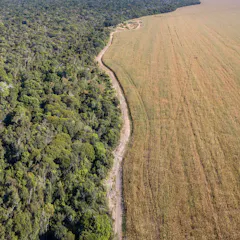
Deforestation in Brazil recently reached a 12-year high, prompting France to cut soybean imports from the country.
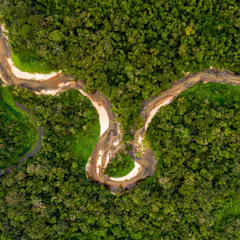
As the world’s largest rainforest, the Amazon is not only an important carbon sink, but also home to thousands of species of plants and animals and a crucial part of the water cycle.
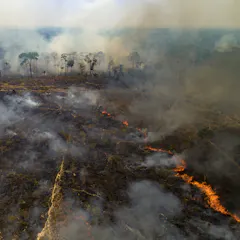
Deforestation and extreme blazes threaten the region’s biodiversity, risk transforming the rainforest into a semi-arid savannah and expose people to zoonoses that could spur new pandemics.
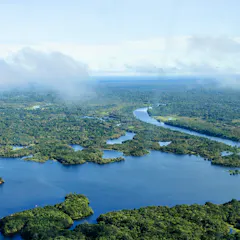
Forest that has been disturbed – but not cleared – by logging or fire can be hard to spot from satellites.
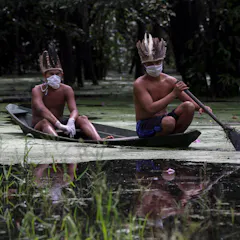
The Bolsonaro government cannot simply allow Brazil’s out-of-control coronavirus pandemic to decimate its Indigenous population, Brazil’s Supreme Court says.

Jair Bolsonaro’s government has put forward laws that could put Indigenous land into the hands of mining, agricultural and timber businesses.

Mining strips nitrogen from the soil and means the forest struggles to grow back even after mines are abandoned.
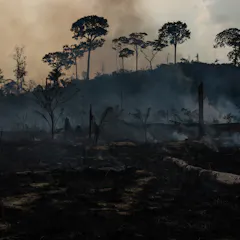
A new study finds 70% of Amazonian dung beetles were killed by the severe fire and droughts of 2015 to 2016. By spreading seeds and poop, dung beetles fertilize forests and aid regrowth of vegetation.
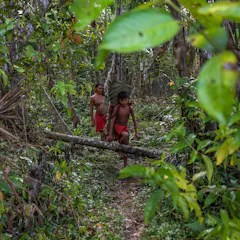
Native Brazilians are among the Amazon’s most effective defenders against logging and mining, because they’re fighting not just for the environment but for their people’s very survival.

A new study revealed that indigenous territories store more than half the carbon in the Amazon forest.
Top contributors
-

Professor of Conservation Science, Lancaster University
-
Senior Research Associate in Tropical Forest Ecology, University of Oxford
-
Researcher in Ecology, Universidade Federal do Pará (UFPA); Empresa Brasileira de Pesquisa Agropecuária (Embrapa)
-
Reader in Ecology and Conservation Biology, Manchester Metropolitan University
-
Distinguished Research Professor and Australian Laureate, James Cook University
-
Moran Professor of Conservation and Development, University of Cambridge
-
Senior Lecturer, School of Geographical Sciences, University of Bristol
-
Professor, former dean of the Faculty of Education at the University of Victoria., University of Victoria
-
Associate professor, University of British Columbia
-
Executive Director of the Stone Center for Latin American Studies, Tulane University; King's College London
-
Professor of Tropical Conservation Ecology, University of East Anglia
-
Research fellow, The University of Western Australia
-
UKRI Future Leaders Fellow / SeniorLecturer, University of Bristol
-
Research Associate, Conservation Evidence, Department of Zoology, University of Cambridge
-
Directrice de recherche CNRS, Aix-Marseille Université (AMU)