
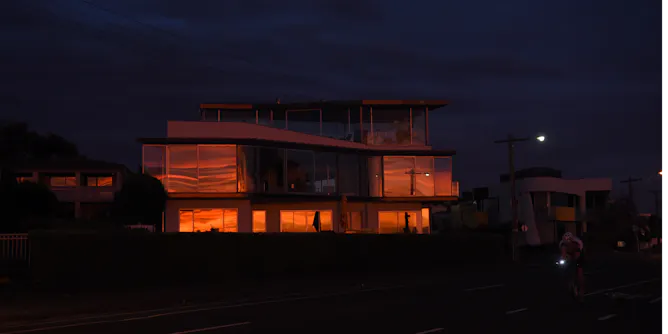
Australian houses are not designed and built for the realities of climate change
Articles on Air conditioning
Displaying 61 - 80 of 87 articles

Policies to tackle climate change will make it more expensive not to act.

The year 2030 may not seem far away, but a decade is a long time in technological terms. Widespread automation, electrification, and connectivity are set to revolutionise the car of the future.

Not all of the solutions to the climate and ecological crisis have to be painful.
Unless it sparks joy, go ahead and scratch this task off your spring-cleaning checklist.

Workplaces the world over tune their thermostats to 22C, because this supposedly optimises mental performance. But the factors that underpin a productive office are much more complicated.

July is the hottest month in much of North America. Experts explain who is most affected by heat waves and ways to cope with them.
There are competing claims over what the optimal office temperature is. Here’s what the research says.

Our study found that office workers performed just the same, whether the air conditioning was set at 22°C or 25°C. But making that tweak can cut energy use by 18%.
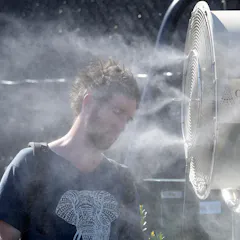
The urban heat island and summertime blackouts
The Conversation25.6 MB (download)
Today, we're asking why some of the most disadvantaged parts of our cities cop the worst of a heatwave and how you -- yes, you! -- can do your bit to reduce the risk of a summer time blackout.

We use our fridges, washing machines and air conditioners every day. That means that we should consider much more than the up-front retail price when choosing to invest in a new one.
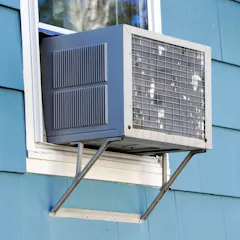
Cooling off this summer will be more expensive than ever, putting at risk the very young, the elderly and people with health conditions.
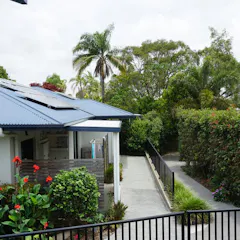
Aged-care units can be a lottery of comfortable versus uncomfortable temperatures, depending on the building’s construction and where you live within it. That needs to improve.
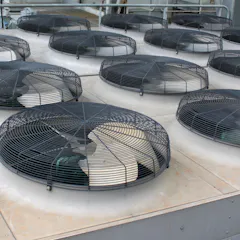
The invention of silver and plastic-clad roof panels that can cool themselves down even under the Sun’s full glare promise to make air conditioning much more energy-efficient.
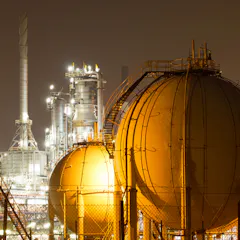
Keeping things cold wastes a massive amount of energy. What if this could be harnessed?
Our cities are getting hotter. Luckily, as a built environment, we can actually do something about it.

As the weather heats up, Australian households won’t just be cranking up the air conditioning for themselves. Some households will also be turning it on for their dogs or cats.
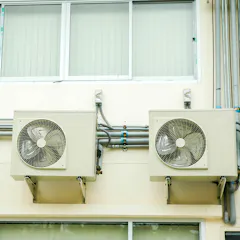
Power-hungry houses that rely on air conditioning to make up for their bad design mean that the electricity grid has to cope with summer demand peaks – and everybody pays.

Poor thermostat settings are making people uncomfortable and wasting hundreds of millions of dollars, an analysis shows. What can be done about this?
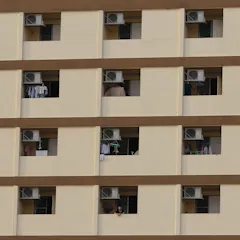
Global temperatures are poised for another record-breaking year. As incomes rise around the world and global temperatures go up, the use of air conditioning is poised to increase dramatically.
Top contributors
-

Professor, Emerging Technologies Research Lab, Monash University, Monash University
-
Associate Professor, Smith School of Enterprise and Environment, University of Oxford
-
Professor, Centre for Urban Research, School of Global, Urban and Social Studies, RMIT University
-
Research Fellow, Centre for Urban Research, RMIT University
-
Senior Research Associate, Department of Engineering Science, University of Oxford
-
Professor of Geography, University of Wollongong
-
Professor of Meteorology, UMass Lowell
-
Professor of Atmospheric Science, Colorado State University
-
Senior lecturer, Griffith University
-
Professor, Social Design, Faculty of Design and Society, University of Technology Sydney
-
University of Oxford
-
Senior Lecturer - Energy, Queensland University of Technology
-
Energy Advisor, formerly, The University of Melbourne
-
Professor of Climate Science, UMass Lowell
-
Senior Researcher and College Lecturer in Engineering, University of Oxford