
There is no single thermostat setting that is right for every person or every home. And there are other easy, low-cost steps that can help keep everyone comfortable when hot weather sets in.
Articles on Air conditioners
Displaying all articles

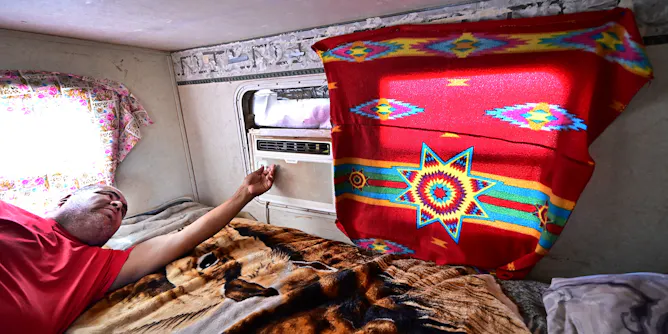
We examined how households in Victoria cope with, adapt to and endure summer heatwaves. Most took a short-term view. A more sophisticated, long-term approach to managing heatwaves is needed.

Any heater that burns fuel without adequate ventilation is dangerous in a home – and none are as safe or efficient as a reverse-cycle air conditioner.
While running it briefly and intermittently at a very low temperature may feel thrifty, it will not be the most energy efficient choice. Here’s what to do instead.
People who switch from gas to reverse-cycle air conditioning to heat their homes still want to feel comfortable. Some don’t. Home electrification programs must tackle the causes of the problem.

People aren’t the only ones harmed by heat waves. The hotter it gets, the harder it is for machines to keep their cool.
As the drive towards electrification advances, one fact seems clear: it is far easier to reuse waste heat for our homes and businesses than it is to generate it anew.

Chlorofluorocarbons (CFCs) are also potent greenhouse gases which contribute to climate change.
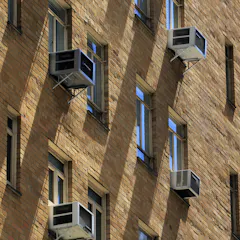
The US Senate voted to ratify the Kigali Amendment, agreeing on a bipartisan vote to phase down climate-warming HFCs. Now what?

Heat pumps use a fraction of the energy of traditional electric or gas heaters, which means they slash both energy costs and emissions.

Hot rooftops and a looming skills shortage – these are just a few challenges faced by crucial yet undervalued air-conditioning repair people.

Energy modeling software provides insight into whether letting your A/C relax while you’re gone all day will save you energy – and money.

Try a few star jumps every hour, it’ll make a massive difference to your warmth.
Top contributors
-

Senior Industry Fellow, Environment and Planning, RMIT University
-
Postdoctoral Associate, Massachusetts Institute of Technology (MIT)
-
Associate Professor in Property, Construction and Project Management, RMIT University
-
Professor of Atmospheric Science, Colorado State University
-
Scientist, Energy Efficiency & Renewables, CSIRO
-
Professor of Mechanical Engineering, Georgia Institute of Technology
-
Honorary Lecturer, Centre for Ocean and Atmospheric Sciences, University of East Anglia
-
Associate Professor of Civil, Environmental and Architectural Engineering, University of Colorado Boulder
-
Research Associate in Atmospheric Science, University of Bristol
-
Senior Research Scientist, CSIRO
-
Ph.D. Student in Architectural Engineering, University of Colorado Boulder
-
Professor, Department of Mechanical Engineering, McMaster University
-
Lecturer, School of Engineering, RMIT University
-
Associate Professor in Housing, School of Property, Construction and Project Management, RMIT University
-
Director, Andrew N. Liveris Academy for Innovation and Leadership & Professor and Chair in Sustainable Energy Futures, The University of Queensland