
AI could kill our creativity by making us think too alike. It also forces us to question what “creativity” is, and the different forms it can take.
Articles on AI model
Displaying 21 - 40 of 44 articles
AI systems with deceptive capabilities could be misused in numerous ways by bad actors. Or, they may become prone to behaving in ways their creators never intended.
Media articles and influencers have helped give the impression that prompt engineering could be a ticket to a six-figure salary. The reality, as always, is a different story.

Snapchat’s AI-powered chatbot malfunctioned this week, raising questions of “sentience” among users. As AI becomes increasingly human-like, society must become AI-literate.

Creating bias-free AI systems is easier said than done. A computer scientist explains how controlling bias could lead to fairer AI.
Regardless of the input, AI image generators will have a tendency to return certain kinds of results. This is where the potential for bias arises.
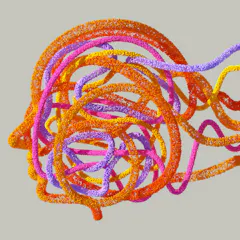
Large language models have been shown to ‘hallucinate’ entirely false information, but aren’t humans guilty of the same thing? So what’s the difference between both?
I study artificial general intelligence, and I believe the ongoing fearmongering is at least partially attributable to large AI developers’ financial interests.

Dubbed the ‘godfather of AI’, Hinton’s early work helped pioneer many of the methods underlying the AI systems we see today.
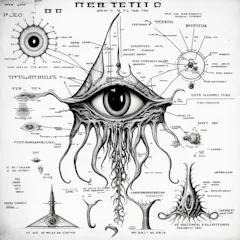
if a machine can ascribe intent to the events and experiences befalling it, this raises the question of identity and what it means to be aware of oneself and others
The new tools are expected to free up space for workers by helping out with tedious and repetitive task. Here’s how it will work.
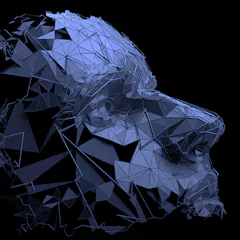
Experts largely agree that AI with human-level capabilities is not that far off. How will this change out relationship with machines?
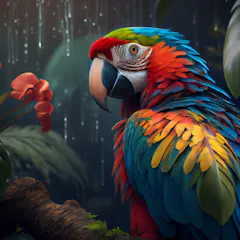
Users are having a blast getting creative with AI generators – but your output is only ever as good as your prompt.
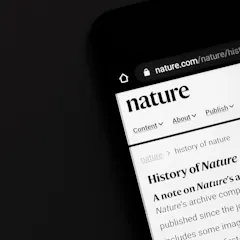
Academic authorship was never straightforward. Now ChatGPT is making it even more complicated.
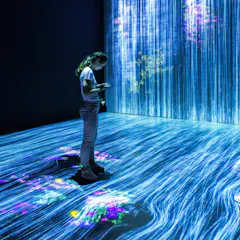
From ChatGPT to Lensa, it feels like AI is here to take over. But despite some impressive results, such systems still have plenty of limitations.
Lensa is the new AI digital artist you can keep in your pocket. Its ‘creations’ have taken over Twitter and Instagram – but the reception has been mixed.
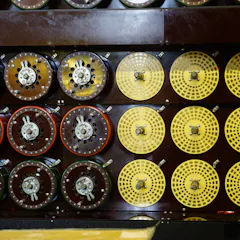
Ada Lovelace said computers could not invent. But a century later, Alan Turing pointed out inventiveness in machines could be found in their capacity to produce surprising and innovative results.
The newest OpenAI text-generator is a marked improvement over its predecessor – but it still has its pitfalls.

The AI leans on a particular tactic for its success. If you knew what it was, beating it would get drastically easier.

Infants approach the physical world with some ‘principled expectations’ about how it works. What happens when an AI system is programmed this way?
Top contributors
-

Professor of AI, Research Group Leader, UNSW
-
Lecturer in Business Analytics, University of Sydney
-
PhD Student, School of Computing, Australian National University
-
Associate Professor of Visual Communication & Digital Media, RMIT University
-
Professor of Cyber Security Practice, Edith Cowan University
-
Adjunct Fellow, Centre for Policy Futures, The University of Queensland
-
Senior Research Fellow, Human-AI Decision Making, The University of Queensland
-
Postdoctoral Research Fellow in Technology and Social Sciences, CSIRO
-
Lecturer in the Philosophy of Science, University of New England
-
Postdoctoral Associate at the Tegmark Lab, Massachusetts Institute of Technology (MIT)
-
Associate Professor of Biomedical Engineering, University of Michigan
-
Professorial Fellow (Artificial Intelligence), Melbourne Business School, The University of Melbourne
-
Associate Professor in Law, Macquarie University
-
Professor of Computer Science and of Communication, University of Southern California
-
CSIRO