

A survey found second-language instructors are using generative AI primarily as an administrative efficiency tool, for work like generating lesson plans.
Articles on AI in education
Displaying all articles

Classrooms are shaped by emotion, relationships and unpredictability. Teachers in a study described a widening gap between AI policy expectations and the realities of classrooms.

What people think of their teachers is tremendously important for learning, and should inform how we analyze the potential use of AI chatbots in education.

Students use AI for everyday tasks, but its adoption in universities has barely started.

Insights from philosophers about the nature of knowledge and learning can help educators identify why and when using AI in the classroom is warranted and helpful.

Whether you think AI is a good or bad thing, the fact is it’s here. AI literacy enables students to make safe and informed decisions when using AI, preventing habits that compromise academic integrity.
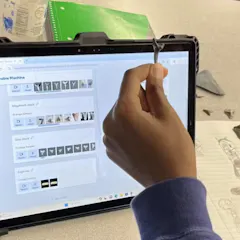
Lesson plans incorporating shark fossil teeth help prepare kids to live and work in an AI world.
AI’s potential needs to be explored through experimentation. But this works best if managed under controlled environments.

Federal and state governments have just released a national framework for generative AI in schools. This paves the way for generative AI to be used routinely in classrooms around the country.

Scholars differ over whether having students use AI in their assignments will help or hurt their careers after graduation.

We need to embrace the use of AI in higher education because the positives can far outweigh the negatives.

Chatbots can be part of a broader approach universities’ teaching and learning centres can take to support faculty in innovating teaching practices.
Top contributors
-

PhD Student and Research Assistant, Université Laval
-
Professor of Literacy, Culture and Instructional Design & Technology, University of Maryland, Baltimore County
-
Research Associate and Doctoral Candidate, Technical University of Munich
-
Associate Professor, Educational Technology, Université Laval
-
Professor of Creative Pedagogies, Edinburgh Napier University
-
Instructor of Information Systems Management & Executive Director, Auburn University
-
Professor of Political Science, Fordham University
-
Professor of Analytics and Operations, University of Richmond
-
Research Assistant, Université Laval
-
PhD, Deakin University
-
Innovation Lab Director and Professor, Educational Technology and Innovation Mindset, Concordia University
-
Associate professor, Deakin University
-
Senior lecturer/ Co-Director, University of the Free State
-
Assistant Professor in Instructional Technology, Kennesaw State University
-
Associate Professor of Educational Technology, University of Florida