

People restoring Africa’s ecosystems need climate services that combine forecasts with Indigenous knowledge and information about land, water and livelihoods.
Articles on Agroforestry
Displaying 1 - 20 of 30 articles

As storms, wildfires, and floods strike in ever-closer succession, an architect with disaster risk science expertise explains why resilience is built between hazards, not during them.
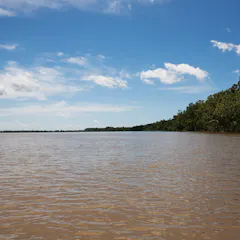
Brazil holds 12% of the world’s freshwater reserves and yet growing water insecurity reveals some of the country’s deepest sanitation inequalities, which are particularly relevant to Marajó, its largest coastal island.
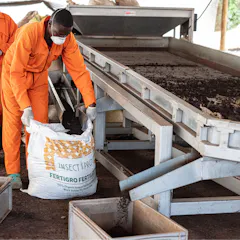
African food systems import 80% of the fertiliser they need. With Iran as a major producer, supplies are now limited and farming with less fertiliser is important.
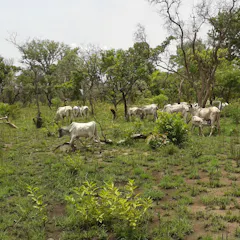
Benin’s smallholder dairy farmers need development finance to plant shady trees on the land where their cattle graze, to improve cattle health.
The people who manage America’s aquifers, wetlands, shorelines and recreation areas rely on federal science as they face new and rising risks in a changing climate.

75% of Mount Kilimanjaro’s indigenous plants have been wiped out over the last century.

Small farms will have the hardest time meeting the rules, giving big producers an edge. One potential solution: agroforestry, growing coffee plants among the trees.
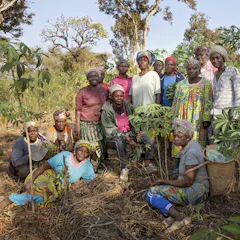
Women smallholder farmers need digital platforms to sell their crops, support to get crops certified as organic, and communal places to process food.
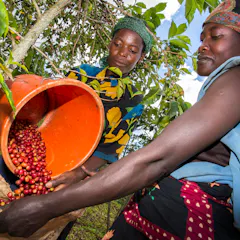
Agriculture is not just a victim of climate change. It is key to the solution. It must receive the same attention globally as fossil fuels and energy transitions.

South Africa’s G20 presidency this year must take 7 critical steps to stop deforestation in Africa.
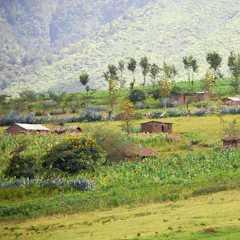
Kenya plans to plant 15 billion trees to combat climate change.

Orders to not investigate potential government wrongdoing sets an alarming precedent for the future of B.C. forestry.

Endemic to Madagascar, voatsiperifery is one of the secrets of the world’s top chefs. But it has to be grown in a way that preserves its environment and guarantees producers a fair income.

Incentives have so far benefited large landowners and created lifeless plantations.

Roman agricultural techniques may help wine producers to tackle the impacts of climate change, and even the UN is getting on board.

Tracking both the amount of carbon and the time that it remains stored is key to unlocking the potential of nature-based carbon storage as a climate mitigation strategy.
Farms have become less friendly for our insect friends – this must be reversed if we want food to eat.

Are the eggs you’re buying this Easter good for cocoa farmers, kids and the Earth – or actually doing harm? Our 2022 scorecard of the big brands can help you buy better than before.
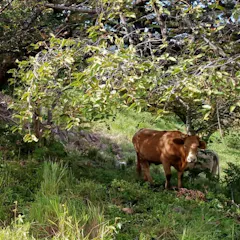
The answer lies in silvopastoralism, an agricultural method that attempts to mimic natural forest ecosystems with livestock added into the mix.
Top contributors
-

Associate professor, Cape Peninsula University of Technology
-
Senior Lecturer, Environmental Soil Science, RMIT University
-
Lecturer, Humanities and Social Sciences, La Trobe University
-
Soil Scientist, Australian Centre for International Agricultural Research
-
Postgraduate Researcher, Climate Adaptation, University of Manchester
-
CGIAR
-
PhD Candidate - Natural Resource Sciences, McGill University
-
Professor in Department of Accounting and Corporate Governance, Macquarie University
-
Senior Coffee and Cocoa Agroforestry Scientist from CIRAD seconded to the, Center for International Forestry Research – World Agroforestry (CIFOR-ICRAF)
-
Distinguished Research Fellow, Center for International Forestry Research – World Agroforestry (CIFOR-ICRAF)
-
Associate professor in accounting, University of Wollongong
-
NRF SARChI Research Chair in Ecosystem health and biodiversity in KZN and the E. Cape, University of KwaZulu-Natal
-
Professor and Climate Scientist, Department of Geography, Planning and Environment, Concordia University
-
Principal Research Fellow, University of Reading
-
Senior Fellow, Center for International Forestry Research – World Agroforestry (CIFOR-ICRAF)