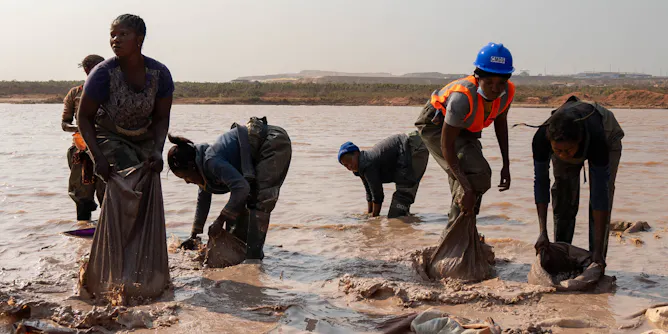
The G20’s new critical minerals framework wants to move Africa beyond raw exports so that mineral wealth creates jobs and growth on the continent.
Articles on G20 Africa 2025
Displaying 1 - 20 of 50 articles

The G20’s legacy so far has been to preserve capitalist financial systems.

South Africa’s G20 presidency highlighted climate action and just energy transitions.

The G20’s Women 20 group agreed that action is needed to stop unpaid care work and forced labour, and improve women’s health and climate leadership.

South Africa’s G20 presidency’s Digital Economy working group tried to make progress on digital inequality, high data costs and weak broadband. How did they do?

Development banks have spent over US$1 billion on factory farming in Africa, locking in high greenhouse gas emissions. Natural farming systems are a better choice.
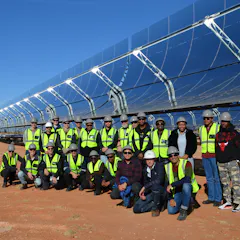
India links new rural power lines to solar projects, providing cleaner energy for farms, while South Africa has ways for communities to benefit from green energy profits.
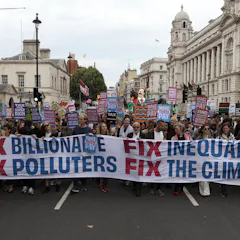
There is a great institutional need for strong inequality analysis. That’s why the world needs to establish an International Panel on Inequality.
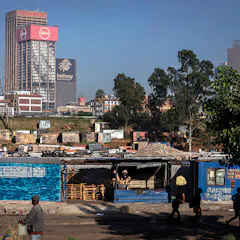
Reducing inequality should be a guiding principle to decisions on climate change.
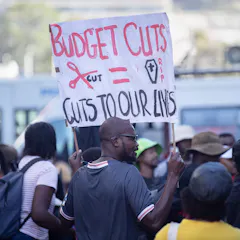
This year’s G20 president, South Africa, hosts the G20 summit from 22 November in Johannesburg. But has civil society really been included in the talks?
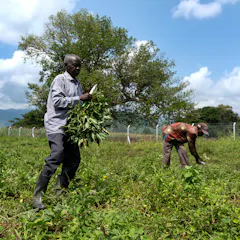
African farmers face rising climate disasters that destroy crops and livestock. The G20 must champion new, affordable tech-based insurance for them.
The optimal and safe use of agricultural inputs to increase food production is key to achieving global food security.

Cultural and creative industries account for 3.39% of global GDP and 3.55% of jobs.

South Africa’s G20 presidency is a chance to lobby for investment in drought-tolerant crops, better irrigation, and early warning systems.

As G20 president, South Africa should encourage richer countries to support the Single African Air Transport Market.
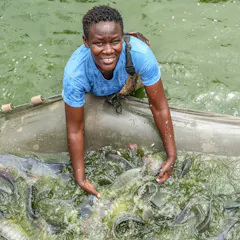
Africa’s small-scale aquaculture practitioners need cold storage facilities to stop their fish from going to waste.
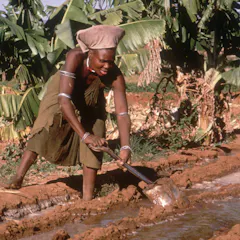
The G20 must collect ancient practices that can help the world withstand climate change so that this knowledge is available for future generations.
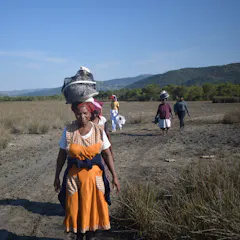
South Africa’s Eastern Cape women farmers have problems getting land, loans, and leadership positions.

Policy-makers must grapple with an uncomfortable truth: without deliberate action, AI will magnify global divides.

Millions of jobs could be created from sustainable economic ocean development.
Top contributors
-

Post Doctoral Researcher, Graduate School of Business (GSB), University of Cape Town
-
Professor/Senior Research Fellow, Centre for Advancement of Scholarship, University of Pretoria
-
Senior Fellow, Centre for Policy Research (UNU-CPR), United Nations University; Aston University
-
Senior Fellow, Department of Agricultural Economics, Stellenbosch University
-
Professor at the Nelson Mandela School of Public Governance, University of Cape Town
-
Senior Researcher at the African Climate and Development Initiative, University of Cape Town
-
Professor and Research Theme Leader of the Flourishing Life Research Theme, University of the Free State
-
Honorary Research Associate, University of Oxford
-
Account Director
-
Head of the School of Geosciences; Associate Professor, University of the Witwatersrand
-
Associate Professor of Economics, Universidade de São Paulo (USP)
-
Research associate at African Centre for Cities, University of Cape Town
-
Professor of Environmental Science, University of South Africa
-
Research associate, University of Johannesburg
-
Senior Research Associate: Digital Economy, University of South Africa