
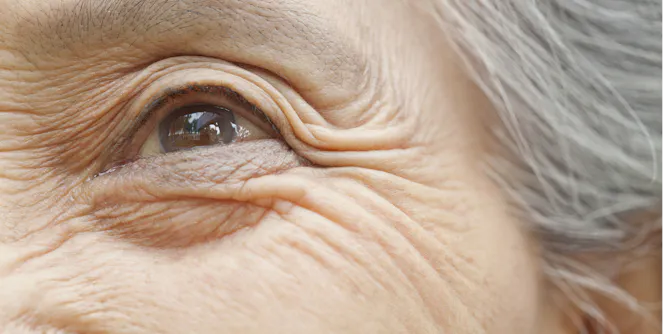
Aging is a culmination of factors spanning from your cells to your environment. A number of interconnected processes determine how quickly your body is able to repair and recover from damage.
Articles on Aging
Displaying 141 - 160 of 319 articles
What is life like at 100? Centenarians shared their joys and future hopes with a team of Saskatchewan researchers.

When fruit flies see other dead fruit flies, their life spans are cut short. Other species also undergo analogous physiological changes when seeing their dead.

REM sleep behavior disorder is characterized by acting out dreams, which may include shouting, kicking and punching during sleep.
Lifestyle factors like physical activity, diet and sleep can lower the ‘biological age’ of your cells and tissues and reduce age-related physical decline.
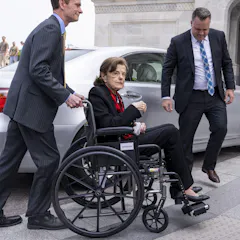
Physical ailments and deteriorated health may be the one area in which politicians can escape scrutiny.
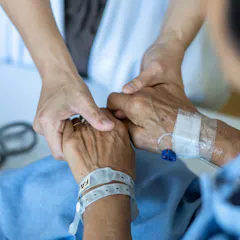
The challenging realities surrounding end-of-life care are especially difficult for older people experiencing homelessness, who have more barriers to accessing hospice care.
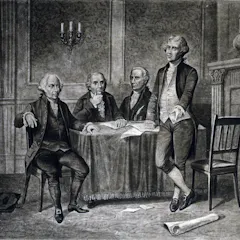
Americans have long nurtured mixed feelings about age and aged leaders. Yet during the country’s founding, a young America admired venerable old sages.

Many older people tend to trim their social circles and focus their social efforts on family and close friends. New research on our close primate relatives may help explain why.

COVID-19 is the third-leading cause of death in Canada, but it’s older people who are dying. That we accept this and carry on as if the pandemic is over reveals our ageism: We don’t value older people.
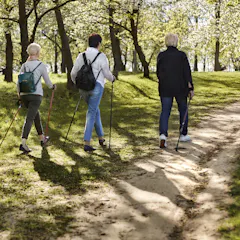
The program’s expenses are rising rapidly as baby boomers retire and health care costs grow.
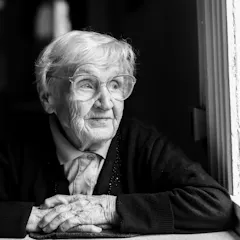
New research affords a rare window into the circumstances and needs of a potentially very vulnerable group that until now has remained largely invisible: people with dementia who have no close kin.

Aging is a major risk factor for many chronic diseases. Figuring out what influences longevity and how to identify rapid agers could lead to healthier and longer lives for more people.

People don’t all age at the same rate. Untangling the factors that influence health and disease – such as epigenetics, demographics and behavior – could lead to better care for those who need it most.
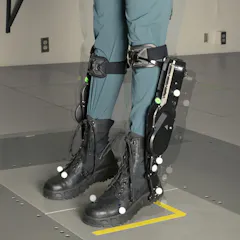
If you want to use an exoskeleton to improve balance, a study finds that superhuman reflexes can help you stay upright.
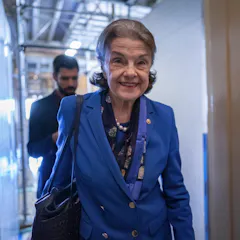
Most Americans knew the late Dianne Feinstein as a US senator. But for San Francisco voters, she will forever be remembered as the woman who stepped in at a tragic moment to lead the city.
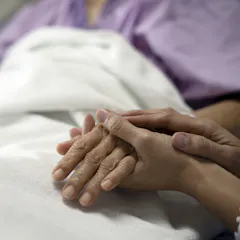
A study of medical costs and income losses found that those who can least afford to pay for health care and miss out on their paychecks rack up the biggest bills.

Repeated storytelling from elderly relatives doesn’t necessarily always signal age or cognitive decline. It’s about conveying memories and values to a new generation.
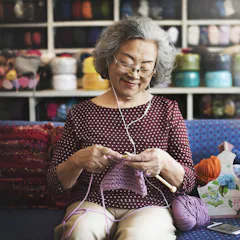
Locking individuals into the narrative of age as a vulnerability means inevitably creating ageist stereotypes.
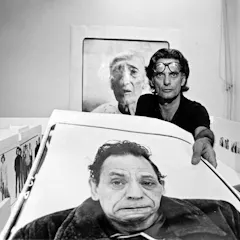
In a 1959 essay, Capote noted how Avedon seemed to capture ‘every hard-earned crow’s foot’ in his subjects – perhaps not realizing that he would one day be photographed by that same unvarnished gaze.
Top contributors
-

Regents and Distinguished Professor of Environmental and Occupational Health, Texas A&M University
-
Senior Research Fellow and Lecturer of Gerontology, UMass Boston
-
Professor of Gerontology, UMass Boston
-
Associate Professor of Medicine and Geriatrics, University of Virginia
-
Professor, Cumming School of Medicine, University of Calgary
-
Professeur Titulaire. École d'optométrie. Expertise en santé oculaire et usage des lentilles cornéennes spécialisées, Université de Montréal
-
Research Data Scientist at Hotchkiss Brain Institute, University of Calgary
-
Professor of Economics, emeritus, Stony Brook University (The State University of New York)
-
A&S Distinguished Professor of Sociology and Director of the Center for Innovation in Social Science, Boston University
-
Associate professor, Queen's University, Ontario
-
Director of the International Laboratory of Demography and Human Capital, Russian Presidential Academy of National Economy and Public Administration
-
Co-Director of Texas A&M Center for Population Health and Aging, Texas A&M University
-
Professor of Clinical and Health Psychology, University of Florida
-
Associate Vice Provost for Health Sciences and Associate Professor, Mississippi State University
-
Medical Science Master's Student, University of Calgary