
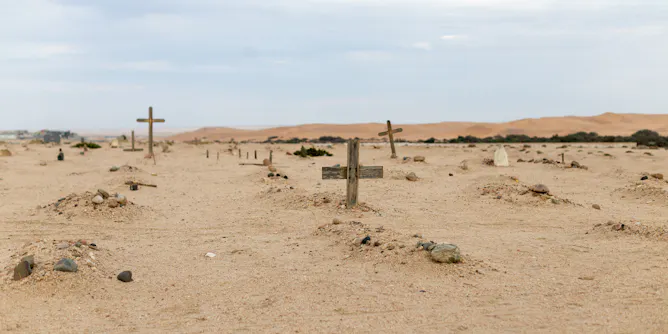
The Long Shadow of German Colonialism tells of a brutal history, and how this past lives on today.
Articles on African colonialism
Displaying 41 - 57 of 57 articles
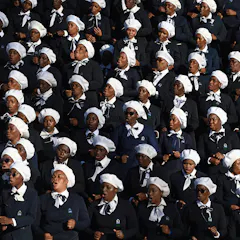
Christianity is evolving. Mainstream churches like the Methodists and the Catholics are losing ground to indigenous and pentecostal groups.

The nationalist art of Mobutu Sese Seko and the art nouveau style of King Leopold II both live on in Kinshasa in fascinating ways.
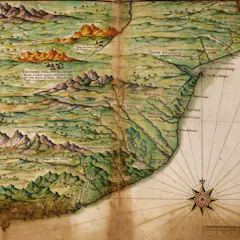
The history of the coastal communities of east Africa shows how ethnic groups and their languages were shaped.

With a dramatic political history, radio is today the number one source of news in Africa.

Driven by social justice, he showed that all people are capable of both good and evil.

Variations of English names reveal the enduring effects of British rule - but there’s also a return to tradition.

The word shows that language isn’t static, it evolves to reflect developments in a society.

Some explorers believed they had found unicorns depicted on rocks. The truth behind the paintings is far more interesting.
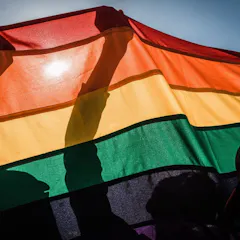
In over 30 countries LGBTIQ+ people would face imprisonment. Progress has been made but there is still a long way to go.
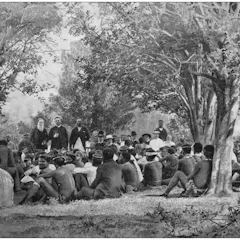
Missionaries and African translators working on local versions of the Bible divided South Africa’s ethnic groups by language.
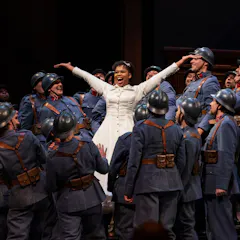
Singing at the reopening of the Notre Dame cathedral and at King Charles III’s coronation tells a story of global histories coming full circle.
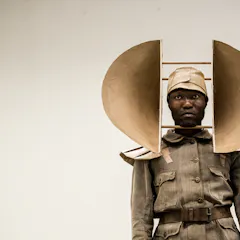
The Head & The Load finally reaches Johannesburg after delays caused by the COVID pandemic.
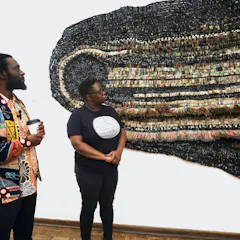
Using found materials from dump sites, the large scale works examine the residues of colonialism.
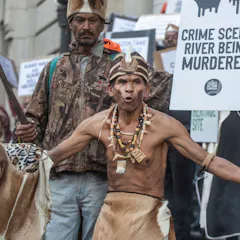
The British empire brought the practice of commons enclosure to Africa to claim land. Its effects continue today at sites like the Liesbeek River in Cape Town.

After South Africa’s first democratic election in 1994, the previously oppressed and dispossessed black majority hoped for constitutional restitution of their land. This has largely failed.
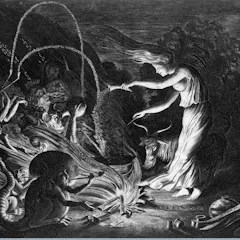
Witch-finders of early modern Europe and modern Africa made themselves indispensable by showing people a threat of a growing crisis of threatening evil.
Top contributors
-

Assistant Professor, Harvard University
-
Professor, Canadian and Cultural Studies, Stockholm University
-
Extraordinary Professor, Department of Political Sciences, University of Pretoria
-
Professor of African legal pluralism, University of the Western Cape
-
Postdoctoral Research Fellow
-
Emeritus Professor in History, King's College London
-
Historien et anthropologue spécialisé dans les armées coloniales et postcoloniales en Afrique de l’Ouest, École des Hautes Études en Sciences Sociales (EHESS)
-
Postdoctoral research fellow, University of the Witwatersrand
-
Research Fellow, History Department, Universität Trier
-
Invited User
-
Lecturer, University of Fort Hare
-
Professor of Public Theology in the Department of Beliefs and Practices, Faculty of Theology, at the Vrije Universiteit Amsterdam (Free University of Amsterdam), Vrije Universiteit Amsterdam
-
Senior Lecturer in Media and Communication, University of Mauritius
-
South African Research Chair in Sexualities, Genders and Queer Studies, University of Fort Hare
-
PhD candidate in Art History, Rhodes University