
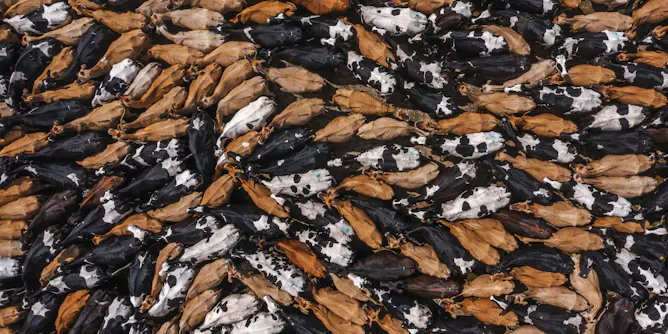
Knowing which parts of Africa best help to store carbon means funding and policy efforts can be directed to protecting and increasing this carbon ‘land sink’.
Articles on Africa climate
Displaying all articles
Primary health care systems must become more resilient as the effects of climate change worsen.
The financial outcome of COP26 is a glass half full, but it’s not far from a failure.
Education, historical trends in precipitation, and perceived drought experiences predict increased climate change literacy, but rates are lower for women, those in rural areas, and low-income groups.
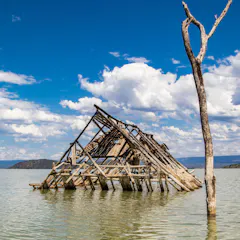
CC BY-NC-ND9.18 MB (download)
African countries are playing their part in fighting climate change but western nations need to come to the party.
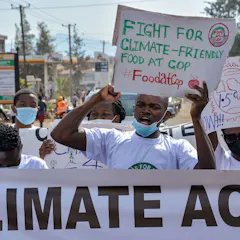
Five aspects need attention if African governments are to be able to mitigate, adapt to and manage climate change in the coming critical decade.
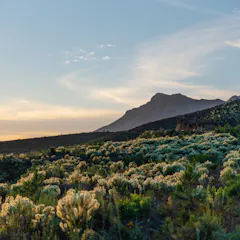
Cape Town’s new climate strategy is a good start. But it falls short when it comes to nature.
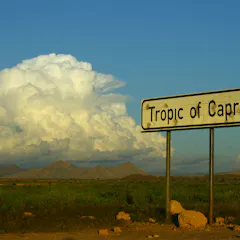
The tropics are expanding at an unprecedented rate. This will have massive implications for societies, economies and the natural world.

A key strategy for President-elect Trump is to turn the US inward, both economically and politically. This bodes badly for Africa.
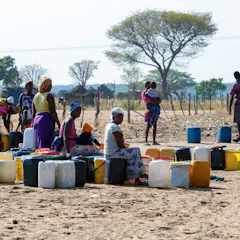
Understanding how drought is impacting on livelihoods and local governments can help in the development of longer term climate adaptation responses.
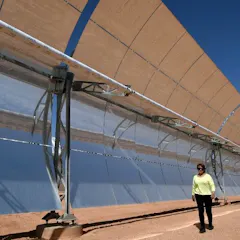
Climate change stands to hit Africa the hardest. That’s why green industrialisation is critical to help keep the continent’s greenhouse gas emissions low.
Scenarios on global trends over the next 20 years point to some serious challenges for Africa. Whatever actually happens, it’s important for the continent to put in place mitigation strategies.
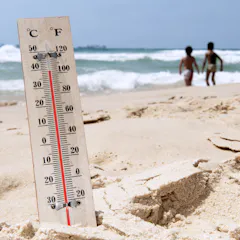
Africa must find ways of dealing with extreme heatwaves or suffer a range of health problems, including fatalities.
Top contributors
-

Adjunct Professor of Environmental Geography, CQUniversity Australia
-
Professor of International Affairs and the Vice-Provost and Associate Vice-President (Academic), Carleton University
-
Honorary Professor of International Relations, University of the Witwatersrand
-
Senior Lecturer/Senior Researcher, Departmant of Geography, History and Environmental Studies, University of Namibia, University of Namibia
-
Associate Professor, University of Pretoria
-
Postdoctoral Research Fellow: Climate Change Vulnerability, Adaptation & Governance - Adaptation at Scale in Semi-Arid Regions (ASSAR), University of Cape Town
-
Enseignant chercheur, Université de Rouen Normandie
-
Professor of Practice in Diplomacy, Dept of Politics and International Studies, SOAS, University of London
-
Senior Research Fellow in Climate Change Risks, University of Cape Town
-
Researcher in Systems Ecology, University of the Witwatersrand
-
Senior Researcher, Agricultural Research Council
-
Scientist, South African National Biodiversity Institute
-
Professor of Ecology, University of the Witwatersrand
-
AIMS-Canada Research Chair in Climate Change Science, African Institute for Mathematical Sciences
-
Assistant Professor, Université Mohammed VI Polytechnique