

AI models can now produce meaningful responses to exam and assignment questions. We’ll have to embrace them if we want the next few years to go smoothly.
Articles on Academic integrity
Displaying 21 - 37 of 37 articles
Research suggests the only way to effectively combat online cheating for now is holding exams in person.

Australian scientists are no more honest or dishonest than those in other countries that have national bodies to investigate research fraud. We have a sport integrity watchdog but not one for research.
An estimated one in ten Australian tertiary students have paid a so-called contract cheating service to do their work for them. What most don’t think about is the risk of being blackmailed later.
What’s judged to be plagiarism may shift as students rely on more sophisticated forms of technology for writing support.

Recent allegations of cheating by university students in online exams suggest the students are adapting faster than the education system itself – and that should change.

The forced transition to online university learning will mean teaching practices will be permanently changed.

Equity and privacy problems with online proctoring reflect a larger issue: Students look to universities to set an example of integrity.
Many countries monitor higher education at the federal level, partly to take a systemic approach to overseeing academic integrity. Why not Canada?

The Institute for Public Affairs’ audit of academic freedom pits people either for or against universities. This prevents us from having thorough conversations about real threats to academic freedom.

Online students tend to be older, which might explain why new data suggest they’re less likely to cheat. But even with these data, the evidence is mixed.
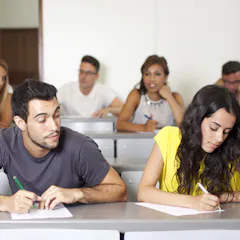
It doesn’t matter how assessments are given to students, as students can still find a way to cheat.

There are major systemic problems associated with peer review that are negatively affecting scientific credibility.

African academics and universities have been caught in the predatory journal web. It’s time for the continent’s universities to start taking this threat to their integrity seriously.
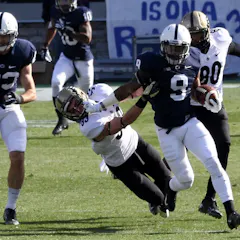
Despite the huge attention to intercollegiate sports, is the day of reckoning approaching?

Managing the newest form of academic deceit will require hard work from established academia and a renewed commitment to integrity from university communities.

Academics’ own propensity for plagiarism may be contributing to high levels of student plagiarism.
Top contributors
-

Professor of Management, University of Johannesburg
-
Professor and Research Chair, Werklund School of Education, University of Calgary
-
Assistant Professor, Faculty of Education, Brock University
-
Associate Professor and Director, Academic Quality, Standards, and Integrity, Charles Sturt University
-
Associate Professor, Director of Speech Pathology, Deakin University, Deakin University
-
Senior Lecturer, Melbourne Graduate School Of Education, The University of Melbourne
-
Associate Professor, College of Information & Communication Technology, School of Engineering and Technology, CQUniversity Australia
-
Assistant Professor, Faculty of Education, Brock University
-
Co-Director: Centre for Competition Law and Economics, Stellenbosch University
-
Associate Professor; Director: Academic Integrity, Adelaide University
-
Philosophy PhD Student, University of Guelph
-
Deputy Vice-Chancellor, Education, Murdoch University; Professor of Measurement, Assessment and Evaluation, Murdoch University
-
Pro Vice-Chancellor, Educational Innovation, University of Sydney
-
Professeur agrégé, École d'études politique, Directeur, Centre d'études en gouvernance / Associate professor, School of Political Studies, Director, Centre on Governance, L’Université d’Ottawa/University of Ottawa
-
Pro vice-chancellor (Education and Quality), Swinburne University of Technology