
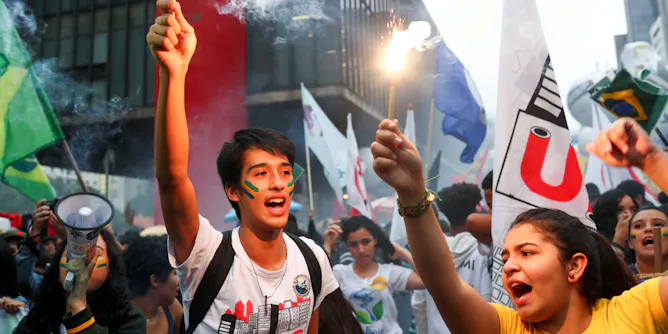
Universities are increasingly under threat everywhere.
Articles on Academic freedom
Displaying 81 - 100 of 154 articles
The commercialisation of universities in Kenya poses a serious threat to academic freedom.
Universities need to protect people with different ideas.

As I found, academics engaging in fieldwork research are in a particularly vulnerable position.

Without clearance from authorities, scientists can face penalties for conducting ‘dangerous’ research’.
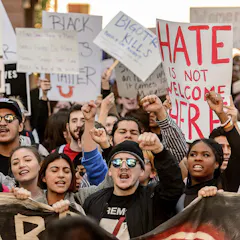
Inclusive freedom reflects university values in protecting free thought, inquiry and expression, while protecting the dignity of all students and faculty by allowing them to equally contribute.
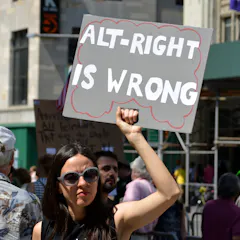
Academic freedom protects free speech, but also conditions it. Knowledge cannot be tested and doesn’t advance if there isn’t also a duty to be well informed and reasoned.
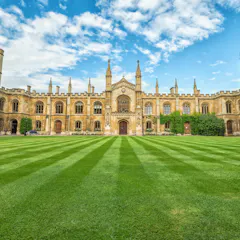
Not only do some countries perpetrate direct attacks on students and academics but the internationalisation of higher education has also created new global threats.

Most medical research is funded by industry, not public sources. And industry puts pressure on researchers in many ways, from guiding the research question to suppressing unfavourable findings.

National security isn’t just about warding off physical attacks. It’s also about understanding cultural forces that drive a society to think, feel and act in certain ways, a political scientist says.
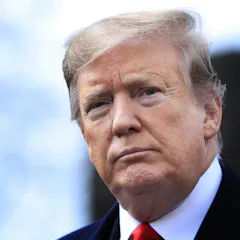
Is a $25 million judgement against Oberlin College going to chill free speech – or is the wealth of a publicly subsidized private college helping polarize debates about race and politics?

The pressure for universities to take action on free speech may be more about politics than anything else.
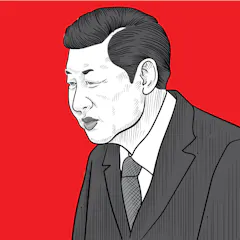
There is growing concern that China is trying to use universities to silence its critics in the West.

Disinviting a person to speak on a university campus adds up to abandoning freedom and speech.
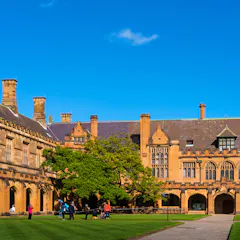
Tensions between the government and the university sector ran high in 2018, with the government cutting funding to student places and research and a big push back from universities.

The Institute for Public Affairs’ audit of academic freedom pits people either for or against universities. This prevents us from having thorough conversations about real threats to academic freedom.
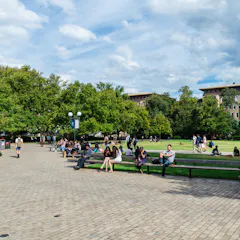
Glyn Davis lays out the evidence (or lack thereof) for the argument that free speech on campuses is at risk.
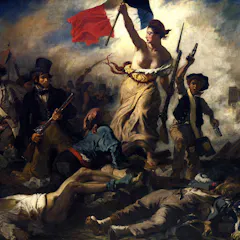
The University of Reading wrongly judged that Geras’ essay, which discusses political violence, might fall foul of the government’s Prevent strategy.
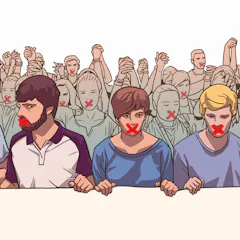
Durham University student Matthew Hedges has been jailed for life for ‘spying’ in UAE.
Universities should very rarely prevent controversial speakers from spreading their message.
Top contributors
-

Deputy Executive Dean and Associate Dean (Academic), Faculty of Humanities, Arts and Social Sciences, The University of Queensland
-
Adjunct Professor, Stout Research Centre, Victoria University of Wellington and Auckland University of Technology, Professor of Political Science, Charles Sturt University
-
Emeritus Professor of Education, University of Derby
-
Professor of Higher, Adult, and Lifelong Education, Michigan State University
-
Host, The Conversation Weekly Podcast, The Conversation
-
Senior Lecturer, Curtin Law School, Curtin University
-
Professor of Law, King's College London
-
Associate Professor of Political Science, Trinity College
-
Professor of Research, Foundations & Higher Education, Northern Arizona University
-
Professor of Modern China Studies, Lund University
-
Professor, Faculty of Education, University of Regina
-
Associate Professor, Curtin Law School, Curtin University
-
Professor of Molecular Biology and Genetics, University of Canterbury
-
Adjunct Associate Professor in History, University of New England
-
SSHRC Postdoctoral Fellow, Political Science, University of Guelph; Queen's University, Ontario