
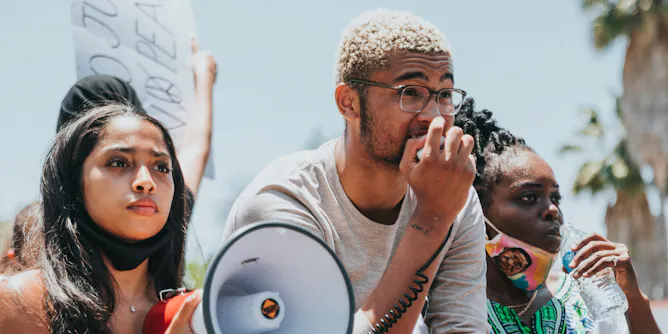
Globally, we’re witnessing a rise in far-right governments increasingly hostile towards universities, historically springboards for progressive change. What should the future look like for universities in Canada?
Articles on Academic freedom
Displaying 21 - 40 of 154 articles

Universities and research are the target of unprecedented attacks in the US, threatening academic freedom. Scientists have created the “Stand up for Science” movement.

From educational gag orders to the decline of tenure-track positions, academic freedom in the United States has been worsening in recent years.

It’s now clear that tensions in academia regarding concerns about Israel’s relationship with the Palestinian people aren’t limited to campus protests.
A wave of mostly partisan laws have sought to curtail what university faculty can say and teach.

In 2015, I saw Jewish and Muslim students forge a set of group agreements so they could dialogue on the Middle East conflict. Initiatives like this or a ‘Semester in Dialogue’ program are promising.
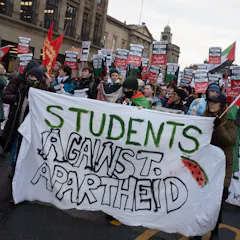
The second of two episodes of The Conversation Weekly podcast exploring how the Israel-Gaza conflict is affecting life at universities.
The first of two episodes of The Conversation Weekly podcast exploring how the Israel-Gaza war is affecting life at universities.

If scientists cannot freely conduct and communicate their work, the gap between evidence and policy widens, and that means Canada gets less effective laws and policies.
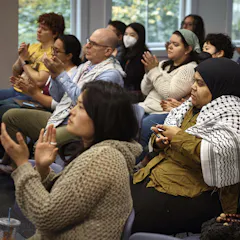
In Ontario and in Alberta, university decisions about balancing free expression and protection from harm will be an important test of recent university policy shifts pertaining to free expression.

The African university cannot be created through changing the intellectual lens and basis alone. Political action is key.

The same boldness that enabled hip-hop to endure can benefit teachers in the classroom, a hip-hop scholar writes.

Trans activists are running a campaign against University of Melbourne philosopher Holly Lawford-Smith. It raises a host of challenging ethical questions.
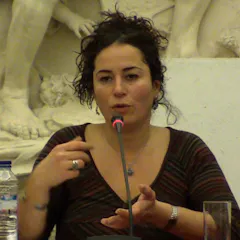
A refugee in France, the Turkish sociologist has been persecuted in her country for 25 years. Her case is emblematic of the repression of academics in Turkey – and elsewhere.
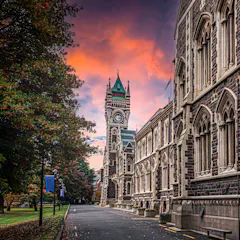
Otago University has followed Massey in aspiring to be a “Tiriti-led” institution. But this implies being on the Crown side of the partnership – which is not where a university should be.

The ability of professors to freely teach and write about controversial topics without fear of retribution is nothing new.
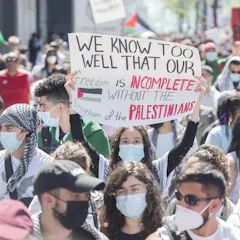
When universities are seen as favouring one position on the Palestine/Israel issue, their ability to uphold academic freedom as a fundamental tenet of democracy is jeopardized.
The true value of tenure goes beyond protection of the individual. It protects society from ideologically motivated restructuring as an alternative to poor performance management.

Academic freedom is increasingly caught up in partisan debates around freedom of speech. But the idea behind it is not only vital but shared across many other professions.

Academic freedom has a positive effect on democracy, as measured by the quality of elections and executive accountability.
Top contributors
-

Deputy Executive Dean and Associate Dean (Academic), Faculty of Humanities, Arts and Social Sciences, The University of Queensland
-
Adjunct Professor, Stout Research Centre, Victoria University of Wellington and Auckland University of Technology, Professor of Political Science, Charles Sturt University
-
Emeritus Professor of Education, University of Derby
-
Professor of Higher, Adult, and Lifelong Education, Michigan State University
-
Host, The Conversation Weekly Podcast, The Conversation
-
Senior Lecturer, Curtin Law School, Curtin University
-
Professor of Law, King's College London
-
Associate Professor of Political Science, Trinity College
-
Professor of Research, Foundations & Higher Education, Northern Arizona University
-
Professor of Modern China Studies, Lund University
-
Professor, Faculty of Education, University of Regina
-
Associate Professor, Curtin Law School, Curtin University
-
Professor of Molecular Biology and Genetics, University of Canterbury
-
Adjunct Associate Professor in History, University of New England
-
SSHRC Postdoctoral Fellow, Political Science, University of Guelph; Queen's University, Ontario